


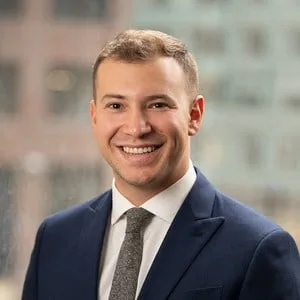
Transcript
Automated transcript · uncorrectedWell, things are happening in Manhattan. What the heck is happening well with us today? Is Jesse on and Jesse is the vice president of the Manhattan Institute, which is one knowledgeable think tank. And Jesse people in New York City, and you live in New York City. I live in New York City. They’re getting all kinds of notices from
city Hall that they owe a lot of money because of that, all of a sudden that they on the appia to tear tacks. And what they’re saying is they have to prove themselves innocent instead of the government says that you’re responsible for sure.
What do you say, Well, it’s it’s definitely a crazy moment. I think that you know, a lot of people are gonna have to go to this website and fill out some exemption paperwork, which of course should be no problem since you know people live there and you know, our full time and file their taxes. But then the website
doesn’t work. So this is just a total bad storm of events, poorly managed. It’s a it’s a big mess, and it’s no real surprise because this is what happens when incompetent government tries to do a whole lot of big things. And I think you’re going to see a lot of New York City business leaders who are pushed
basically to the brink. And this may spark a huge controversy in the city. And it’s it’s poorly managed on the mayor’s part. Is the reality here?
Well, we talk about the mayor’s pot and let me let me talk about the albity put the congestion pricing. There’s nothing but empty stores on Third Avenue, Second Avenue, First Avenue, Election and Avenue all over the place.
Yeah, well, look, I’m not even you know in theory, you want to put off some congestion pricing signs, so be it, But look at the state of disarray in the city. I mean, public safety is a problem on public transit, So where are you pushing people too? Right, this is a problem. You want to have congestion pricing signs,
so be it, but first clean up the subways, get rid of the people hanging out in tents on the street. And there’s been a total adication of responsibility on that front from this administration.
Understood, we talked about congestion pricing, we talked about the pen to tear tax, you’re on first base, why would you like to work about?
Well, i’ll tell you, John, One thing I’m thinking a lot about is this summer is thirty years following President Bill Clinton’s welfare reform, signing that into law, and it really seems like a Democratic party has largely abandoned the politics that it once embraced in favor of this more activist agenda centered on universal benefits and unconditional cash assistance
and socialism. Of course, so we’ve got actually some new polling at the Manhattan Institute that suggests that the American public has not made that same shift. Okay, so get this, John, Nearly three quarters of voters, seventy four percent support work requirements for welfare recipients, another sixty seven percent favor targeted assistants over universal benefits, and something like eighty percent prefer
providing benefits through food, housing, and healthcare as opposed to unrestricted cash. And voters really overwhelmingly prioritize reducing waste, fraud and abuse, which has been a priority for Republican back to elected officials recently, and that’s something seventy three percent of voters backs and of course, expansions of snap work requirements.
That’s something like a heavy majority fifty seven percent of voters too. So what does all of this say. I think it points to a broad public consensus that neither party yet fully owns. Americans continue to favor the Clinton formula of combining compassion with responsibility and pairing meaningful support for those in need with expectations of work program integrity
and public ardor And while Democrats have increasingly distanced themselves from that approach, Republicans have not always presented it effectively that they’re the right alternative. We’ve got our polling that suggests that there’s really an opportunity here for anyone to seize upon this issue. And I’d like to see more moderate politicians that helped Clinton build that durable collectoral political
coalition come back to the four on some of the policies he wants champion that were really popular in this country understood.
Well, what else you have to get off your chest on a Sunday morning.
Well, look, John, we’ve got some big elections coming around the country this week. A big fight in Michigan is expected on Tuesday. There’s a relatively normal mainstream Democratic politician, Hailey Stevens, a congresswoman there who’s running against one of these hardcore far left sort of communist sympathetic is Limits adjacent types, and a guy named obs else iaid. It
looks like the more radical option is going to win, and increasingly that seems to be the story of this election cycle. Right far left is taken over the Democratic Party, and it made newte the games that should be projected given the fundamentals of this cycle in November, So it might not be as big of a blue wave after all.
Understood, Well, thank you so much for coming on. And look, let’s get let’s keep the facts together. We love New York. You love New York. I love New York. Let’s try to save New York, and let’s do what we have to do save New York.
Absolutely great to be with you, John, have a good one. Thank you.
Sunday, August 2, 2026

The Fight to Bring Safety Standards and Accountability to the Digital World
Marsha Blackburn U.S. Senator from Tennessee; nominee for Governor
Pledge Act Seeks to Reinforce Patriotism in the Nation's Capital
Ashley Moody U.S. Senator from Florida
The Preservation of the American Dream Depends on the Voters
Jeff Van Drew U.S. Representative from New Jersey
Why Europe's Border Crisis Should Serve as a Warning to America
Kat Cammack U.S. Representative from Florida

Why New York Needs New Leadership to Reverse Years of Decline
Bruce Blakeman Nassau County Executive; nominee for Governor

Growing Crises in Europe and the Middle East Are Reshaping Global Security
General Blaine Holt Brigadier General USAF (Ret.)
Americans Are Demanding Accountability, Transparency and the Truth
Michael Cohen Former Attorney to President Trump & 77 WABC Host

Why the Collapse of Iran's Proxy Network Could Transform the Region
Eylon Levy Former Israeli Government Spokesman

The Fight Over Water Pressure Is a Fight Over Government Overreach
Richard Stern Vice President, Plymouth Institute for Free Enterprise
How Tuxedo Park Explores Power, Corruption and the Pursuit of Justice
Thomas Kenniff Criminal Defense Attorney; Author, 'Tuxedo Park'

Property Owners Are Facing Higher Taxes and a Loss of Privacy
Suzanne Miller President, Empire State Properties; WABC Real Estate Analyst
Holding City Leaders Accountable for Rising Violence and Public Disorder
Fernando Mateo President, NY State Federation of Taxi Drivers
Remembering the Golden Age of WABC Radio and Its Legendary Personalities
Richard Factor Founder, Eventide Audio; Former WABC Engineer


The Psyche Mission Could Unlock the Future of Asteroid Mining
Steve Kates Space and astronomy broadcaster (Dr. Sky)

Why Congress Must Pass the Kids Online Safety Act
Lynn Shaw Founder of Lynn's Warriors
Jesse Arm
Sounds the Alarm on Anti-Americanism 25 Years After 9/11
Jesse Arm Vice President of External Affairs, Manhattan Institute
Democratic Socialists Gain Ground in New York's Primary Elections
Jesse Arm Vice President of External Affairs, Manhattan Institute
Trump's Endorsement Power Continues to Shape Republican Primary Victories
Jesse Arm Vice President of External Affairs, Manhattan Institute
High Taxes Driving Wealth Out of Blue Cities
Jesse Arm Vice President of External Affairs, Manhattan Institute
Higher Borrowing Costs Signal Strain on City Finances
Jesse Arm Vice President of External Affairs, Manhattan Institute
Is The Median Democratic Voter Moving To The Left, Or Is The Party Being Pulled To The Left
Jesse Arm Vice President of External Affairs, Manhattan Institute
