


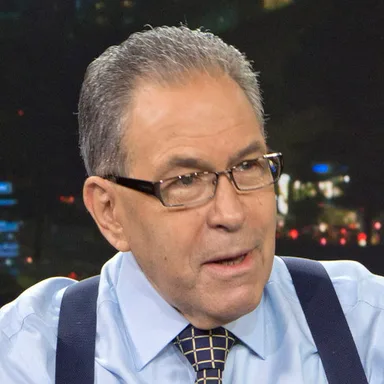
Michael Stoler Real Estate Expert
This week's guest: Benjamin Blumenthal Founder & Principal Broker Noah & Co.
Transcript
Automated transcript · uncorrectedGood morning. This is Michael Still for the Stolen real Estate Report on the Cat’s Roundtable this morning. I had a young, dynamic real estate broker who founded his own business, I believe at the age of twenty seven, and he’s been in business basically since he’s twenty one. In the real estate business, I have Ben Blumaho, who is the
CEO and founder of No real Estate. Thank you for being here.
Thanks, it’s a pleasure, So let’s talk about it.
How’d you decide to get involved with real estate? He graduated Yeshiva University.
So my foray into real estate started when I was a young kid. We’d come into the city on Sundays with my parents and my neck was always craned upwards, and just the energy and excitement of the city and the buildings and the stories and the characters was always something that gripped me. It was very exciting for me,
and I always loved to hustle. I was always selling the chocolate bars when I was in elementary school and very entrepreneurial. And what I saw on brokerage was an opportunity to marry a love for sales and real estate and brokerage, you know, really as any broker will tell you as a low barrier entry for better or for worse,
But it’s really up to you to make your own luck, and there’s no limits as to what you can accomplish if you’re willing to work hard and stay focused. And that was something that really drew me at a school had gone down the path on more formal investment, banking positions and whatnot, and just didn’t like the rigidity and the.
Hierarchy that existed there.
So I found brokerage to be a really compelling opportunity out of school.
Now, no real estate specializes in properties in Midtown, Grand Central, sometimes the Plaza district, maybe going down to fourteenth Street. How come you specialize in those markets specifically?
So, as Bob Nacle famously says, you know, we’re in the information business, and when you’re a broker, there needs to be a compounding factor to your work every day. And what I found a few years into my career is that the more I would specialize, the better my information would be, the better my angle would be. And
what we decided was we were going to take a specialty for representing tenants only in Midtown going down to fourteenth twenty third Street up to fifty seventh Street, and just the information that we were able to track was much more current, much more relevant.
And we also had a size of prospects.
You know, our tenants, we only have about ten to fifteen thousand people that we’re trying to touch a couple times a year to find out where they’re at. So the market coverage is much more manageable on the one hand for the prospecting and business development, and in terms of execution and being a market authority and that sort
of thing, you draw a much better compound value from your activities on a daily basis if you have a clear specialty. I mean, we can tell you know within the first thirty seconds if this is a deal for us or not.
Okay. With regard to the changes in the Grand Central neighborhood, how important has the Long Island Railroad coming to Grand Central had an effect on tenants.
It’s been a game changer.
It’s opened up a new market for people who were really married to the Penn Plaza district. It’s posed some challenges for Penn Plaza, which has always been you know, very heavily populated by people coming in from Long Island.
Grand Central now being an option for those people has really been a challenge for pen Plaza. It’s been a plus for Grand Central, but I think zooming out, this redevelopment and the rezoning of Grand Central has given a lot of landlord’s pause as to their future on some of those buildings there, A lot of them are thinking
about putting in demolition clauses or redevelopment clauses and really thinking about the highest and best use for their property for the next ten, twenty or thirty years with the air rights that are available and what they can do to redevelop it. So let’s put some buildings in limbo buildings who may have been struggling for other reasons as well.
Now are these AB or C buildings you know.
Look, it’s mostly the B buildings that are probably less than three hundred or four hundred thousand square feet. I mean, those are the prime candidates. But some of the A buildings are very challenged right now who are looking for a path forward that they have to reinvent their buildings, you know, redevelop them in some way, or if there’s
enough juice to take them down and rebuild something similar to what XR is doing on forty second Street to what some properts is doing at the old MTA headquarters or what you know, JP Morgan and Sagreen have done.
What do you think of the possibility of the West Side in the Hudson Yards neighborhood.
So, I think it’s been a resounding success, you know. I think the lease up there has been very successful. It was very quick, and there’s been tremendous demand for new quality product in Manhattan. And I think that’s proven that there’s really a deep demand willing to pay top dollar for new product, whether it’s in Hudson Yards, Park
Avenue or forty second Street. But that’s really what the market wants right now. The challenge with Hudson Yards. But what many people would have liked to see is some of that momentum and energy spill over into some of the neighboring blocks there, talking about you know, eighth, ninth, tenth Avenue. I don’t think that that momentum has spilled
over enough to support those neighborhoods in struggle.
Do you believe that there are enough amenities in the neighborhood to take care of the people who are working and living in the neighborhood.
I think it remains to be seen, you know, I think right now there are some challenges going up and down eighth, ninth and tenth Avenue. Police presence has to be strong, and the Mayor’s got to be, you know, vigilant about making sure that the quality of life is not diminished in those areas inside the complex of Hudson Yards.
I think it’s a it’s very pleasant, but I think you know, once you go block south or north of it, you know you got to be careful.
Okay with regard to the grand central neighbor But where is the best opportunity for a tenant to get a low rent, good concession, a good, good package in this market?
You know, I think it’s a similar question to where’s the best place to get a suit? You know, it depends what someone’s looking for, what kind of size they are, what kind of attention they need. But each each tenant’s got their own requirements. I think, you know, big institutional level tenants can see opportunities and buildings that are at
an inflection point right now with with their future that may need to redevelop themselves. So you could probably negotiate for some great amenities, some great upgrades in the building. I think boutique tenants have a great pick of buildings that have presented themselves as great boutique options with divided floors or maybe some amenities that wouldn’t necessarily be available
to smaller tents, and if you can fit into a secondhand, custom made suit, you know, a sub lease can also be a great option sometimes for tenants who may be dealing with a company that’s just looking to get the space off their books and really take whatever write downs necessary for the first person that comes to the door.
What do you think of the conversions of these office buildings into residential office residential rentals?
So I think for you know, the the initial talk about it, I think was really like a stall tactic for people to buy some time on you know, maybe some options that they had. But I think what’s become clear is that very few buildings fit the bill for actually being convertible in an economical way. You know, the
ones that have have been taken down. You know, Silverstein and has done a couple of those Downtown along with the Rudens and the Garrals are working on similar projects. I just don’t think a lot of the projects are necessarily economical, Yet the buildings are not trading for cheap enough for their highest and best use to be residential
after it’s all said and done with all the money that needs to go into them.
So if I’m a small tenant, what type of deal can I get a couple of months concession? What kind of build out and so on?
Yeah, so I mean depends on the building. Each building is in a different place. So if you’re in a building that has more vacancy, obviously the concessions would be greater. And if the landlord’s in a position to actually transact, many landlords right now who have bought their buildings within let’s say the last ten years, are a little bit stuck.
This is a very capital intensive business.
It requires a lot of capital to make deals many times, and don’t necessarily have that capital capacity to transact. You go into the garment district, you could do deals around thirty dollars a foot with maybe a month free per year.
With a new installation, you move up to Grand Central, you can talk about value space on a direct basis, maybe fifty five dollars all the way up to seventy bucks a foot for quality space so it really depends on what market you’re in and what you’re looking for and what you need and what you can live with.
What about nonprofit searching for space?
So we’ve done actually a big deal for a nonprofit. What we’ve seen a lot of the larger requirements in nonprofit have a facility use married to it. It’s not necessarily straight office. A lot of the nonprofits that we’ve been speaking to probably lagged somewhat in terms of return to the office with their employees. But we recently finished
up a forty dollars forty thousand square foot nonprofit deal that’s partially clinical use as well as office use.
Okay, with regard to the return to office, what percentage of people would you say are back in the office?
It depends who, you know, It depends whose agenda is being pushed. I think, you know, the numbers are really dependent on what your reference point is. You know. I think a lot of the Castle data has a lot of people have complaints about the Castle data. What are you comparing that to or you know, what were the
pre COVID numbers on a daily basis? I think it really it really varies. It’s hard to say, but whatever you’re measuring. I think there’s been an up an increase probably since the beginning of twenty twenty two, whatever objective measure you’re using to measure that, I think there’s probably been a steady increase in most accounts.
And you would say today probably people are working at least four days a week in the office.
I’m in the office five days a week.
I see less people in on Friday, but you know, I think between a lot of people have gone from three to four. I think there’s probably more people working four days a week now than any time since I guess COVID.
Okay, in conclusion, what do you expect for twenty twenty four in the office leasing world?
So I think we’re starting to see price discovery. Price discovery on leasing is probably starting to start about a year a year and a half ago, as lenders and landlords start to digest this, I think, and interest rates have kind of gone up. I know people have said that they’re going to start to freeze or come down
a little bit, but I think we’re going to start to see price discovery on asset values.
We’ve already had price discovery on.
Leasing in many cases, and the next step is really price discovery on asset values, which is going to ultimately start forcing lenders and owners to really start making some difficult decisions in some cases about the future of their assets and what they’re planning to do.
I’d like to thank Ben Bloomethal for being here and I see you next week.
My pleasure. Thank you,
Sunday, January 14, 2024
Governor Hochul state of state speech A+. Calls for housing.
David Paterson Former Governor of New York

Pairs with teachers' union to lessen the effect of congestion pricing.
Vito Fossella Staten Island Borough President

The City has budgeting problems, largely due to migrants.
Nicole Gelinas Manhattan Institute Senior Fellow and Columnist

Just returned from the Southern border. Eye witness.
Kat Cammack U.S. Representative from Florida



80 days till total eclipse. Peregrine moon mission scrubbed.
Steve Kates Space and astronomy broadcaster (Dr. Sky)

Michael Stoler
The Stoler Report with Michael Stoler: David Schechtman
Michael Stoler Real Estate Expert
The Stoler Report with Michael Stoler: Eli Weiss and Andrew Albstein
Michael Stoler Real Estate Expert
The Stoler Report with Michael Stoler: Eli Weiss and Andrew Albstein
Michael Stoler Real Estate Expert
