



Michael Stoler Real Estate Expert
This week's guest: Matthew Dzbanek, Senior Director of Capital Services, Ariel Property Advisors
Transcript
Automated transcript · uncorrectedGood morning. This is Mike Stolen for the Stolar Real Estate Report. What’s happening in the financing of real estate today? It’s money available at what rates? What kind of deals? I don’t know the answers. So today I brought in Matt to Sibonic, who is the head of capital services at Arial Property Advisors. Thanks for coming, Thanks for having me.
So what’s happening? Is there money for real estate?
So there is, It’s a lot tougher, there’s a lot more questions being asked, there’s more diligence that we need to get through. But we had a statistically a pretty good year last year in terms of closings. You know, we’re seeing a lot of transactions go through, but there’s still plenty of deals that are having trouble. And I
would say buy and large most of the deals that are having trouble aren’t they is capital available issue. It’s a is there enough capital to take out their existing debt or is on an acquisition? Is there you know you’re getting the leverage that you’re looking for. That’s pretty much been our biggest issue in the market. It but
we’ve closed ground leases, heavy construction, ground up construction, all with banks, So we’re still seeing activity in that market.
It’s really deal by deal.
We’re also seeing rates with three percent now or six percent, So how are we taking care of those?
Honestly six percent out of minimum, you know, we’re getting quotes above seven percent on certain deals. That’s been one of the biggest challenges. You know, people who took seventy five percent leverage at three percent money rents have not increased enough to outpace increase in rates, So we’ve been seeing that been a real struggle. Some of it’s bring
people bringing money to the table. Some of it’s been the extend to pretend. That’s been very popular for the past eighteen months. I think that’s going to become the name of the game. I think twenty twenty five is gonna be a big shake up here for that.
What about money for condominium instruction and new rental apartments.
If anyone’s building a new rental building these days, there’s plenty of money for that. Honestly, even in the condo space. I think we did more condo construction loans last year than we have any year prior. We’re seeing, as you know, as we’re hearing from other places that there’s a lot of demand for apartments. Rents are going through the roof,
and honestly, we’re deals that are now being sold that we financed eighteen twenty four months ago. The apartments are being sold well above where we underwrote them. You know, they’re seeing rent sales prices going through the roof, and there’s a line off the door of people looking to buy these things. And we’re seeing a lot of people
who are buying them all cash, no finance and contingencies. They just desperately need a place to go.
Now, where are these people from? They from New York or they’re out of town? Is what’s happening in that I.
Would say it’s a lot of local New Yorkers. There’s definitely some out of towners coming in. But I think with the lack of supply of housing in the suburban markets, these people can’t move out, and for a little bit more, they can now buy a larger apartment in the city with lower carrying costs and able to maintain and live
a city life that they’re looking for. We’re seeing a lot of people looking to stay. Anecdotally, I have a number of friends who bought condos because the pricing on housing in the suburbs for an hour commute each way. Right, Once you factor that in, it just doesn’t make sense anymore.
The suburbs are not a discount to the city like it used to be, and the city is a very desirable place to be.
So I think we’re seeing real demand. I think you’re going to see a.
Lot of condo construction happen over the next twelve, eighteen twenty four months.
What are you going to see with regard to congestion pricing.
That’s a good question. We’re actually having that debate in the office earlier today. The truth is that to me, I think where this could potentially hurt are the firefighters, the doctors, the police officers who all work south of sixtieth Street, who drive to work, who now have to pay nine dollars a day every time they come into
the city. Right, they’re already living on a tight budget. It’s going to hurt those people. The people, right, the people who have to be here will be here, But I think it could hurt potentially some services. I also think you’re going to see real, real parking issues upper East, Upper West Harlem, because everyone’s going to drive in, try
and park on sixtieth Street or above. They’re all gonna be fighting for the same ten spaces.
It’s going to be a good time if you’re a garage owner.
Yeah, I think you’re gonna see real increase in value in those garages. But with the new City of Yes, right, you don’t have to build those garages anymore. So I think there’s gonna be that interesting interplay.
So explain the City of Yes and it’s effect on real estate.
So we’re sort of in the beginning of it. We have a lot of clients who have put projects on hold because of City of Yes, because I think they could take advantage of it. I think a lot of people are still working through some of the nuances see how it impacts it. But we’re seeing these these opportunities
where you know, something was a low faar and got a bit of a bump, or they don’t have to build the parking anymore, or they’re getting incentives to build a little bit more, and now it makes sense for them to increase their density.
And I think with the exception that if it’s over one hundred units, you have to pay a union scale.
Yeah, so I think you’re gonna see it’s gonna be that sub one hundred units. I mean, I’ve heard of someone on the upper eat side who’s essentially taking a site that they’re building. They’re gonna build one hundred and eighty and get divide into two essentially ninety unit projects.
They’re gonna have a little bit higher loss factor right two sets of staff, but it’ll save them on the Union side, and I think they’re really looking to avoid that.
So where do you think the greatest opportunity is for a buyer today, with regard to multifamily, with regard to retail, with regard to hospitality.
So I think hospitality on the non union side is very attractive. I think with the restriction on Airbnbs, and with the fact that a lot of these hotel units were taking offline for other uses, you’re going to see a huge demand.
I don’t. I know that they say the statistically.
Numbers were close to the amount of tourists that we used to have, but as someone who lives in the city, it doesn’t feel that way. It feels like there’s still a lot more tourists that can come into the city with a lot less hotel units, and New York was already one of the most under hoteled markets in the
country and potentially in the world for years prior to that. I think we’re going to be back to that, and I think you’re going to see and I think you’re going to see a real demand and increase in value for those hotels. I also think if you can find new or newer construction product that is generally free market,
there’s going to be a big value pop in there because you can charge a lot higher rents than used to even three or four years ago. I mean we’re hearing I know people who are getting over one hundred dollars a foot in Williamsburg, in Hell’s Kitchen, and some of these markets where pre COVID they were getting maybe
sixty bucks a foot on average.
I’ve heard as high as one hundred and thirty thousands a foot certain brand new buildings.
Yeah, so I think you’re going to see that value skyrocket. I think there we’re in a real price discovery situation. I don’t think a lot of these properties are being priced appropriately, and I think those who combine now at what many people consider a reasonable price are going to do very well in the future.
Let’s talk about note on node financing. We haven’t discussed it on the show much sure, So.
It’s become really in vogue right a lot of people. There’s been a lack of notes being sold, but the notes that are out there, there’s a lot of capital behind that. A lot of people are finding that there are some real opportunities. I think the biggest issue that we’ve been seeing is just the foreclosure process in New York, right,
it could take three to four years, so a lot of these banks are trying to work out as much as possible before going to the note sale process. But there’s been a number of notes sold specifically in the hotel and office market over the past couple of years.
I think you’re going to see it on some multi family assets. I don’t think it’s going to be as popular this time around as it was sort of in previous recessions, but I think you’re going to see it, and I think there’s going to be a lot of capital for it. A lot of our lenders are now
becoming note on note guys, are becoming mes and pref guys right. They’re expanding their offerings when they didn’t have to do that three four years ago.
What about the private equity, I.
Think there’s a lot of private equity in the space.
I think a lot of those guys are entering that space and saying, hey, I can get eight, nine, ten percent return on my money plus a few points. You know, it’s a better return for me than being on the equity side. I would say we have more debt providers and private equity providers now than we do equity providers.
Guys who are looking to actually invest directly into now.
I know that you’re also looking for equity for clients. How difficult is it to find equity?
So I’d say if you’re in the larger institutional space, there are still some players out there, But if you’re sort of talking sub twenty million dollar equity check, it’s it’s just very difficult. A lot of those equity players have their own sets of issues on their books. They’re still working through a lot of their own problems. They’re
not ready to put out new capital. I think once a lot of these deals have been moved either refinanced, sold and moved off the books, you’re going to see that come back because they’re going to start having to put money out.
But right now, it’s tough.
A lot of our equity providers are just asking a hundred questions and then finding a reason to pass on things. And we’ve been seeing that trend for the past, you know, two three years.
So where do you see the opportunities.
I think the construction game, I think there’s gonna be a lot of opportunities. I think the non union hotels, there’s gonna be a lot of opportunities. We’ve been seeing a lot of people in the industrial space, especially the value add industrial space. There’s still a real demand for people in that area. I think in the right location,
retail has been very strong, but in places like Midtown five I have been struggling a little bit. But I really think if you’re in a good neighborhood, there’s a lot of upside. I think things are being mispriced and I think there’s a lot of upside for the right assets.
So if I, as I used to say on the TV show, I had my crystal apple and I shine it, and I think it’s going to be shinier this year. And we look forward to idink the thank Thank Vin Matt for being here today and I’ll see you next week.
Thanks so much for having me
Sunday, January 26, 2025
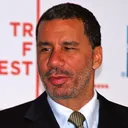
Resignations from the ranks of the Mayor's staff.
David Paterson Former Governor of New York

The Governor's race in New Jersey is he
Eric Shuffler Founding Partner, River Crossing Strategy Group


Who has been running the White House past couple of months?
Michael Goodwin New York Post Columnist

Will the cease-fire hold in Israel?
Judge Richard Weinberg Retired New York City Criminal Court Judge; 77 WABC Host

Congestion pricing bills hit… widespread resistance
Vito Fossella Staten Island Borough President

Report from Davos Switzerland.
Charles Gasparino Fox Business Senior Correspondent and Columnist


The Chinese are gaining on us in naval superiority.
Gordon Chang China Analyst & Author

The border was the main focus of the last election.
Jeh Johnson Former U.S. Secretary of Homeland Security

Nominee Hegseth will be good for the DOD.
Tommy Tuberville U.S. Senator from Alabama; nominee for Governor

Star ship 7 launch details and what went wrong with Star Ship 33
Steve Kates Space and astronomy broadcaster (Dr. Sky)

Michael Stoler
The Stoler Report with Michael Stoler: Eli Weiss and Andrew Albstein
Michael Stoler Real Estate Expert
The Stoler Report with Michael Stoler: Eli Weiss and Andrew Albstein
Michael Stoler Real Estate Expert
The Stoler Report with Michael Stoler: Robin Schneiderman
Michael Stoler Real Estate Expert
