


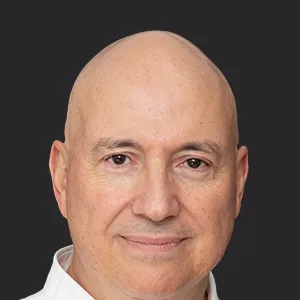
Dr. Peter Michalos WABC Medical Expert
Get ready for summer. Healthy tips to age slower.
Transcript
Automated transcript · uncorrectedWhat is today Memorial Day is doctor Peter Michelos and on motto live long and prosper. So if we have prospered, how do we live longer, Doctor Peter Michalos, how do we live longer?
Well, part of living longer is trying to stay healthy, and we’re about to enter the summer season where everything is full of sunshine, and we’re going to talk about some of the ways to keep healthy. First of all, I want to start off by saying we all have three ages, and one is our chronological age, which is
how many times we went around the sun, and that’s our age. And then our mental age is how young we feel. And our biological age, which is the most important, is basically the condition of our bodies. And when we look at somebody to determine whether we think they’re young or old, the places we look at first are the skin,
and that particularly the face and the top of our hands, because those are giveaways for aging. The largest organ in the body is the skin. And I just had the opportunity to interview the dermatologists of the Stars, leading dermatologist Kenneth Mark discussing on how appearance is extremely important to people.
We look in the mirror every day, and when we talk to people, we look at them might eye and we look at the face. And protecting your face from the sun is extremely important, and wearing a large hat with a brim is very important, especially with young kids and small children are on the beach. We now know
that ultraviolet radiation is cumulative over a lifetime, so it builds up and it adds, so the use of sunscreens, preferably mineral based that are non toxic, are better with a minimum SPF of thirty and that just means how long it protects you from the sun. And they even have lines of clothes wear that you can put on kids,
and I personally wear one myself if I’m going to go into the water that are called SPF shirts, and they actually can block the UV radiation because even though you’re wearing a light shirt, sometimes the UVA, which is called UVA and UV be those are the frequencies that can cause skin cancer like melanoma, which can actually kill
you because it spreads to other parts of the body. Then there’s other skin cancers like squay as cell and basal cell, and those things have to be also checked with a total body check, which is a good thing to start your summer with. And this summer, in addition, try to stay in the shade when you can, use
umbrellas when you can. And also UV light is associated with cataracts and macula degeneration, so wearing wrap around sunglasses, like my good friend doctor Stanley Chang Columbia University, when the top red and a specialist in the world always says, wear those UV sunglasses in the summer and protect the macula that’s the center of your vision in the back
of the eye. And the hats are important because the face, neck, nose, ears those are commonplaces where people can end up with skin cancer. And for the summer, try to avoid excess alcohol, try to sleep, eat your fruits, vegetables, your blueberries, melons, your peaches. Drink lots of water because you want to keep your blood flowing thin like skim milk, because when
you’re dehydrated, your blood is thick like half and half, and that’s why people get more heart attacks and strokes when they’re out in the heat of the summer. So staying hydrated is extremely important. And those are some of the things you can do. And if you’re going to travel aboard, always get travel insurance because American Health Insurance,
our regular insurance doesn’t cover you in other countries. So getting a fifty thousand dollars medical policy and medical evacuation if you have to be brought back into the country. These are all things that you should do if you’re traveling.
If you need some sunshine because you feel you need sunshine, and you go into the sun because you want your vitamin D. How many minutes is I used to think it was like twenty minute to.
It. Really it’s really, you’re absolutely right, But it’s the time of the day. Also, you want to avoid the sun between noon and three that’s when the sun is that it’s peak power and maximum amount of UV is out there. So if you go with you know, for twenty minutes half an hour, and you go at ten
o’clock in the morning, hey, that’s that’s okay. And obviously you have to know your skin type. If you come from you know, the Mediterranean part of the world and you have olive skin, you’re less likely to burn if you have come from Irish descent or German descent or English descent. Those people when they evolved for the last
thirty thousand years, they weren’t exposed to the sun, so they tend to burn and tend to get more skin cancers. So you have to look at the time of the day is very important, but really more than twenty minutes is not. You know, you don’t really need that, and you got to you have to cover up, and you
will look younger, and your face will look younger, and you can see the people who have the wrinkled, leathery faces who just stayed in the beach and burn the sun. It feels good. It does feel good, and when you’re young, you don’t care, but as you get older, you start caring more and more. And I always put some sunscreen
on the top of my hands every day, and that’s why people say, how come your hands don’t have any marks or spots, because you just have to. It’s maintenance. Twenty percent of our destinies are genes. Eighty percent is how we take care of our bodies.
Understood. Anything else you want to tell our listeners this morning.
Well, the other thing I want to talk about is I was happy to see that gain of function research was defunded and people are not going to start playing with these viruses and altering them. And I think that putting money into surveillance around the world to know what’s going on and to be prepared for the next pandemic
and be developing great anti viral agents, and that we shouldn’t be playing around and altering and making viruses different than they are from nature so someone doesn’t end up closing some real disaster by making a virus that’s resistant to all vaccines and anti virals. So I was happy to see that the research for a gain of function
and altering viruses was defunded.
I’m just doctor Peter me Hello. Thank you for your wisdom, thank you for your tips for our listeners, and we’ll catch up again.
Wilson, thanks for always getting the truth out on the Cats round Table.
Sunday, May 26, 2024



Memorial Day.. much to remember and thankful for.
Bob Unanue Former CEO of Goya Foods

Charter schools are a huge supplement to public schools.
George Pataki Former Governor of New York

The primary goal, shorten the wait list for a kidney.
National Kidney Foundation CEO Kevin Longino

Legislation to ensure AM radio emergencies.
Gus Bilirakis U.S. Representative from Florida



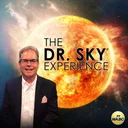
Russian anti-satellite. Danger to the world.
Steve Kates Space and astronomy broadcaster (Dr. Sky)
Dr. Peter Michalos

Fighting Cancer and Aging With the Latest Medical Advances
Dr. Peter Michalos WABC Medical Expert
Advances in Lung Cancer Detection and Personalized Treatment
Dr. Peter Michalos WABC Medical Expert
Healthy Eating, Stronger Immunity and the Science of Living Longer
Dr. Peter Michalos WABC Medical Expert
Limiting Sugar and Choosing Whole Foods to Support Healthy Aging
Dr. Peter Michalos WABC Medical Expert
Protect Your Skin From UV Radiation and Reduce the Risk of Skin Cancer
Dr. Peter Michalos WABC Medical Expert
