Transcript
Automated transcript · uncorrectedAnd joining us now here on Katz and Cosby to talk about the mental health of this individual, but also what we need to do with individuals like this who are all over New York City and really all over America.
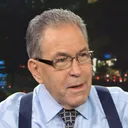
Is Stephen Eid. He is a senior fellow at the Manhattan Institute. Stephen, what do we do not only obviously to help somebody like this, but also to help society?
Yeah. I think the last time I was on with you guys, it was when Mayor Adams was rolling out his Involuntary Treatment Plan sometime last year, as you recall, and that was an effort to you know, make more use of psychiatric hospitals, to stabilize people and to help society.
I think what we learned from this tragedy is that, first of all, that plan is not getting quite far and see boys in subway. But secondly, we still need something like that if we’re going to do something about these tragedies.
You know, and they’re happening all too often. John, we see him every day, I mean we see him on the street.
This is John Kassmanti’s and I have said that twenty years ago we used to have twenty eight thousand patients and mental health hospitals, and then the politicians threw them out, and now I think there’s only like three thousand in mental health hospitals. So this is a contingent liability. Who have to blame the politicians that threw them out of
the mental health hospitals and it made them homeless? Or do you blame who do you want to blame? I mean, I don’t know anymore.
Well, but yeah, this is a failure of government systems. I think we understand, you know, whether you’re on the right or the left, that people with severe mental disabilities, whose families cannot care for them, that’s going to have to be the government who steps in there. I don’t think anybody disagrees with that. So really we need to
talk about what are the politicians doing?
Yeah, and it doesn’t look like they’re doing anything, you know. The one thing I think about too in the middle of all this ka of course, New York City Council member, remember when there was that horrible case of the guy who had a mental history, clearly had illnesses at priors, he stabbed the fd and Y woman just out of
the blue, and Tiffany Kaban basically said, when you see somebody with mental illness, approach them, ask them if they went to high school with you, asked them, would they like a drink? I don’t think you want to have contact.
I mean, that’s crazy through the tulips, right.
I mean, these incidents are so fat and it’s hard to keep track of all of them. But here’s what’s different about this one is the way that some politicians are trying to make this about rape, Okay, that I find very disturbing. If we keep the focus on untreated serious mental illness, I mean, it’s a faint help, but
maybe we can talk about reforms in that front. If this things fire, of all, you can forget about mental help.
Again, you know. And and Stephen too also, we do need to obviously try to help these people. Some of them are crying out, but some of them it’s like not even crying out.
There any hell no sign. I agree one hundred and ten percent. I think the politicians are more guilty than anybody because they’re the ones that close down to save money. They are the ones that closed down these hospitals to save money and made them homeless. So they take they changed the characterization of these people. Yes, and the other
thing we have all veterans, and the federal government has to take care of our veterans because they threw them in the streets too, and they became homeless.
And you know what, I also think, John, I also think family members need to do more because so many times we hear these stories and family members say, oh, I knew he had a mental illness or I knew she had a mental illness, and don’t do anything.
Craim to go around a lot of places, rita, and I don’t know what to do anymore. But it comes back to what happened in the subways. I mean, these people are using the subways as their hotels.
Yeah, and police can’t be everywhere. That’s the thing I think about. I haven’t been on the subway that much. Last time I was on, I like great after I got out.
If I went on a subway, I’d take a Rocky Colorvino bat with me, like I’ve always said. And somebody bothers me, I’d hit him over the head.
Well, if I came, i’d bring you.
Right. I mean, we do. Mayor. The mayor has been focused on this since he took off, but he’s been talking about this problem in the way that. I don’t really think he saw it love talking about it was more just an uncomfortable subject for him. But the progress and so they made, they’re making an effort more involuntary treatment.
They’re trying to at least talk about investing more in psych bed but they’re gonna need a lot more help from the state, and he’s gonna need a lot more be a lot more effective in fighting off the progressive lift and trying to hijack this narrative.
We all agree it’s upset of politicians, the city, the city politicians, city Council, the state Assembly, the governor, and the state the Senate to care for these people. And you know, don’t say that you care for the poor and you’re for the poor if you’re not taking care of our homeless in the streets.
Absolutely, and stop the blame game too. One thousand percent. Well, Steven, I thank you so much for being with us from the Manhattan Institute. A very important topic. We appreciate you being here on Kats and Cosby.
It was a pleasure as always.
Thank you, Steven. I hope we solve the problem someday.
Yeah boy, thank you Steven very much for making the time. Thank you thank you, bybye,
Sunday, May 7, 2023
Entire Assembly up for election with new district maps.
Bob Hugin Former Chairman, New Jersey Republican Party
Former governors discuss the state of the State.
Former NY Governors David Paterson & Andrew Cuomo
"No common sense in NYC politics"
John Chachas Investment Banker, Founder of Methuselah Advisors

Alternative to President Biden's nomination
Robert F. Kennedy Jr. U.S. Secretary of Health and Human Services
Battling the Fentynal scourge killing Americans.
DEA Special Agent in Charge Frank Tarantino

Water detected on a distant exoplanet.
Steve Kates Space and astronomy broadcaster (Dr. Sky)