


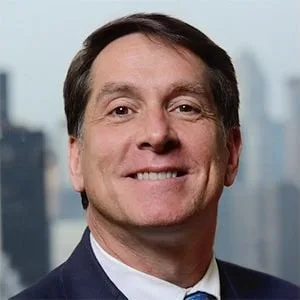
John Chachas Investment Banker, Founder of Methuselah Advisors
"No common sense in NYC politics"
Transcript
Automated transcript · uncorrectedWhat is today is John chanchis a good friend, a media executive and runs his own media company. At one time, he ran the media for Lazard Fair. Tell us the name of your company that you run now.
John, Our advisory firm is called Methusela Advisors, and our broadcast company is called in Broadcasting Understood.
And there’s so many problems in broadcasting that we’re going to talk about. And there’s also problems in our city that we both love and live in. Where do you want to start.
Let’s start with the city that we love and live in. It seems like every day we wake up, there’s another bad headline.
Well, there’s four hundred and eighty four thousand people have left the city there were and the people that have stayed were hoping that the budget in Albany will come out for in common sense, and it seems like common sense did not necessarily prevail.
But say there’s no common sense in New York City politics and New York State politics for that matter. I think it’s quite remarkable. You saw the article a couple of days ago about state of Illinois having the same kind of exodus. We have, the post pandemic result of wealthy people and businesses. We’re taught that they are mobile
and they are leaving. And the flight out of for lack of a better description, Blue States is remarkable. And the growth in places like Texas and Florida and Utah and places that function is off the chart. And New York State, you know, we barely have seen the data for twenty twenty one. We’re now going to pretty soon
see the data for twenty twenty two. And the budget gap that’s going to happen because the leadership in this state can’t get their head wrapped around this is going to be astonishing, truly astonishing.
And you know what we worry and you know, you know what the other thing that we’re worried about is keeping on a citizens safe. All of a sudden, there’s a big controversy in New York where one of our marines that was uh UH that was trained to protect Americans and to protect America uh I was protecting some
subway writers and now they want to they want to UH.
Indict him for murder. I mean, what’s.
It’s just crazy. It’s just crazy. I mean, you know, the gentleman was on a subway where an erratic human was throwing things and threatening people, and he subdued him and unfortunately that person, that person died in the process.
But the idea that uh, you know, someone defending New Yorkers is now indicted. It’s just part of a whole culture of victimhood, culture that’s consumed our city and consumed our media and consumed our politicians. All they do is spend their time focused on things like that, not the fact that the city’s less safe, dirtier, grimier, uh at
a place that’s difficult to do business. Uh. And what we’re going to see, John, I think this is the precursor. Honestly, I think it’s a precursor to to American bankruptcies in cities. I think New York could be the first. It could be back to the era when when the city was on the brink and when they call up to Albany
looking for money to bail it out of it of its financial problems. The rest of the state of New York is gonna say forget it. So I think we are headed to a period where this kind of lunacy is going to start showing up in bankruptcies in American cities.
Well, the problem being, and you know, in our five o’clock show. On weekdays, we play the Exodus music. If the if the people are not going to be safe in New York and they’re going to keep raising taxes and and they banned the banning cigarette smoke.
But meanwhile, you walk out of our.
Office building that we mutually on the same building, and you can get high just on marijuana.
I mean, on what happens.
I mean the exitdus continues, Who’s going to pay the taxes?
Well, and I own a business in San Francisco where every day our storefront manager has to go out front and sweep up the needles because the city supervisors of the City of San Francisco think it’s a great idea to create human misery by inviting people to shoot up in public, you know, and to feed their drug addictions.
I mean, this kind of progressive policy lunacy is showing up in Seattle, Portland, Chicago, New York. It’s essentially large urban environments run by people who basically have the philosophy that they can just promote these kinds of these kinds of urban policies and there’s no come up in for it. Well, the problem is going to be in places like New
York at some point, and the pandemic taught people that they’re mobile, that they can move with their money and their business. You’re going to wake up and see that those who are the producers in our society get up and take their chips and leave. And what you’re going to be left with is a city that’s in a spiral.
That’s you know, and and I had to I have to say it. I’m sorry. I come back to media. The media is somewhat complicit in this. The media used to sit above the sewage.
This is all when you.
Talk about the media, you talk about the big corporations and now own most of the media in the United States.
Is that what you’re talking about.
That’s exactly what I’m talking about.
That you you that you helped make those some of those media companies when you were Liza I. I.
I sure did, and I and I have supported them and financed them for years and and helped them in their endeavors. But there they have lost their way in terms of remembering their role as enterprise journalists. And I agree, I agree, no longer are no longer in business criticizing people equally. They have joined the circus on one side
of the circuits or the other. And it’s a really dangerous thing.
Yes, I understand that.
So you know we’re in for a real wild ride. I think the rest of twenty twenty three is going to be a very difficult time for New York. Mayor Adams can complain all he wants about the thousands of people being bussed here from Texas. I mean he and he and others like him have called New York the
great sanctuary city. Now that these people are being brought here, they of course don’t want them here. And the wealthy and producers in our in our city are departing, and the media better start to report on.
Well, it’s departing. It’s departing.
The Blue cities, is departing the Blue States into states where they’re not taxed as much, and they feel safe. I just feel safe. They feel safe in Texas, they feel safe in Tennessee, they feel safe in South Carolina, they feel safe in Florida.
Yeah, there are lots of places where you can run your business, have your children go to school, and not feel like you’re under continent assault and criticism. I mean sort of this sort of the tone of the city of our city is the criticism of people that are productive, pay taxes and employ people. And you know, I don’t
know what the statisica is. I’d love for one of your people look this up. But someone told me during the Bloomberg administration something like fourteen hundred tax returns in the City of New York paid fifty five percent of all of the income tax fourteen hundred tax returns. So if you lose five of those or ten of those,
how many hundreds of millions of dollars of tax revenue do you lose? Which pay for all of the programs and city employees and pension benefits and so forth that are unsustainable. That’s where we’re headed. And the longer that Kathy Hockel and you know, Eric Adams and Cortezes and all these people talk about this stuff without facing that fact,
the city is going to get in deeper, deeper trouble, deeper trouble. No.
I see it coming, by the way, to four hundred eighty four thousand New Yorkers that are left already in New York the last twenty four months, the average salary was like one hundred and forty eight thousand dollars. And if those people are not around to pay the money.
Who’s gonna pay?
That’s it? Well, and those are people that don’t just pay taxes. They support restaurants, and they support retail establishments and professional service organizations.
Yes, and they support ubers, they support taxis, they support restaurants, and they’re not hinging around.
And if you if you go up and down New York, there’s a lot of empty stores.
Now, next question, you’re also in the media. You’re also in the are your other business the AM radio broad.
Chech podcast business?
Well Ford, Mercedes General Motors wants to take AM radios out of the cars. When I was in Las Vega, I guess a couple of weeks ago, I met with FEMA. Ninety seven percent of the American people are covered by the Emergency Broadcasting System. Now if we take them the AM radios out of cars and the people can’t brought it,
can’t listen what happens in case of emergency? You know, with with Governor Hokel taking down gas stoves, you won’t be able to eat, you won’t be able to drive because electric cars might go off the grid. You won’t be able to drive, you won’t be able to eat, You won’t be able to listen to your radio in
the car.
What goes on It’s absurd, it’s absurd. I mean Governor Hope Will spends her time on things like eliminating you know, gas stoves from your from your from your house and removing AM radio from your car. It’s just there is something wrong with our political class to think that that’s a free radio and free television. Over the air television
are assets with the American people owned. They are broadcast spectrum that are that are in business for the public interest. There is absolutely no reason. There’s virtually no cost to a to an automobile having an AM radio in its dashboard, and as you’ve said, it provides all kinds of value and safety.
One of the reasons, one of the reasons I hear now is instead of giving you a two hundred dollars radio that goes into your dashboard, they rather charge a nine dollars and ninety nine dollars nine dollars and ninety nine cents a month every month for the rest of your life.
Right. Yeah, So so someone someone’s on the other side of that trade, you know, making your subscription fee every month. It’s crazy, and I help the American consumers complain to their automobiles and to their congressman and senators. That’s part of the part of the part of the problem is we just need a much more engaged electorate who raises
l and who fires these people. I’ve got on the record in San Francisco basically asking for the city supervisors, the mayor of San Francisco should all resign. I mean, I’m tired of trying to run a business San Francisco.
San Francisco, play the funeral watch it’s dead.
Yeah. Well, you know, I own a business that’s been operating there for one hundred and fifty five years. We still have fifty employees that kill themselves to make it a successful luxury retail business or one of the oldest names in San Francisco. And it’s becoming very very difficult to stay there. And you know, and yet you have
political figures that are doing things like taking your taking your radio out of your car. It’s just it defied logic.
It’s John Chas, give us the name of your company in San Francisco. Maybe we can buy through the internet.
Gump San Francisco, g u MPs, gums dot com. It’s great that was.
A great company, great company. Move it to Dallas. Thank you so much, Thank you so much, John Chachis, and we’ll catch up with you again, Wils.
Nice talking to you John. Bye bye.
Sunday, May 7, 2023
Entire Assembly up for election with new district maps.
Bob Hugin Former Chairman, New Jersey Republican Party
Former governors discuss the state of the State.
Former NY Governors David Paterson & Andrew Cuomo
Alternative to President Biden's nomination
Robert F. Kennedy Jr. U.S. Secretary of Health and Human Services
Battling the Fentynal scourge killing Americans.
DEA Special Agent in Charge Frank Tarantino
Water detected on a distant exoplanet.
Steve Kates Space and astronomy broadcaster (Dr. Sky)
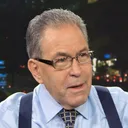
John Chachas
Evidence of society breakdown.
John Chachas Investment Banker, Founder of Methuselah Advisors
San Francisco is a lost cause of homelessness and crime.
John Chachas Investment Banker, Founder of Methuselah Advisors
San Francisco nearly shut down. Sad state. Trump will be the nominee.
John Chachas Investment Banker, Founder of Methuselah Advisors
Between crime and the mentally ill, businesses are closing all over the Country.
John Chachas Investment Banker, Founder of Methuselah Advisors
FTX made political donations in millions before bankruptcy.
John Chachas Investment Banker, Founder of Methuselah Advisors
