


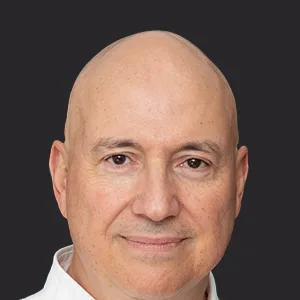
Dr. Peter Michalos WABC Medical Expert
Oral health is the most important part of our body.
Transcript
Automated transcript · uncorrectedSunday morning. Whether this is doctor Peter V. Michlos live long and prosper is the nickname we gave them, and uh, doctor Michelos, what have you discovered this week that’s gonna make us live longer?
Well, I think it’s turning out that one of the most important parts of our body is our oral health, our dental hygiene, and our gum disease. And some of the recent literature that has just come out is quite amazing.
For example, they did a study on kids with depression and they found that the kids with depression had a less diverse oral microbiome. And the microbiome is basically all the bacteria, virus, and fungi that coexists with us for many, many years, millions of years, and basically they live in our mouths. And they found that when they had a
higher level of certain bacteria one of them is called Pravatella, another one and nic Seria species, when it was higher, it’s at more depression. Then you had people who had pancreatic cancer, and they found that they had more of this one bacteria called for for animos and that was also fascinating, and it’s associated with gum disease and periodontal disease.
But what’s interesting for the future is that there are tests that now exist that you can actually get yourself. One of them is called viol and the other one Bristol, and they basically are the oral health intelligence and they can tell you which bacteria if you have too many of the cavity producing bacteria, it can give you a
report on the status of your gum health. Then they also tell you what foods you should avoid and then what foods you should eat, and they also make recommendations on certain types of mouthwashes that can be more helpful.
Because we now know that the future of oral microbiome and analyzing it is you’re going to be in the future being able to find out whether you’re at risk to certain autoimmune diseases, arthritis, liver disease, cancer, depression, and even anxiety. So it’s becoming a big, big topic that we’re going to be hearing a lot more about. In addition,
they’re even able to test the breath, and that’s the gases that come out of our breath, because bad breath is basically hydrogen sulfide that makes the breath bad. And measuring these volatile compounds. Now there are testing that is showing that they can diagnose stepsis possibly certain cancers like colon cancer, just out of the breath that comes out
of the oral microbiome. So this is a fascinating new area we’re going to be hearing a lot more about. And then another recent study. I was just talking to deleting dentists Dottor, Adam Bhar and Robert Siccarelli, and they were talking about Alzheimer’s patients they found who had gum disease.
There was the people who had more gum disease had more Alzheimer’s disease. And they think that some of those bad bacteria are getting into the bloodstream and our blood brain barrier normally protects us from a lot of things.
That’s why we have a blood brain barrier. But some of these small bacteria are penetrating the brain. And those people with poororal health who get this bacteria that actually enters the brain causes inflammation associated with memory problems and decreased cognitive function. So that’s going to be also very interesting, and it just reminds us how important it is to
get dental cleaning several times a year and taking care of our oral health.
So, doctor Peter, what we’re saying here. We talked about in the past our brain is our brain. Then we talked about near a past that the bacteria in our stomach is our second brain. Now is the bacteria in your mouth the third brain.
It’s all a continuation of what’s in the gut, and the high way of communication is called the vaguus nerve, and it’s a two way street. Just like after we eat certain foods, our brain doesn’t feel so good. We might feel tired, we might feel sleepy. Certain foods might cause us to have anxiety because that constant communication between
the brain and the gut and it’s the mouth is just a continuation of the oral microbiome. But it’s the closest to the outside world on the top part of our body. So that’s why it’s going to be easier to analyze. To measure, you’re going to go get a swab test, they’re going to mail it, and the mail
and then they’re going to come back with a report and tell you shouldn’t be eating this, this, and that because it’ll increase the bad bacteria that’s closing your cavities or whether let’s say you have a very high acidic pH in your mouth, then the bacteria that are bad that cause cavities flourish. So that’s what we’re going to
be hearing about in the future. That’s why the mouthwashes we use are very important. Like I use a whole US mouthwash as a marine based product, which is less likely to damage the good bacteria and allow the better bacteria to survive, the ones that help protect us from cavities and bad breath. And also what we eat affects
our breath too, so diet, oral hygiene and cleanings are extremely important. And they protect also from heart health because they found the same bacteria in plaque gingervitis in heart plaques in the heart when they did autopsies, So that is a direct connection oral health and cardiac health. But this is the latest with the Alzheimer’s Association too.
Now, we talked about something else earlier in the week, and that is a method that they detect the plastics in your blood system and a system to get rid of the plastics.
Yeah, that was a fascinating topic. With a pin pricked and they analyze the blood and with these basically laser almost like electron microscopes, measuring the nano and microplastics inside your blood stream, which is something relatively new because there are many sources of plastics entering. And then basically it’s like a dialysis machine with a filter and they run
your blood through it and they clean out whatever microplastics are in your blood. The problem with that is it doesn’t clean the microplastics in our tissue because they found actually on autopsies microplastics that made it through people’s brains.
Those are the nanoplastics, and when they looked at certain tumors, they also found microplastics in tumors. So we’re not designed to have plastic in our body, but it’s everywhere, from the rubber tires that get aerosolized when you tire wears, down to all the plastic containers, packaging bottles. Everywhere we have plastics, including these clothes. A lot of the clothes
that we wear are basically plastic based. That’s why I try as much as possible to use cotton for socks, for pants, and things that are more natural fibers to minimize plastics exposure.
Understood well, doctor Peter Mihillos, Live long and prosper and thank you for your update, and maybe we should do this two times a week.
Yeah no, Well, thank you for helping share this most fascinating topic and getting the truth out always on the Cats round Table.
Sunday, July 13, 2025
Mamdani has offended American-Italians.
Angelo Vivolo CUNY Trustee; Restaurateur & Philanthropist

New York City cannot become a socialist city.
Bernadette Castro Former NYS Parks Commissioner
Rallying to protect our coast in Long Island.
Bonnie Brady Executive Director, LI Commercial Fishing Assoc.

Adams or Cuomo need to drop out of the race to beat Mamdani.
David Paterson Former Governor of New York

The Department of Health cannot verify over a million people on Medicaid.
George Borrello Senator from NY

Summer Soiree supporting Life's Worc newest initiative, Worc Force.
Geraldo Rivera Journalist & Author


President Trump has done a phenomenal job securing the border.
Peter King Former U.S. Representative from New York

We have a better chance now to defend the freedom of our country.
Rick Scott U.S. Senator from Florida

There is almost an inexhaustible amount of oil and gas in Canada.
Danielle Smith


Jerome Powell has cost America billions of dollars.
Peter Navarro White House Senior Counselor for Trade & Manufacturing
Did an interstellar probe get close to our solar system?
Steve Kates Space and astronomy broadcaster (Dr. Sky)


Interviews Will Silverman, Managing Director of Eastdil Secured
Michael Stoler Real Estate Expert
Dr. Peter Michalos

Advances in Lung Cancer Detection and Personalized Treatment
Dr. Peter Michalos WABC Medical Expert
Healthy Eating, Stronger Immunity and the Science of Living Longer
Dr. Peter Michalos WABC Medical Expert
Limiting Sugar and Choosing Whole Foods to Support Healthy Aging
Dr. Peter Michalos WABC Medical Expert
Protect Your Skin From UV Radiation and Reduce the Risk of Skin Cancer
Dr. Peter Michalos WABC Medical Expert
