


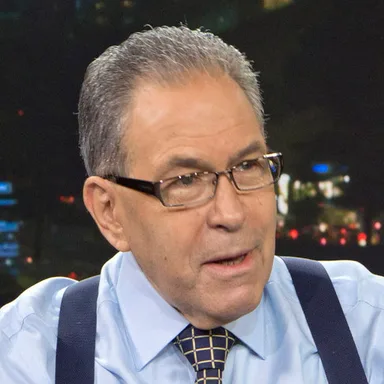
Michael Stoler Real Estate Expert
Interviews Will Silverman, Managing Director of Eastdil Secured
Transcript
Automated transcript · uncorrectedGood morning. This is Mike Stola for the Stolar Real Estate Report. As I stated last week, happy days are here again? Are they really? Happy days? Really real again? I hope so, especially when I have Will Silverman, who’s in charge of investment sales at managing director, and he’s still secure. Thanks for being here.
Thank you for having me, Michael.
So we are in happy days. Right on the investment sales business, things are selling, Things are selling. What happened like at five ninety Madison Avenue.
Right, I think things are selling. I think there is a liquid market. Five ninety Madison was the first time in several years that we had attempted to sell a north of billion dollar office building really anywhere in America, and we were pleased to find that there was a deep field. We fielded more than a dozen bids, and
I can’t comment on the Dragon’s action, but I can say that it’s been noted in the press that it’s under contract for over a billion dollars. And I can tell you that the field of bidders we had was fairly diverse, included local, and included private, and included institutional, and it included offshore. And so I think that what
we’ve now seen is is that we can get prime office done at large at large values.
So how long did it take from start to finish? Right now, it’s.
Usually a between you know, four to eight month process, and that deal was no different. I would say the bidding process was a little bit longer than it would have otherwise been thanks to thanks to Liberation Day, but other than that, it was a fairly standard process. We came out of the beginning of the year and it’ll
probably be closing this summer.
Now, who are the big players today looking to purchase properties in the metro area?
I think, well, I think groups like r XR who’s buying that property or extremely active. I think you’re also going to see increased activity from the reats, and I think you’re also seeing an increase in private activity. I mean, we sold two buildings last year to a group called Savannah who were investing on behalf of an individual out
of Greece who was buying his first office deals in New York City. And then we’re under contract selling another building to a family from South America. So I think we might look around to the United States and say, Jae, we’ve got a lot of challenges that we need to work through. But I think the rest of the world
looks at the United States and specifically looks at New York and says, this is probably the best of the available mattresses into which to stuff my cash.
Okay, with regard to properties going on, retail has been active purchases. Let’s talk a little bit about that. Well.
I think the retail phenomenon has been interesting because it started with transactions that were exclusively in the luxury sector. We had the great fortune of working with Jeff Sutton on the sales to carrying into Prada a little over a year ago. But then you also saw Uniclo sell or buy their piece on Fifth Avenue, and we also
completed a deal in which Ikea would be investig at Fifth Avenue. I think what’s interesting about the retail deals is a couple of things. The first is that if you remember the old bags they had at SIMS that said an educated consumer as our best customer.
Correct, And I’m surprised you even remember it, Yeah, absolutely, because you bomb it.
So. But I think that’s the truth, which is the retailers themselves have better information than anyone about what’s going on inside the four walls. Of their stores. So if they’re looking at this as a moment to lock down prime locations, it tells you everything you need to know about the strength of the market, because if they thought
the market wasn’t getting better, there’d be no need for them to procure these locations long term. And the fact that it’s both the luxury folks and also the mass market folks, the fact that it’s not limited to just one sector, I think is also incredibly telling.
So I think there’s.
Two ways that people try to take advantage of moments of dislocation in markets, which we’ve experienced a few over the last few years. You can either buy the stuff that’s always available for less money than you normally pay for it, and you can probably get a discount doing that, or you can pay a stronger price for something that’s
only available because of the disruption in the market. So I don’t think that anybody’s stealing anything in Manhattan. I think the prices are set to trophy real estate. But I also think they’re taking advantage of the fact that these are properties that might not otherwise be available if not for the moments of disruption we’ve seen. So it
works for everyone.
What about the conversion of office space to residential. What’s your thoughts on that and the ability to sell them.
We’ve sold a bunch. I think that the market for them is extremely strong. I think what continues to impress people is how strong the leasing is on these properties after they deliver. You’ve got a lot of buildings now in neighborhoods that didn’t used to garner premium rents north of one hundred dollars a foot, or in more layman’s terms,
let’s say more than fifty five hundred dollars a month for a one bedroom that are now getting those rents. And I think it’s two things. I think it’s number one, the amenity packages that you can deliver in these buildings because of their size, are extraordinary and are comparable to luxury hotels. And the second thing, and you know you
made the playful comment about my age, I look at younger people now and I will tell you that people in their twenties perceived this city in a way that’s very different than the way my generation does, which is that I would say, the younger you are, the flatter of the island is, and the narrower the rivers are,
meaning the little distinctions that we used to obsess over of living in this neighborhood or that neighborhood, or what it meant to live in Long Island City or Brooklyn or Jersey City. The younger someone is, the less focused they are on those distinctions, which means the rents have increased tremendously in those locations, and those happen to be
places like the Financial district where there’s a tremendous amount of conversion activity.
What what’s your thought about Lower Manhattan.
I think that we’re finally getting there in terms of it being a twenty four to seven environment, right. You’ve really got thousands and thousands of new apartment units coming, You’ve got a good retail story. I think the success of print tomp in One Wall Street becoming really a global social media phenomenon and not just a shopping phenomenon
at this point shows that you can win big in retail down there. And so I think you’ve got a really interesting market. I think there are still plenty of office buildings left to go. I think there’s plenty of space that’s challenging to lease. But I think that you’ve still got so.
What’s going to be happening with those properties, I think a lot.
I think many of them convert, but I also think that you’ll see a lot of them absorb the tendency of the other nearby conversions. This is an interesting phenomenon we’ve seen on Third Avenue in Midtown.
Yeah, let’s talk about the Third Avenue, Grand Central Midtown. All of a sudden, you’re going to have all these apartments. We’re going to have a community. Used to be Murray Hill just a small little part right now it’s going to be much larger.
Yeah, And I think what’s what’s interesting about that is a lot of those buildings are converting. But also if you talk to the owners of the other buildings in the corridor, they’ll tell you their occupancies are rising, sometimes due to the fact that the building across the street that was maybe fifty or sixty percent occupied is being
emptied for the conversion and they’re absorbing the tenants. So we’re looking at something really fascinating in Manhattan, which is we might end up with a net inventory contraction in office space in Manhattan when all the conversions are said and done, and when you layer in all the user purchases.
Also the inventory of buildings available to people who wish to buy and sell them or tenants that wish to take space of them, may end up being smaller three or four years from now than it has been since before Hudson Yard built. So rarely in the real estate industry do you ever talk about supply contractions. It’s not
a topic that comes up much. Usually you’re just talking about an island of Manhattan getting taller and tallerant adding more space.
Let’s story, let’s talk about Brooklyn and Llyld City. Sure, what’s your thoughts?
Well, I think the residential markets there are probably maturing faster than the commercial markets. I think there was a lot of exuberance around the commercial markets there many years ago. I think for individual assets that has sometimes come to fruition.
But the widespread idea that many many buildings in those markets would become sort of extensions of Midtown South, I don’t thinks necessarily come to fruition. Whereas to my point previously about younger people perceiving the rivers as narrower than others, the spread between rents in like kind buildings between Brooklyn, Long Island City and Manhattan is the narrowest that it’s
ever been. I mean, the discount attributable to living those locations is just the smallest it’s ever been, which is about the strength of those markets.
I think the second thing that happened.
There is when you look at places like Long Island City and like downtown Brooklyn, in order for them to become attractive environments to live in, there had to be a lot of apartments. There was a little bit of a chicken or egg issue. And now what you’re seeing is the retail has turned over enough and there’s enough
interesting restaurants and things of that nature and amenities for that tenant that it’s made it even more desirable to live there. See, we watched the maturation of these neighborhoods into legitimate institutional investment targets over the last twenty years.
Okay, what about the industrial market.
Industry market is something I’m less focused on, but it does seem like, you know, it’s obviously been susceptible to a little bit of disruption around the tariffs. So I think the port driven markets are probably the more challenged.
But I think that you know, last mile delivery in New York City is still a tremendous, tremendous focus in something that the market is still bereft of enough space in.
So you’re in this business over twenty years, how hard is it today to find people to work for you?
Huh, that’s a really interesting question that you raise. I would say it’s it’s slightly easier than it was a year or two ago. I would say the hardest time was probably four or five years ago for a specific reason, which is that pre pandemic, New York was losing mind share among young people who were coming out of top colleges,
who were starting to opt to go to cities like the Austins, the Nashville’s, the Denvers and places like that. I would say, thankfully, in the last five years, New York has recaptured that mind share and is again by far the number one choice of those young people. And they want to come here for the same reasons, which
are they want to be able to avail themselves of the deepest high ind job market in the country, and they want to avail themselves of the deepest high in dating market in the country, which are the things people tend to be focused on at those ages. And so the additional talent that we are getting inbounds from in
the city has made it a little bit easier to hire today than it was say a year or two ago, or three or four years ago, for sure.
So in conclusion, you’re positive on the.
Market, very positive on the market. I think we’re always cautious because I think the lesson of the last decade as you never know when there’s some unforeseen condition that can impact the market. But I think for the hundredth time, the enduring desirability of New York City among investors, tenants, and residents has been proven beyond a shadow of a doubt.
I’d like to thank well Sulman for being here today. Thank you, thank you. Michael
Sunday, July 13, 2025
Mamdani has offended American-Italians.
Angelo Vivolo CUNY Trustee; Restaurateur & Philanthropist

New York City cannot become a socialist city.
Bernadette Castro Former NYS Parks Commissioner
Rallying to protect our coast in Long Island.
Bonnie Brady Executive Director, LI Commercial Fishing Assoc.

Adams or Cuomo need to drop out of the race to beat Mamdani.
David Paterson Former Governor of New York

The Department of Health cannot verify over a million people on Medicaid.
George Borrello Senator from NY

Summer Soiree supporting Life's Worc newest initiative, Worc Force.
Geraldo Rivera Journalist & Author


President Trump has done a phenomenal job securing the border.
Peter King Former U.S. Representative from New York
We have a better chance now to defend the freedom of our country.
Rick Scott U.S. Senator from Florida

There is almost an inexhaustible amount of oil and gas in Canada.
Danielle Smith


Jerome Powell has cost America billions of dollars.
Peter Navarro White House Senior Counselor for Trade & Manufacturing

Did an interstellar probe get close to our solar system?
Steve Kates Space and astronomy broadcaster (Dr. Sky)


Michael Stoler

The Stoler Report with Michael Stoler: Eli Weiss and Andrew Albstein
Michael Stoler Real Estate Expert
The Stoler Report with Michael Stoler: Eli Weiss and Andrew Albstein
Michael Stoler Real Estate Expert
The Stoler Report with Michael Stoler: Robin Schneiderman
Michael Stoler Real Estate Expert
