


Transcript
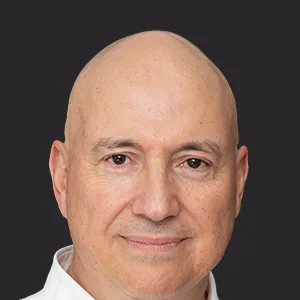
Automated transcript · uncorrectedWhat is today is doctor Peter Michlos, and he is our in house scientist, historian, medical advisor and doctor Mihllosa. What do you think is the crisis we should talk about today?
Well, I think a major crisis in the United States is mental health and mental illness. In twenty twenty three, twenty one percent of adults have experienced at least one bout of mental illness, it’s been reported, and that’s fifty million people. That’s a lot of people, and fifty five percent are not getting them treatment. And we’re seeing how
that’s playing out on the streets of various cities around the country. And you know, people always talk about gun deaths and homicides, but you know, I was also surprised to learn that six and tent of these deaths by gun, and they try to say that they’re all murders, it’s actually six and ten are by suicide. And the other
interesting statistic is that only three percent of crimes that at the middle of that handgun are committed with legally obtained guns. And the other thing is that, you know, we have five and a half million people in the USA with mental illness that don’t have any insurance and while we’re sending money all over the place and around
the world, we really need help with mental illness and I think that’s very, very important. And we also know that four point eight four percent of adults have suicidal thoughts in the United States. That’s twelve point one million people, with Georgia being one of the happier states with the lowest suicidal thoughts in Utah being one of the highest,
which also surprised me as well. And we also have fifteen point three five percent people in the United States have admitted to substance abuse. That’s another thing. And six point eight two percent of adults have admitted to illicit drug use disorder, and that’s a lot. And this also shocked me. That ten point nine to six percent of
adults in the United States are alcoholics. That’s a lot of people, and ninety three percent of them are estimated not to be actively getting treatment. So and one of the highest states with substance abuse happens to be Washington, DC, So that was also fascinating. But now let’s talk about some of the solutions and how to help people. One
of the big things that happens is people forget to think of organic reasons that people can have medical issues like mental illness. And one of the things is that especially teenagers. The CDC just put out that there’s an alarm and curasus with depression anxiety in teenage women. And one of the things they need to screen for is
things like toxicology screen which checks for drugs. Because many kids say, I don’t do drugs. I don’t do drugs. But eventually the kids get tested and they find out that yes they are because they’re drug dealers. They’re lurking around high schools and even elementary Maybe we should do.
Maybe we could solve a problem A part of the problem about joining drug tests in high schools. That way, if a kid has a problem, maybe we can help them because before it becomes a problem.
Absolutely into early intervention would be a great thing. Just like here in New York, if we had each burrough had a health center. Instead of building all these different things or filling up hotels with the people that the state has to pay for, you just have health centers.
In that health centers, you come in, you be screened by a social worker, a psychologist. Then you would get the treatment you’d need. You’d get to see a psychiatrist, and also people would get the medical screening which includes the toxicology screen things like FOLL eight levels, you be twelve levels, your hormone levels. There are even RNA biomarkers
that they’re finding are associated with the mental illness. We now know that there’s even tests you can do genetically. There’s a company Nebulo Genomics that you can analyze your DNA and your genetic risk to bipolar disorder and other mental disorders. A lot of there’s people in my career I saw two people are having mental problems and eye problems.
They ended up having syphilis and all they needed was some benicillin because that actually gets into your brain too. People with hypothyroidism low firolids that can also affect mental illness and cause depression. So these are things that blood tests you can actually do and that would be part of a work up in these community health centers because
years ago they close a lot of the impatient psychiatric facilities because the biggest disease. Everybody keeps focusing on guns. Guns does subways, but a lot of people are getting killed with knives, with hammers. What are we going to do ban all the knives? We need to address this crisis in the United States of mental health. We need
to get people into treatment, We need to get them worked up because right now, even wealthy areas like for example, in Long Island, New York, you know, getting psychiatric care, finding a pediatric psychiatrist we even takes insurance or we’re going to afford to live here is challenging. So we need to alter our priority portfolio in the United States
to give serious attention to psychiatric care and help young psychiatric residents to get housing, to help them with their loans because they’re severely in debt, so that they choose that specialty and start getting a lot of these people help.
And we need compassion towards the people with mental health problems so they don’t go out and commit violent crimes and domestic abuse and child abuse. And that will be very helpful because it’s a national security issue because with all the substance abuse and mental health, we’re going to have trouble. We’re having trouble recruiting a standing volunteer army,
So we have to look at it as a national security issue and pay closer attention to mental health in America. And that’s why people need to listen to WABC to get the truth of what’s happening and then go out there talk to your congressman, your representatives and advocate for some of these things.
Well, doctor, I mean as far as we’re I live in New York here and the homeless on the streets a large percentage of them or are people that need to inst institutionalize because of mental illness, and the other half of them is you know who the other half the vets. Don’t forget In the United States, twenty two
vets every what is it, every day commit suicide and nobody’s helping the vets. And that’s the federal government and nobody’s you know, at one time we had twenty eight thousand mentally ill in the hospital in New York Hospitals, and now I think we have like three thousand. The other twenty five thousand didn’t get well.
You’re absolutely right, because they assumed that people when they closed down the impatient facility, that they would comply and be cooperative and they would go take their medage in the outpatient facility. But that has not worked out. And in the VA system. One of the weaknesses is is I’m always advocating and saying please have weekend care. I
can’t tell you how many veterans run out of medicine and it’s a weekend. They don’t have access to care. So they need to be able to get access to mental health, and they should actually be just even for vets who served our country honorably, and even for law enforcement who go through a lot of traumatic events. There
should be more hotlines that way people can call and get help and get seen, even on a weekend or holidays, before something terrible happens, before they hurt themselves or start thinking about hurting other people. Because when someone’s not mentally well, they usually lash out among the people around them, and sometimes even people that they’ve loved all their lives. There’s
a lot of murders, for example, happen within families in close quarters. So mental health needs to be a priority, and we’re going to continue to advocate that and talk about it on WABC, and we’ve got to push for regional mental health ventors.
Peter Michelos, thank you for your wisdom and thank you for filling in all New York as all Americans, and God bless you and God bless America.
Thank you, John, and thank you for giving us all the microphones to get the truth out
Sunday, May 14, 2023

Governor expected to make a move on migrant distribution throughout the State.
Zach Williams Transportation Reporter, Bloomberg Government

Migrants on Staten Island and Congestion pricing. Both are killin' the City.
Nicole Malliotakis U.S. Representative from New York

Mayor Adams got himself boxed in by migrant issues.
Peter King Former U.S. Representative from New York
Food, fun, & baseball. May 14 (Sun) 11:00 AM vs Long Island Ducks
Eric Shuffler Founding Partner, River Crossing Strategy Group

Update on the war in Ukraine. The Spring Offensive.
Tidal McCoy Venture Capitalist & Former Asst. Secretary of the Air Force


The migrant situation in New York is out of control
Andrew Cuomo Former Governor of New York


Is water more common in the solar system than we thought?
Steve Kates Space and astronomy broadcaster (Dr. Sky)

Dr. Peter Michalos
Advances in Lung Cancer Detection and Personalized Treatment
Dr. Peter Michalos WABC Medical Expert
Healthy Eating, Stronger Immunity and the Science of Living Longer
Dr. Peter Michalos WABC Medical Expert
Limiting Sugar and Choosing Whole Foods to Support Healthy Aging
Dr. Peter Michalos WABC Medical Expert
Protect Your Skin From UV Radiation and Reduce the Risk of Skin Cancer
Dr. Peter Michalos WABC Medical Expert
