


Transcript
Automated transcript · uncorrectedSunday morning, Where are the markets going? Well? One of the smartest guys I know, Mario Gabelli, he is the founder and CEO of the Cabelli Asset Management Company, is with us this morning, and Mario twenty twenty five is coming soon. Which way are the markets going?
Well, that’s a great bottom line question. But I put a lot of things, starting tops down. I’ll do it quickly. I look at it the economy, the election, the efficiency of the world, particularly in light of the OGE and the efficiency of the US, and obviously energy policy because of what goes on and potentially goes on that could
be disruptive in geopolitics, particularly in the Mid East. So the US economy, John is basically international monetary fund, and we don’t have our own data. So we take this and they’re reasonably okay, one hundred and twenty five trillion.
The US is going to be close to thirty trillion to twenty five percent of that, you know, in rough numbers. And so the US consumer I think, is, except for some help that’s needed at the lower income levels because of inflation and other things, that are going to be corrected, in great shape. We publish a balance sheet on that. Basically,
the debt, the network are in pretty good shape. The industrial sector continues to do quite well, both restoring and on shoring and relocation of plant and more efficiency. So you know, then the question is net exports, and that comes down which is an imports. The net imports are subtractive from us GDP, and the tariffs are going to
have an impact. Over all. The economies sound Europe, assuming no geopolitical dynamics that are different than you know, what you’re seeing in the last twelve months. I think is okay, China is okay, So I think that’s a pretty good environment.
Profits will do okay. The market then there’s a question of multiples. So that goes back to the next thing, John, and that is the debt. We spent seven trillion, we took in five trillion, We have a debt at thirty five trillion. How does the efficiency of the government going to handle that? And what does that mean for interest
rates in the short term if you take in quotes with the FED talks is as an R factor, what’s the regular rate? You know, that’s an impact on the multiples, And so I am not clear as to whether it’s four forty or four to eighty or three eighty. But my gut tells me we’re going to be walking likely
at the four forty to four to eighty level on a ten year, if not higher. So that’s the impact on a multiple short term that is, one year from now, I think we’re okay plus and minus five percent of the market except for some obviously geopolitical dynamic that you know can happen. Those are uncontrollable events.
Bottom line, Mario, bottom line. You’re saying that over the next year or so, you still thinks that even though the Fed reduced rates, you think the market rates are going to continue to go up anywhere from four a ten year rate, from four forty to four eighty.
Yeah, I would think that the short term rate can go down. You’ll love it up with sloping rate, that’s the best case, but that’s not you know, my gut tells me to be flexible. And today I left the house there was no snow, a lot of wind. About eight miles away where I had to give a speech
to a charity, it was two inches of snow. So, you know, be flexible and basically anticipate the unanticipated. The market has a lot of quants algos, momos, all of which are tied. You can see stocks that used to go up two dollars and up ten, down two instead of down twenty instead of down two, And so you
deal with that market volatility on short term traders and having fun. From my point of view, John, how much money do you want to protect against inflation if uninflation expectedly rises again? And how do you do that? You buy companies that are ignored and unloved with pricing power, or you look at owning a portion of your assets
in the stock market over the next forty years that will be a million. That’s an eight percent or seven percent ke good the last one hundred years, John, we’ve grown at a ten point four percent cager. So because it’s at a much higher capitalization rate. But you’re still going to do it quite well. And so you have
to own equities in a broad based back. But you’ve got to know each loand of the listeners has to know for themselves, will I need an unanticipated amount of money? And how do I manage that? And then you then you’ve got to look at that what you make, but what you keep, which is taxes. Yes, so that’s it.
Now I understand lately, you’ve been involved with this Paramount deal. How do you feel about that?
Okay, I started following Paramount. When I started following Gulf and Western, Paramount was owned by Gulf.
And Western golfin development.
Yes, spun it off. And so today there’s ten million, there’s forty million shares of voting stock. John all that publicly traded as ten million. Of that amount of Cherry Redstone and National Amwsment’s owned thirty million. She’s selling her stock.
She’s selling her stock because she’s had some obvious speed bumps in the financial economy, basically the COVID and then the Screen Actors and Writers Guild and having a leveraged company. So all I want for my clients that own eight hundred clients owned five million of the ten million voting shares, and we just want to get a small discount from
what she got, and that is a premium over the no voting. Now, I believe that the Ellisons will do a very good job at running this company. They will basically bring technology and AI to the creation of content, David, and so that’s not a negative. What I’m only concerned about is what in quotes Wall Street terms of trade
what are the shareholders getting versus what are they going to pay for the businesses that the that Ellison, David, the son of David Ellison, wants to put into the Paramount. So Paramount has a CAPEC content spend of about sixteen billion dollars this year. And that’s very sizable. And today today, wait, today’s Friday. Yesterday you could have gone to see Wicked.
That’s not theirs. But you could have also gone to see Gladiator too, that’s their content. And you can get a handle on the notion of theatrical input and what’s going on. So Paramount at twenty I’ve owned it. I’m nibbling at some unless a client has a required minimum distribution.
We have forty, as I said, eight hundred clients in it. Some of them need cares.
Bottom line, bottom line, before we run out of time. You’re fighting very hard for your clients.
Well, that’s my job, that’s your Mario.
I want to thank you, wish your happy Thanksgiving, and thank you for coming on this Sunday morning, and we’ll catch up again real soon.
Thank you to your listeners, Happy Thanksgiving to all, Thank you, thank all you do. Take care
Sunday, November 24, 2024
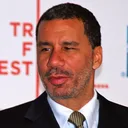
Will Governor Hochul have opposition? Richie Torres.
David Paterson Former Governor of New York

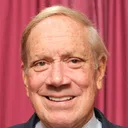
We must support Ukraine in the face of aggression.
George Pataki Former Governor of New York
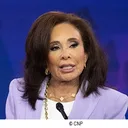
Trump has a whole new agenda for America.
Judge Jeanine Pirro U.S. Attorney for the District of Columbia

New Jersey gave greater support to Trump than previous votes.
Eric Shuffler Founding Partner, River Crossing Strategy Group
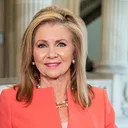
FEMA discrimination of Trump supporters.
Marsha Blackburn U.S. Senator from Tennessee; nominee for Governor
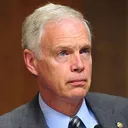
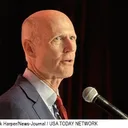
The Senate is prepared to carry out the agenda of the new administration.
Rick Scott U.S. Senator from Florida
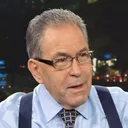
Interviews David Schechtman, Senior Executive Managing Director, Meridian Capital Group
Michael Stoler Real Estate Expert


Cancer and generational DNA. Dangers of pot smoking. Alternative to Obama care.
Dr. Peter Michalos WABC Medical Expert