



Michael Stoler Real Estate Expert
Interviews David Schechtman, Senior Executive Managing Director, Meridian Capital Group
Transcript
Automated transcript · uncorrectedGood morning. This is Mike Stola for the Solar Real Estate Report. What’s happening in the investment sales and the capital raising in the New York City market today? Today I have the senior executive managing director of Meridian Capital Group and also Meridian Investment Sales, my friend David Checkman.
Thanks for being here.
Thanks for having me.
Michael, So, are you an optimist pessimist? Where do you see the market today?
Well, I think I’m pragmatic, and after twenty years of being a broker, you have to be pragmatic. I think the market is very spotty. There are opportunities as cap rates expand and returns on buildings are going to expand to the extent you have the opportunity to buy them.
But I think the number one driver in New York City is not the local or the national political races. I think it’s interest rates, which really have decimated value and sentiment in the City of New York, occupancy and office buildings and foot traffic. Notwithstanding the reports, it truly has not returned to pre pandemic levels.
What about why hasn’t it returned? Is it the interest rates? Or are people scared?
Well? I think that technology has really changed how we utilize real estate, not just in New York City but most major business districts. We don’t office the same. It is fully acceptable for people to work remote, even entry level, mid level and senior positions. As a young attorney in the early two thousands, it would be verboat for me
not to have breakfast, lunch, and dinner five days a week and at least one weekend day to be in the office. And from what I learned now with the attorney’s ideal with half of them are working remote with blurred screens and it’s perfectly acceptable. And I think that’s other industries. We just don’t come in five days a week,
and candidly, I don’t think we ever will again. And retail the way we purchase things, this started back in the twenty tens plus that’s a permanent sea change. So the way we utilize our spaces in city centers, particularly in New York has changed. But there are bright spots local food and beverage, healthcare, wellness. The retail market in
New York City is steadily on the rise for demand and vacancy is going down, so it’s a true bright spot here in the city.
What about the values have gone down significantly.
Well, I think value is really the function of the market. What will somebody pay and rent and what will the yield be after you pay your mortgage. So if you buy a building for ten million dollars and you have a sixty percent mortgage, you have to keep in mind that as recently as two or three years ago, that
mortgage could be three and a half four percent if you go to refinance today. Your listeners know that commercial mortgages are unlike residential mortgages. You have a house thirty years later, you own that house. In commercial mortgages, you take a five, seven or ten year mortgage. At the end of those periods, you owe the bank the money
and you very often donate deeply into the principle. So if you had a mortgage for three and a half percent on a ten million dollar building a couple of years ago, and you go to refinance today, depending on the asset class and the lender, you can be in between six and a half and seven point two percent.
That’s a one hundred percent jump that’s going to drive values down.
So a bank’s selling their notes.
Banks are starting to sell their notes, which is a bright spot for me. We’re seeing not just portfolio lenders, but credit funds, rates and special servicers are finally getting to the point where they’ve stabilized the buildings, and I think twenty five and twenty six are going to mimic twenty eleven and twelve. My bet is that over sixty
percent of the transactions that happened in New York and generally of all the building stock in New York City and the five boroughs, in between two and three and a half percent of those buildings change hands in a given year. Our numbers have been closer to one and a half percent for the past two years. I think
in twenty five and twenty six, sixty plus percent of the transactions that will happen will involve the lenders. So lenders are taking back the keys, and they’re going to sell r eos real estate owned properties because lenders, even if they do foreclose and take back the keys, they’re not in the business of running buildings. So you’re going
to start seeing a reset in values. And I’m excited about that because it’s going to vivify some of these buildings and businesses.
Let’s talk about the multi family.
Business multifamily is a tale of two asset types. If you have rent regulation and that dominates your tenancy in a building, whether it’s Bronx and Harlem or neuroa Shell or the Financial District or Staten Island, buildings that used to trade at a four percent return because of interest rates and the rent stabilization prior to twenty nineteen used
to be viewed as upside income potential, converting those regulated units to deregulated units. In twenty nineteen there was a sea change for right or for wrong. That upside potential was legislated out of existence, and today we’re seeing the effects of that Triconian legislation. It’s an asset class where, to the extent there are sales, you’re seeing seven and
eight percent returns on sale, So people who don’t have to sell are going to ride the wave and hope for the pendulum to swing on the litigation. However, multifamily in New York City, to the extent that it’s not regulated, what we call free market, is still a highly desirable asset class. And notwithstanding the fact that there’s fewer people
in the office and in big box stores here in the city, people are still coming opportunity of bounds in New York, and I don’t want to sound cliche, but it’s still one of the busiest and most desirable cities on earth, so rental vacancies continue to be at all time lows.
Let’s talk about conversion of office buildings to residential.
It’s a noble and intelligent concept, and I’m glad that the legislation has finally caught up with the desire and the need. Unfortunately, I think what’s being overlooked is even if you have legislation in place which permits you to do it, and fortunately our legislators have recognized that it’s necessary, there are physical limitations. So if you focus on the
garment center, for instance, you generally have eight to eight and a half foot ceilings on buildings that the vintage goes back fifteen years. The way they lay out these buildings, they are rabbit warrens. They are not just elevators in the center and then four sides of light and air.
A lot of these buildings, even though the legislation is there, it will be more costly to convert it to residential, medical, or dorm use than it would be to just knock it down. My prediction is in the coming years, values are going to continue to drop on some of the less desirable neighborhoods for office and you’re actually going to
see buildings sell at knockdown value.
What about development sites?
Development sites in New York continue to be desirable. The pricing fell off materially, but it’s starting to rebound. I think the new iteration of the tax benefits, which used to be called four twenty one A, I think are slats recognize that to jumpstart residential development, they came up with a new tax scheme. The problem is the larger
projects are going to be hamstrung with so much regulation that it’s really one hundred units or one hundred thousand square feet below where the desire lies. I think what is continuing to be a you know, an ankle weight, so to speak. On why we’re not moving faster on the sale of these sites. There isn’t enough construction financing.
There aren’t enough lenders in the market saying hey, we’ll take the risk with you, let’s put up a new building.
So the private lenders are doing well.
The private lenders are well, you know private lenders we call non conventional lenders. And then the dirty word is hard money lenders. But the truth of the matter is, if you have discretionary capital, whether you’re a private equity fund or a ret or high net worth families or sovereign funds, you’re lending money at ten, eleven, twelve, thirteen percent,
and you oftentimes have a line out the door. So I’m glad that those folks exist. And if the numbers make sense and the sites are cheap enough, you’re going to see them change hands.
Twenty twenty five. Happy days are here again.
Happy days are here again? Not even a question because what goes down at some point must come up in New York City.
So is it twenty five or twenty six?
I think it’s here. I think we’re already beginning to see quarter over quarter volume increase in disposition. My most fervent hope, though, is that sentiment is shared by everybody on both sides of the aisle, and light of the recent elections, I think the more unification we can get and the safer we can make our city, we’ll get
back to the business of business, and we’re on the upside of the curve. I think the abyss has already been hit.
I’d like to think David Sheeckman for being here and I see you next week.
Sunday, November 24, 2024
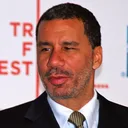
Will Governor Hochul have opposition? Richie Torres.
David Paterson Former Governor of New York


We must support Ukraine in the face of aggression.
George Pataki Former Governor of New York

Trump has a whole new agenda for America.
Judge Jeanine Pirro U.S. Attorney for the District of Columbia

New Jersey gave greater support to Trump than previous votes.
Eric Shuffler Founding Partner, River Crossing Strategy Group

FEMA discrimination of Trump supporters.
Marsha Blackburn U.S. Senator from Tennessee; nominee for Governor

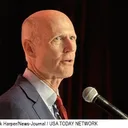
The Senate is prepared to carry out the agenda of the new administration.
Rick Scott U.S. Senator from Florida


Cancer and generational DNA. Dangers of pot smoking. Alternative to Obama care.
Dr. Peter Michalos WABC Medical Expert
Michael Stoler

The Stoler Report with Michael Stoler: David Schechtman
Michael Stoler Real Estate Expert
The Stoler Report with Michael Stoler: Eli Weiss and Andrew Albstein
Michael Stoler Real Estate Expert
The Stoler Report with Michael Stoler: Eli Weiss and Andrew Albstein
Michael Stoler Real Estate Expert
