


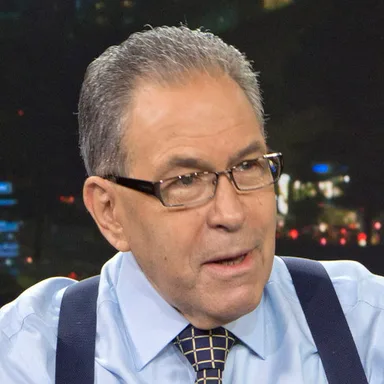
Michael Stoler Real Estate Expert
Interviews Jed Resnick, CEO of Douglaston Development
Transcript
Automated transcript · uncorrectedGood morning. This is Michael Stola for the Stolar Real Estate Report on the Customer TV’s round Table this morning. I have one of the most active developers in the city of New York and even I believe in Seattle, also or Arizona. It’s Douglaston’s Development’s CEO, Jed Resilik. Thanks for being here.
Good morning, Thank you.
So how do we look at the time today as a developer? I mean, it’s difficult times as political issues, they’re financing issues. There’s a definite need for housing. So how do you look at it today?
Well, Michael, I think I’ve said before, this is in some ways the best of times, in the worst of times in New York City development. Housing demand has never been higher. Rent and occupancy you’ve never been higher. There are more people who want to live here who need homes.
At the same time, it’s probably never been harder to build anything, and we’re seeing it. We’re seeing it in lots of different aspects of the market right now. We’re seeing it in astronomically high rent on the market rate side.
We’re seeing it in extremely low vacancy. We’re seeing it an increase in homelessness, the microan crisis doesn’t help. The fact is that lots and lots of people want to live here. More people want to live in New York City than ever before, and we just need more places to put them.
So you’re active right now in four of the boroughs and not active in the Borough of Queens right.
I amazingly we’re active in four borrows and the one that’s missing is Queens. So if you have any ideas, please, we’d love to be able to.
We cannot find some more land, you know, I mean development only takes place if we have land. Okay, are we going to do a landfill?
You know, look there’s land out there. The problem we have is without without any four twenty one A or any substitute or replacement or any other kind of tax debatement for mixed income rentals, It’s just it’s not something that we can do give.
You know from my audience, let’s talk about what the four program was and what we what do you like to see? Sure?
Sure? So four twenty one eighty for decades was the principle financing mechanism for mixed income housing, and it’s changed a lot over the years, and the most recent iteration developers would set aside twenty to thirty percent of the unit new units to be constructed for permanently affordable housing and would or rather I should say, I should say
for forty years of affordable of affordability locked in and an exchange would receive an exemption from the increase in taxation that results from their development. So the property would continue to pay whatever tax it was paying, whatever assessment was currently on that land, but the city would defer the phase in of any new taxes as a result
of building a bigger, newer building. And that really enabled developers to build all across the city. Not just significant new supply that that helps moderate increases in market rent, but was the principal mechanism to build affordable housing in high opportunity neighborhoods. And without it, we’re really concerned that that activity is going to drop off.
Let’s talk about your new developments, the baby that you’re involved with on Atlantic Avenue.
Sure, Sure, So it’s a very very exciting project. It is potentially our last big mixed income rental for a while. It’s four hundred and fifty six units on Atlantic Avenue between Franklin and Class and we closed our acquisition of the land and our financing about three weeks ago, and it is it’s a very exciting project. It was rezoned
by the sellers who with whom we’ve partnered on the development, and was taken from a one story manufacturing district to what will be a seventeen story mixed income project. It’s one hundred and thirty seven of the units are set aside for families averaging eighty percent of area median income, so it’s a significant increase in affordable housing. And because
it’s financed with four twenty or the Affordable New York program, which was its its most recent incarnation, there’s not a dollar of city, state, or federal subsidy. So we get to create one hundred and thirty seven affordable units four hundred and fifty six units overall, and we don’t need any any government money to do it, which is which
is really remarkable.
Right now, you’re also involved with senior housing. Tell me about that.
We are we are. We’re very active on our affordable affordable housing platform in the senior space. We just received a TCO couple weeks ago on a project on Webster Avenue in the Bronx on a ninety nine year ground lease we executed with the New York Botanical Garden back in two thousand, so we built one hundred and eighty
eight unit building. It’s one hundred percent eight restrict for seniors. It’s one hundred percent Section eight, so it serves seniors are earning less than fifty percent of AMI and those seniors will pay thirty percent of their income regardless of what that income is. And we have will have project based Section eight vouchers that will pick up the rest
of the of the rent. So it’s really a fantastic program. It’s a deep, deep need in the city. Now, this is a we have an eight We have an aging population. We have a growing population, but we also have an aging population. And New Yorkers of means have a lot of options as they age. They some of them go
to Florida, some of them, some of them, you know, move move closer to their children somewhere else, some of them age in place. But but lower income New Yorkers just don’t have as many options. And it’s something that we’re really excited to participate in.
Let’s talk about your eleventh Avenue projects being rented up right now.
It is so it’s called three eleven. It’s the address is three eleven eleventh Avenue, and it’s it’s a giant project. It’s the whole block from from twenty ninth to thirtieth Street on eleventh Avenue, and it’s the biggest thing any of us have ever done. It’s six hundred and thirty five feet tall, it’s nine hundred and thirty eight units.
That project was also a rezoning. We’ve been working on that for more than ten years, and because it was a rezoning, it was subject to mandatory inclusionary housing. So we’ve set aside a full quarter of the units, which is two hundred and thirty five units for families averaging sixty percent of area median income, the other seventy five
percent our market rate. And are they are leasing up fantastically well, We are right on pace. We anticipated it would take twelve to eighteen, probably eighteen months to lease up. We’re about ten months in and we are about sixty percent least far exceeding expectations.
Okay, besides exceeding expectations on leasing, what about the rents?
The rents, The rents are exceeding expectations. We’re very happy with where rents are. We all went through the early part of the pandem concerned about the state of the city. We saw very quickly and by the end of twenty twenty, right around the time that people started having confidence that they’d get vaccinated, they started signing leases for apartments. By
the middle of twenty twenty one, there were no discounts in the market. And you know, we’re happy to say that that rent is well above its pre pandemic levels and it is exceeding our pro forma expectations where we couldn’t be couldn’t be happier.
Okay, what about retail.
The retail in that building is least you know we’ve seen. We’ve seen retail activity. It’s not a core piece of our business. We really only do retail.
Where it’s accommodation.
It’s an amenity for our residence. It activates the ground floor. It’s important. At three eleven, we have a eight thousand square foot space with an additional five thousand feet below grade that we leased to a supermarket, which we are excited about, sort of sort of a a high end independent supermarket, which is an important amenity for the neighborhood.
Right now, the only supermarket or in the Hudson Yards area. Is the Whole Foods at at Manhattan West, which is fantastic, but it’s important for the community to have a whole foods alternative.
Now. Is the supermarket under the Fresh program.
Not at that location. It’s not. We’re doing a Fresh Fresh supermarket at the project I mentioned in Webster Avenue, where we are actually relocating an existing grocer who had been on site. We’re putting We’re moving him into a brand new facility so that we can then demolish his existing store and build another building. And that’s been that’s
been an interesting and interesting challenge. We have to learn a lot about the Fresh program and its requirements. It’s a little bit complicated to commit in advance to find a grocer.
Yeah, no, Russian with one minute left, Let’s how do you look at the the end of the year, the balance of the year with regard to interest rates, developments and so on.
Well, I wish I could guess at interest rates. Your Your guess is as good as mine. It seems seems like we are maybe leveling off a little bit, maybe maybe taking a little bit of a pause on rate increases.
The most recent inflation numbers were encouraging. Seems like the Fed is is getting it under control, which which we’re excited to see. I hope that if interest rates stabilize a little bit, it’ll bring a little bit more comfort to the capital markets, that that people will start to feel a little bit better about about repaying some of
their short term debt. We haven’t seen long rates increase as nearly as much as short rates, so if if we see some things stabilized there, it’ll just be good to get capital churning again. Some of my bank or friends say that they can’t lend us a lot of money because nobody’s paying them back. So if we can
start to see some capital cycling around, it would just be great for everybody.
So, as I would say on my TV show with my Crystal Apple, the apple seems to be semi bright for the future. Oh, it’s definitely bright for my friends. To Douglas in development. I’d like to thank Jed Resnik for being the CEO for being on this show today.
Thank you so much.
Sunday, July 2, 2023


Affirmative action, student loans…SCOTUS
Peter King Former U.S. Representative from New York




Michael Stoler
The Stoler Report with Michael Stoler: Eli Weiss and Andrew Albstein
Michael Stoler Real Estate Expert
The Stoler Report with Michael Stoler: Robin Schneiderman
Michael Stoler Real Estate Expert
The Stoler Report with Michael Stoler: Winston Schromm
Michael Stoler Real Estate Expert
