



Michael Stoler Real Estate Expert
Interviews Ronnie Levine, Meridian Capital Group
Transcript
Automated transcript · uncorrectedGood morning. This is Michael Stella for the Stellar real Estate Report on the CATS Roundtable this morning. I have Ronnie Levina, Senior managing director from Meridian Capital, one of the largest intermedia areas for financing. Ronnie, is they have money for real estate financing? You know, especially with the high interest rates SOFA over there, you know, all of
the difficulties we’re out there, Is there really money out there for real estate financing?
Yeah? I think that’s a nuanced question. But generally speaking, there’s money and liquidity in the system. But as a general statement, leverages as down and pricing is up. So that’s the paradigm that we find ourselves in. So I think for high quality projects, high quality sponsors, you can get your deals financed, but they’re requiring more equity than
they used to and the cost of capital is significantly increased. As all the indexes are up. I like to say, there’s nowhere to hide in the yield curve anymore, from SOFA on the short end of the curve all the way up to the ten year treasury. Generally speaking, every one of those indexes is above four percent, so you
know when you’re adding a spread to that, Generally cost, the capital.
Is expensive, what about loan to cost?
Well, given the interest rate environment that we’re in, most lenders look at what they call the exit debt yield or how refinancible that loan is. So really what they’re doing is they’re stressing the refinance of these deals, so they can only lend you a certain amount of money based upon what they think the loan can be refinanced at.
So leverage is generally down in the senior mortgage market on a construction loan that can be anywhere from forty to fifty five percent loan to cost, depending upon the bank and the project. I mean, the good news about the market is, though, there’s a lot of ways to kind of get additional leverage in the stack through preferred
equity or mezzanine financing.
So for my novices who are listening to the show, what is preferred equity mezzanine loans?
Sure, I mean, they’re various forms of subordinate financing. So if you think about the capital stack, you start out at the base, which is your senior mortgage, and then the most subordinate or the first loss piece is generally your common equity. So what you’re doing is filling in between the senior mortgage and the common equity. So mezzanine
financing is another form of debt, generally secured by a pledge of the partnership interest, so they’re collateral is really they’re taking a pledge of the ownership interest in the borrowing entity, as opposed to a mortgage on the real estate, so they don’t have a second mortgage. Generally, it’s not a direct lean on the property. They’re really leaning the
partnership interests. And preferred equity is really a hybrid debt equity product where they’re coming in as a partner in the deal, but they have preferred returns and then there’s some kind of a waterfall in the distributions. And then if you basically have some kind of a default under the preferred equity, they get enhanced control remedies, they can
sell the property, they may be able to kick out the sponsor. But again these are all add to the cost of the project. So you know, if you’re taking measure preferred equity, the cost of that capital needs to be put into your budget and it will definitely dilute the returns of the deal.
So how much can you get if you put preferred equity and all the other nuances.
Look, I mean, we’ve done deals upwards of eighty eighty five percent loan to cost financing, but generally when you get up that high, you’re giving a participation in the upside of the deal, which means they’re going to participate in the equity upside. I think with a straight coupon, meaning they’re not participating in the upside, you’re probably in
the seventy five to eighty percent loan to cost range. But every deal is different. It depends on you know, if somebody owns a piece of land at a great basis and the metrics of the deal work, then you may be able to push the leverage higher without having to give any piece of the upside of the deal.
What’s happening with the multi family financing today, especially without four twenty one A’s.
Well, Look, I mean multifamily depending if we’re talking about construction perm financing. But I think in the permanent loan market, you’re very fortunate to be in the multifamily sector because you’ve got Fanny and Freddy very actively putting out financing.
So as the banks have kind of stepped back given kind of the regulatory scrutiny and the amount of deposits that have walked out the door into the major banks or into the treasury market. You’ve seen the local regional banks really stepping back in a significant way. The good news is Fanny and Freddy have been very active. The
construction lending side of the market. It’s a little bit more challenging. There’s probably less liquidity in that sector, you know. That being said, we just closed a two hundred and fifty two million dollar construction loan for a ground up deal in Coney Island, So there’s money out there, but again, better projects, better sponsors, and that deal took us a
very long time to put together. It was a syndicated loan. Several banks come into the syndicate and it was a best efforts deal, meaning that all the banks had a s show up and closed simultaneously. So it’s it’s it’s a challenging market, but but deals are getting done.
Has anyone taken over for the First Republic and the signature market.
Look, Signature and First Republic were very significant contributors to the commercial real estate market in the Tri State region. First Republic actually you know nationally, I mean Signature is actually doing some business in California before they shut down as well, So I think it’ll take some time for the amount of deal flow that they had to get digested.
I haven’t seen anybody step up. What the market right now doesn’t lend itself to any one bank stepping up to take over. But you’ve seen, you know, a lot of the signature clients have ended up with, you know, with New York Community Bank or Flagstar from just the migration of their deposits. You know, First Republic obviously went
over to JP Morgan, So you’re you know, but it dust hasn’t settled yet in the bank market. I think it’s going to take another year or two to figure out who are going to be the dominant forces in the kind of the local or regional banking market.
Right now, what’s happening in the Guanas.
Guanas is very active. We’re working right now on a on a construction loan. Obviously, you know, the four twenty one A and kind of the you know, the the outside deadline for the four twenty one A is becoming an issue that we’re contending with. But most of the projects in the Guanas have been finance or close to
being finance, and there’s some talk of a government you know, backstop to the four twenty one A with a program that I’m not sure whether it comes to fruition or not, but there’s been some talk of almost similar to like a pilot that you’ve seen in Long Island where they would do kind of a you know, some kind of
a backstop to the four twenty one A. But that market is extremely active right now. You know, every other block is under construction.
What about speaking of them the construction mothan in the Bronx.
I was just in Mohaven last week touring a building that we did a construction on less than two years ago. The buildings finished twenty months they built it, and they’re starting to lease. And you know, when you look at what the investment that Brookfield has put into that market and the institutional capital that’s flooded there, you know there’s
a lot of supply there. But I think it’s a price point play. I think to Manhattan, and I think it’s got good transportation connectivity. You know, these buildings are brand new, highly ammenditized efficient units. So I think if you’re looking at a walk up in Upper Manhattan, or you could be in a brand new unit with a
lot of amenities in Modhaven. I think that’s generally the tendency that is going there. And I think once all Brookfield’s buildings open up, and there’s obviously development to the north and Modhaven as well, there’s just a ton of new product there. I think it’ll take a couple of years for that market to kind of fully absorb the
units and also get more of a kind of quality of life aspect to it. You need some more retail to open up, but it’s definitely closer than further What.
About the B and C office buildings refinancing it?
Then, that is about as challenging as space as you can find in the commercial real estate sector. Is financing B and C office buildings. You know, it’s it’s very challenging, to say the least.
What’s your thoughts about the conversion of office buildings into residential I.
Think everyone talks about it and it’s a nice SoundBite, but the practicality of it is, you know, when you look at the floorplates of a lot of these office buildings and the cost that it takes to convert, to me, it’s just you need a massive reset and basis for any of this to make sense. So you know, you
need to get the building below land basis to make these buildings work. People throw around numbers like two hundred and fifty three hundred dollars a square foot to get the building. You know, the conversion costs are expensive, and the challenge you have with these office buildings is very rarely do you find a vacant building, so you have
to basically sit there and carry the building while you lease it down. You have to get vacant possession of the building, and oftentimes you don’t know what’s behind the walls, so the costs are a little bit harder to project than in a ground up construction deal. That being said, look there’s some you know, there’s some high profile conversions
that have been done or being done downtown, but I don’t think that’s the answer to the office was. I think a small percentage of the buildings will be converted, But I think there’s got to be a different someone’s got to come up with a different alternative use as opposed to just saying these are all going to be residential.
Last question, the hotel industry, which has improved quite a bit in New York.
Yeah, the hotel industry has improved. The occupancy and ADR numbers are quite impressive, but the financing markets are still pretty challenging for hotels. You know, I think a lot of the hotels historically, we’re generally speaking, over leveraged when you look at the the yield that they were financed at or the basis per key. I think there needs
to be some de leveraging in the hotel space, and right now the lenders are kind of you know, when you look at a refinance, you know, a lot of these hotels are financed at double what they could get financed at today. So there’s a challenge in that. On an acquisition, you can get financing. You can get financing
for ground up construction hotel at the right basis. But the leisure I mean, look, if you ask anybody that’s trying to go on vacation and trying to book a hotel anywhere, it’s a tight market. You know, it’s hard to get a hotel room, and the costs for generally up.
But you know, New York’s got its own peculiar set of you know, the union costs of running a hotel in Manhattan aren’t quite prohibitive when you layer on the real estate tax burden and the union issues. It’s a difficult business in Manhattan to.
Make money, so you know, we don’t have the crystal ball like we did on the TV show. It sounds that there is money for real estate under different terms and conditions. You should be a well capitalized new borrow and borrow as opposed to a new borrow. And I think people with like Rondie Levine will help you to
get there. And i’d like to thank you for being here today.
Thank you Michael
Sunday, September 3, 2023

100,000 migrants in the City, unsustainable.
Alfonse D'Amato Former U.S. Senator from New York
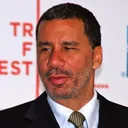
The migrant problem has to be fixed at the border.
David Paterson Former Governor of New York

This migrant situation is out of control.
Peter King Former U.S. Representative from New York

Morrisey wins approval of Mountain Valley Pipeline.
Patrick Morrisey Governor of West Virginia


Is Russian strongman Prigozhin dead or alive?
John Bolton Former U.S. National Security Advisor

The war in Ukraine, update.
Admiral James Stavridis Former NATO Supreme Allied Commander Europe

How old is the universe? In the skies this week.
Steve Kates Space and astronomy broadcaster (Dr. Sky)

The healing power of eating mushrooms and new medical tests of the future.
Dr. Peter Michalos WABC Medical Expert
Michael Stoler

The Stoler Report with Michael Stoler: Eli Weiss and Andrew Albstein
Michael Stoler Real Estate Expert
The Stoler Report with Michael Stoler: Robin Schneiderman
Michael Stoler Real Estate Expert
The Stoler Report with Michael Stoler: Winston Schromm
Michael Stoler Real Estate Expert
