


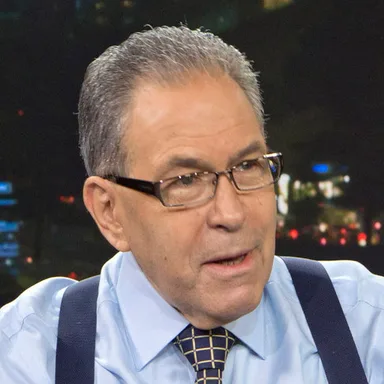
Michael Stoler Real Estate Expert
Jay Neveloff, Partner, Chair, Real Estate, Kramer Levin Naftalis & Frankel LLP
Transcript
Automated transcript · uncorrectedGood morning. This is Mike Stola for the Stolen real Estate Report on the CATS Roundtable this morning. I have one of the leading real estate attorneys in the nation, somebody who’s been noted by very few, very major publications and the organizations as probably New York’s one, one and only real estate attorney. Oh my wife’s going to be
so happy this. You know, we got to give the little His name is Jay Neveloff. He is a member of the executive Committee, chairman of the real estate department at Kramer Levin. Frankel.
Thanks for being here, my pleasure, Thank you. Okay, So what’s really happening we’re here in this spring is it? Is it going to be a good year. What’s what’s going to happen in the real estate market. I think it’s gonna be a terrific year.
And and because I want to let you know, I’m putting my money where my mouth is where we just extended an offer today to a very senior lawyer. We have plans to extend another offer to a senior lawyer.
We expect to be very, very busy and.
I don’t know in good transactions or in bankruptcies and restructurings.
You know, I think every every transaction, almost every transaction is going to emanate from from the cycle we’re coming out of. So for some people it’s an opportunity. For some people it’s distress. You have an environment where interest rates have stabilized, it’s easier to underwrite a deal. People feeling pressure either from lenders or equity holders to do
something with the deal. So so yes, distress creates opportunity, and I think that’s what’s going to drive the market.
So where are the opportunities.
I’m going to give to me? I’m going to leave office out of this for a moment. The opportunities are in transactions which may to most people look like they’re they’re trouble transactions. But in a recapitalization where the finite where the new money goes into the capital stack defines whether it’s a good investment or or or not a
good investment. And that’s a different analysis from whether the deal is a good deal or not a good deal. So whether it’s a it’s a rental property, whether it’s a for sale property, where you are in the capital stack defines the transaction. And I believe that most of the action has recently been and is going to be
continue to be in restacking recapitalizing transactions.
Okay, why don’t you explain what what do you mean by recapitalizing transactions.
Take a typical real estate deal. It could be a rental property, could be an office, apartment, building, retail. They are rents aren’t what they expected there to be. Occupanciaries aren’t what they were hoping to be, So there are vacancies that need to be filled, there are shortfalls. Interest rates have been high over the past few years, so
deals are running out of money, putting aside what the cost was just because the people bought it a long time ago or held it for a long time ago. They refinanced five years ago or four years ago. Those loans are becoming due. They need money. They haven’t been able to pay full debt service or ground rent because
they haven’t had rental income. Those deals need need money to stay alive, for the cycle to come back again, for the values to come back again. And a recapitalization is fresh money coming into a transaction.
And who was providing the money for the recapitalizations today? I mean the banks are really stymy. The banks are out of the business.
I think you’re right. You know, that’s an interesting topic to talk about who the players are and where the money is coming from. And it’s not it used to be years ago it was the commercial banks, that it was the investment banks. Now you’re seeing private equity funds with immense amount of money that’s available in the vests.
You see family offices with huge wealth creation that’s occurred over the past decade, aid that have large portfolios, and they’re different types of investors, and and some deals are are better suited for private equity investors where there where the funds have seven to ten year horizon. Other deals are more well suited for private private families or family
offices which purport to have a longer time horizon. So it depends on the deal. But there’s a there’s an immense amount of money. There’s there’s foreign money because investing in US real estate is simply safer, it’s a it’s historically a better investment than almost any place in the world.
What about the Chinese, I mean you represented I think the Waldorf the story, which was a Chinese investor.
I still do represent the Wolldorf. That’s money dealing with the Worldorf. That’s money that’s already in the US, it’s already in invested, and there are a lot of transactions where there’s whether it’s Chinese money, Middle East money, European money.
A lot of sovereign wealth is looking at deals and is in deals. So it’s no longer the commercial banks which were which were singularly the largest source of capital years ago, that’s all changed.
What about an insurance company’s CNBS and COLO.
Insurance, they are all in the market. Insurance companies are certainly in the market. They probably have less of an allocation to real estate than they did, let’s say ten years ago. CNBS CMS again is a whole other topic.
CMBs is active, it’s there, it is.
But certain companies say they never want to deal with cnbs.
Yes, and I think that the discussions I’ve had with clients for the past twenty years when they were looking for debt, is is it worth the X basis points because the debt, the cost of debt will be less expensive if if it’s CNBS, Is that worth the risk of having to deal with a servicer and a special servicer,
the conflicts between the servicer not wanting to let go the fees and turn over the special servicer, the difficulty in dealing with a special servicer, all those complications. So the question is whether in a lower interest rate environment, where the spreads between commercial banks and cnbs are are smaller, whether the difference in the rate is worth the potential
of having difficulty and challenging times.
What’s your thoughts about the office conversions going to through residential today.
I think that people view that as a as a savior, that they think that’s going to save a lot of office buildings. But I think that there are only a certain number of office buildings that are suitable for the conversion because they are floor plates are too large, they don’t have windows, they don’t necessarily have ceiling heights that
are appropriate. I think that there are some candidates of office buildings that are great conversion topics. So it’s challenging. I think we need housing, and we have they need. We need affordable housing, we need workforce housing, and we need housing just for for regular people.
But if we don’t have tax incentives, you’re not going to have new housing. You may have more affordable housing, but you may not have I.
Actually don’t and my friends in real estate might not like necessarily like this answer. I think that the existence of tax benefits are non existent or non existence, is really a functional price and what you could pay for it, and it goes into the cost of constructions is higher.
It really goes into what’s your overall cost of the project. There should be tax incentives, and I believe that the city and state will morph there. I don’t know that it’ll more fast enough for the market and fast enough to support the over supply of office an older, obsolete office, So that’s going to be a challenge, but it’s not
the only obstacle.
Now, in the years you were involved with the Time Warner Center and the other projects including the Google over downtown, do we see any major projects in the happening over the next five years here, with the exceptions of the potential on the casino business, I’m.
Not aware of anything on the scale of Time Warner Center, Hudson Yards, Brookfield, the casinos. Yes, but they keep pushing.
Right now there is in twenty twenty five, right, it’s so, what do you think about the office markets? Is it a good time for a tenant, especially with landlords giving possibly up to a years rent.
Yeah, it’s a terrific time for a tenant, there is a lot of space available. The tenants I’m told of gravitating towards higher quality buildings. There’s a split in in what I’m hearing from the experts who are in the office leasing world about how important amenities are. Some say amenities are important, some say they’re not. I like the
concept of live work, play, so I like the concept of Hudson Yards where you could live, work and play in the same area. I think we’ll see that on a smaller scale in other places. I think that’s attractive.
I think office markets are challenging. They’re challenging because tenants are reluctant to lease space that they’re reluctant to commit to longer term leases. And from an onus point of view, their challenge because they don’t have If you think about an office building that’s whatever percentage is vacant, whether it’s a third or quarter or or or more than half,
they have brokerage commissions that they’re going to have to pay up front. They’re gonna have tenant improvement. That’s a big capital outlay for a landlord who has a vacant building isn’t getting a rent from one hundred percent of the tenants, and I don’t know how they’re paying their debt service. I don’t know if they have a ground lease,
how they’re paying the ground lease. So I think a lot of those deals have to have to be rethought. But it’s not only in an office building finding the tenants, it’s finding the upfront money. And where’s that money coming from.
Is it coming from the lender, is it coming from the owner. It’s a stalemate.
Rights difficult time. So in conclusion, would you give me your forecast when the world will get better? Is it twenty twenty five.
That’s the real estate world or the whole world?
No? Please, we just talk about real estate. You listen to John on the other show the rest.
Of the world. Certainly, by the end of this year, I think that transactions are going to be all over the place. I think that money is going to be heavily invested. I think that smart money is looking for deals now, and what I’ll call the off market or shadow market transactions which are happening and don’t necessarily appear
in the papers. Those are happening more and more frequently, where deals are being repriced, where where owners of properties are going to brokers and saying I don’t want you to send that a flyer. I want you to go to your ten best people see if they want to buy it, or more likely see if they want to invest.
Here’s the projection that’s happening a lot. I think on note sales by banks, which are happening more and more frequently, those are relationships as banks are going off market with sometimes that brokers to people who’ve bought no true right.
Relationship. I’d like to thank j Nevillo for being here and I’ll see you next week.
Thank you, Michael,
Sunday, April 14, 2024

Pablo Sandoval Signs With Staten Island FerryHawks.
Eric Shuffler Founding Partner, River Crossing Strategy Group

Controversial recruiting a volunteer force for emergencies.
Bruce Blakeman Nassau County Executive; nominee for Governor

Greek parade on 5th Ave.
Fr. Alex Karloutsos Greek Orthodox Protopresbyter and Former Vicar General

Report on the war in Ukraine.
Admiral James Stavridis Former NATO Supreme Allied Commander Europe
Just returned from Europe. Europe is fed up with migrants.
Bill O'Reilly Host of No Spin News and Author

Just returned from the Southern border. TikTok.
Marsha Blackburn U.S. Senator from Tennessee; nominee for Governor

The most mysterious thing in the universe. Dark matter.
Steve Kates Space and astronomy broadcaster (Dr. Sky)

Michael Stoler
The Stoler Report with Michael Stoler: Eli Weiss and Andrew Albstein
Michael Stoler Real Estate Expert
The Stoler Report with Michael Stoler: Eli Weiss and Andrew Albstein
Michael Stoler Real Estate Expert
The Stoler Report with Michael Stoler: Robin Schneiderman
Michael Stoler Real Estate Expert
