


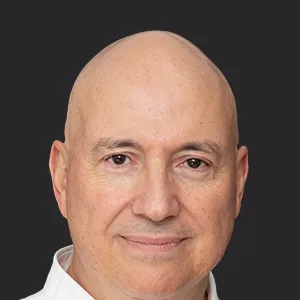
Dr. Peter Michalos WABC Medical Expert
Longevity, health and your gut microbiome.
Transcript
Automated transcript · uncorrectedIt’s Sunday morning, Live long and prosper well. We have doctor Peter Michelos is back from his European travels and what is this morning? To give us some chips? How do we reach the age of one hundred? Well, doctor tell.
Us, Well, I always observe a lot when you see some of these very healthy people on some of these Mediterranean places, on the Greek islands, of course.
We know Ikatia is one of them, Sardinia and Italy and other blue zones, and you know, there are common things, and you know when we say you are what you eat. We’re learning so much about the gut microbiome and our intestines and how it affects our health. And there was a major paper that just came out of London, England
about how gut health affects things like Crohn’s disease and bow disease. And it turns out that they discovered that there’s also a genetic component to it as well that controls something called the macrofages. And these are master cells.
They’re like little transducers that basically manage and monitor infections, inflammation, and when they go awry and you get too much inflammation, you get inflammation of the bowel walls, and when we drink water, it gets reabsorbed, reabsorbed in our large intestine and if it’s inflamed, you get diarrhea and things can’t stay in and that affects actually many, many people who
have Chrome’s disease, and those people sometimes end up with colon cancer. And that’s what the presumed diagnosis is of Kate in England, Prince the Prince’s wife, because these are very important diseases because chronic inflammation can lead to cancer and other diseases. So it turns out that the majority of our white bloods, like eighty percent of them, they
hover around the intestinal track with all the food and everything that gets processed through there. And now we’re finding out that if you have higher levels of certain bacteria and you’re intestine, you’re more prone to getting, for example, pancreatic cancer or colon cancer. If you have certain bacteria that are higher, you’re more prone to depression. So it’s
turning out that we’re learning more and more and in the future we’re all going to go for tests. In addition to a blood test, we’re going to be going to be blunt. It’s going to be basically a poop test to see what is in there and certain things.
If they’re elevated, then you’re at risk for certain things. But if it’s low. For example, there’s a certain bacteria associated with the happy hormone serotonin, because a lot of the happy hormone that keeps us happy comes out from our gun. That when you’re low in a certain bacteria, if you raise it, those people will get feel better
and feel happier. So these are things that are happening as we speak, and we’re learning much more more. And there’s one species of bacteria that are called Acromancia that a lot of the probiotics have in it, and it seems to help to regulate gut health. And when you go in a lot of times you see one hundred
different types of probiotics. But now you can even get tests just through the mail, and you can mail it in and they can give you an analysis of all the good and bad bacteria you have, what the balance is, and they can actually make recommendations on which back good bacteria you should take. For example, someone I told you
should go do that test and they did the probiotic and they’ll call me, oh, my goodness, my daughter is doing much better. Her anxiety is less and her skin condition that she had is better. So there’s a lot to be said about the gut. We’re going to be hearing much more about gut health and good bowo habits.
And you know, because we suffer in the United States with all the stress and some of the foods we eat, we get reflux and esophagitis. And you see people with these coughs sometimes, which is not from your lungs, it’s because the acid is coming back up. So try not to eat after eight o’clock at night. Minimize caffeine, chocolate, soda, nuts,
and peppermint, white peppermint because it lowers the tension and the little sphincter in the bottom of our esophagus and the acid comes right back up. So those are some of the things that you can do. Raise your pillow, put a little rolled up carpets between your mattress and box springs so you’re slightly elevated so the acid doesn’t
come back up. Because we have a big problem it’s called gerd gastro rastric reflux in this country. So those it’s.
Terrible when when that acid comes back up, it is terrible.
No, absolutely, that’s why that slight elevation. Not eating after eight pm helps, and avoiding especially at night, caffeine, chocolate, alcohol and things like that just bring it right back up. So these are some of the things.
We discussed that. I mean, you gave me a number that was mind bottling of the amount of the type of bacteria in our gut that that that does all the jobs, and the amount of bacteria in our gut that that does all the jobs. You what what was it?
I mean, you gave me.
Exactly we have, Yeah, we have.
It’s like, uh, it’s several trillion organisms and then there’s several uh tens of thousands of different species. But not only bacteria, there’s viruses as well and even some fun guy and it’s all a balance. And some of these things were in fection let’s say, two thousand years ago, but then they came in and they’ve learned how to
live with us and work with the whole system. And it’s basically, you know, it’s like we’re.
A ciation and everybody’s gut.
It’s an entire it’s you know, because your gut is actually the outside of your body. If you think about it, and that layer between your bloodstream and your body is only a cell wall thick, and that’s why when we do damage to that wall, that’s when the bad bacteria can get into the bloodstream and that generates inflammation. So
that’s why it’s important.
To a certain bacteria or a certain one. Have they scientists determined yet who balances out that whole trillon of civilization on who does why?
Yeah, well that’s what they’re trying to figure out. Now. With genetic testing, you analyze the gut the genes, and then you can identify because when you analyze poop and you look at the genetic you can see which virus, which bacteria. So they know there’s about twenty bacteria that are the good ones that dominate, and those are the
ones you want to try to keep in balance. For example, if you take too many antibiotics, you get an overgrowth of something called seed diff, and seed diff can kill you because what it does when that overgrows, it blocks the reabsorption of water and you’re colon and then you just have diarrhea and you guys basically go into the
hydration and death unless you take the antidote, which is another antibiotical vanklemycin to kill the bad ones and then you can reabsorb water properly. So having a gut health test is one called gut Zoomer that’s done by integrative medicine specialists too, and you can get a real detail analysis of what is happening inside your gut and be
on the lookout. And you can even ask your doctor if you do any gut health test. And that’s something to consider to learn more about our health and how to improve our general health. And people should be watching because we’re going to be seeing a lot more and hearing a lot more about gut health so we can
continue to live long and prosper and keep listening to WABC for more health tips.
Well, live long and prosper. Thank you, and welcome back to the United States, and we’ll catch up into up again real soon.
Thank you John for always getting the truth out on the CATS Round Table.
Sunday, June 9, 2024

Albany stunned with Governor's reversal on congestion pricing.
Zach Williams Transportation Reporter, Bloomberg Government
Liberty Island ferry is besieged with fake ticket sellers.
COO Concessions & Park Services Michael Burke


Governor Hochul's reversal on Congestion pricing.
David Paterson Former Governor of New York

Governor Hochul halts congestion pricing. Staten Island dodges bullet.
Vito Fossella Staten Island Borough President


Has the FBI been weaponized?
James Gagliano Retired FBI Supervisory Special Agent; Fox News Contributor

China is provoking a conflict in the Solomon Islands.
Gordon Chang China Analyst & Author

Biden's border deal, election-year politics.
Judge Jeanine Pirro U.S. Attorney for the District of Columbia

Remembering D-day. Freedom is not free.
Bill O'Reilly Host of No Spin News and Author

Preserving the American way of life.
Tommy Tuberville U.S. Senator from Alabama; nominee for Governor

Interviews Daren Hornig, Managing Partner, Hornig Capital Partners
Michael Stoler Real Estate Expert
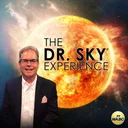
Space X star ship launch June. June skies.
Steve Kates Space and astronomy broadcaster (Dr. Sky)
Dr. Peter Michalos

Fighting Cancer and Aging With the Latest Medical Advances
Dr. Peter Michalos WABC Medical Expert
Advances in Lung Cancer Detection and Personalized Treatment
Dr. Peter Michalos WABC Medical Expert
Healthy Eating, Stronger Immunity and the Science of Living Longer
Dr. Peter Michalos WABC Medical Expert
Limiting Sugar and Choosing Whole Foods to Support Healthy Aging
Dr. Peter Michalos WABC Medical Expert
Protect Your Skin From UV Radiation and Reduce the Risk of Skin Cancer
Dr. Peter Michalos WABC Medical Expert
