


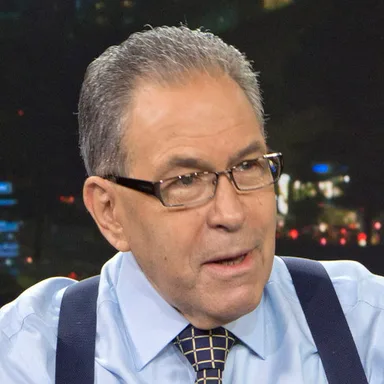
Michael Stoler Real Estate Expert
The Stoler Report with Michael Stoler: Michael Cohen
Transcript
Automated transcript · uncorrectedGood morning. This is Mike Stolar for the Stolar Real Estate Report. The office market in New York City has it change? It has changed so much over the last couple of years. It is dynamic. It’s growing, people are moving, people are looking for space. Parts of the city which were never considered areas that the growth of being taken
care of. So today I’m fortunate to have Michael Cohne, who is the president of the Tri State Region at Colliers New York, to provide his insight on the market. Thank you for being here.
Thank you for having me, Michael.
So let’s be an optimist. Tell me what’s happening with the market. But I believe you can be optimistic today.
Well, we ended twenty twenty five with a banner fourth quarter, and the first quarter of twenty twenty six would appear to be on track to be similarly successful. And I’m talking, of course, from the perspective of the investment in the landlord community here in New York City. We saw very substantial leasing activity and absorption. It’s really something of a
perfect storm. If I go back to my economics one a lessons of supply and demand. We’ve got increasing demand, shrinking supply, and as we all know, that leads to higher pricing.
So where we seeing pricing today for rents, I know they’re up substantially from the COVID period of time, but sure even over the last six months, it’s substantial increases.
So for the newest product, the buildings built within the last few years in the huts and yards and in midtown, and they are sprouting like mushrooms, We’re going to see a lot more new construction. You’re talking about not just triple digits, but multiple triple digits. It’s no longer uncommon to hear about leases with rents in the two hundred
plus range, and very common to see leases of between one hundred and two hundred dollars a foot.
So it happened to the cheaper rents in the City of New York.
Well, they’re still around. Of course, the downtown Financial District offers a lot of bargains, and we still have you know, B and C quality buildings that are that are offering places for the average tenant that can’t afford to pay one hundred dollars a foot or more. And there’s plenty of that inventory out there.
What’s happening with concessions for tenants.
So it’s an interesting question. There are really two main kinds of concessions, the improvement allowance and the abatement. And we’ve we’ve started to see abatement periods gradually shrink. Back in twenty twenty five, the rule of thumb was you get a month free for every year of term, so five months on a five year lease, ten months on
a ten year lease, sometimes rounded up to six and twelve instead. But we’ve started to see that shrink and there’s definitely downward pressure on abatements. On the other hand, improvement allowances are very sticky these days because the average tenant, and I’m not talking about the major financial.
Institution, very different time, right, the.
Average tenant doesn’t want any part of building out his space anymore. He doesn’t want to pay for it, he doesn’t want to design it, he doesn’t want to build it. And most landlords have become manufacturers of office space. We’ve all we’ve seen them all in has the capability of turnkeying space and pre building space, and that costs what
it costs, and with inflationary pressures, those costs are rising. So the turnkey or the pre built still continues to be the norm for most tenants, and those costs can be anywhere from one hundred and fifty to two hundred dollars a foot, depending on who designs it and how elaborate and how laviage the finishes are. And those numbers
haven’t budged much. If anything, they’ve gone up thanks to inflation.
What about the pre builts? Are wes seeing more prebuilts?
So the pre built is you know, this is going to sound hokey, but there’s there’s you know, the old saying build it and they will come. And for a certain sector of the market, particularly spaces of twenty thousand square feet or less, that is now the established norm.
Nobody wants to walk in to an empty white box and envision what could be done with it. They want to walk in to a space that’s either built for you know, a tammy open cre the native environment, or one that’s built for more of a service environment half and half open space and perimeter offices. But there are
very few tenants that will start from scratch today, so everything, almost everything is pre built.
What about the co sharing business.
So the office suite and coworking business is back in business. We certainly had a shakeout right after the pandemic, but fundamentally the model has changed in two ways. Number One, the enterprise level coworking options places to put fifty or one hundred people proved to be too lumpy, and income stream for the coworking operators feast or famine, whereas the
onesies and twosies, small suites you know for one or two people, or sometimes you cram in for to six, that’s a much more recession resistant income stream, much more predictable. So we’re seeing much more of that. And secondly, the arrangements the coworking operators are making with the landlords are more of a partnerships. The risks are shared, they’re more durable.
In good times, the both landlord and operator will enjoy the benefits, and when times get tough, they’ll both suffer the downturn. But that’s much better than having these operators start going broke, throwing the towel, give back the keys, as we saw with many of them after the pandemic.
What about the midtown South rezoning, the availability and increasing of space.
Well, this is part of the City of Yes legacy, and I think it’s going to have a very positive and very impactful effect. So if you think about Midtown South, mostly south of thirty fourth Street, much of the commercial inventory there has been rezoned residential, and the Florida Area ratio, which we know as FAAR, increased from twelve times to
eighteen times. This is an extraordinary increase. And I think we’re going to see a lot of redevelopment, a lot of old buildings that will get emptied out and replaced by residential buildings, some of which will have stabilized apartments and some of which will be luxury condos. We’re going to see absolutely everything. They’re going to sprout like mushrooms
south of thirty fourth Street.
What about this situation with the ninety nine units.
Well, that’s a very interesting question. Now I’m not a residential developer or investor.
But everybody have properties which could be converted into.
There’s no question. So we’re so I’m an informed amateur, if you will, But there does seem to be resistance to building more than ninety nine unit rentals because of the prevailing wage obligations. And so we’ve seen a lot of these, you know, ninety nine or less unit residential developments, and the folks in the business tell me that until
there’s some kind of modification of the applicable programs, we’re going to see more of that.
What are the Lower Manhattan the reprograms?
So Lower Manhattan continues to have the largest oversupply of inventory. It’s still over seventeen percent availability, and that’s down from eighteen and a half percent a year ago. So while it’s made good progress and the racing volume was over two million square feet in the fourth quarter of last year, you know, double more than double previous quarters, there’s still
a lot of wood to chop and oversupply, and I think anything that will attract tenants downtown will be helpful. I do believe that if trends current trends continue, downtown will find itself being the last remaining refuge for the cost conscious tenant excellent quality properties at a fraction of the price in Midtown and Midtown South. But that will
require continue tightening in Midtown and Midtown South. So we’ll see, we’ll see.
What about Hudson Yards, what do you see going there?
Well, so Hudson Yards has one of the lowest availability rates in the city. It’s well under the ten percent which we consider equilibrium. It’s a landlord’s advantage market all the way, and right now there are new development sites looking for anchor tenants. Related has already found one and will be developing a new building, and we’re going to
see more new development in the huts and yards. I think think that the pressure to develop new buildings, both in midtown and the huts and yards is very high as these large tenants, the Citadels of the world, look to consolidate, put everybody under one roof, and can’t find enough space in the existing inventory.
Last question, well, how do you see the Grand Central neighborhood?
So Grand Central remains sort of the quintessential transportation hub, and particularly with the Long Island access, the east side access there now is very very popular. And I think the fact that Boston Properties has already landed sorry they’re now known as b XP forgive me, has already landed an anchor tenant for the former MTA headquarters on Madison
Avenue right by Grand Central, and we’ll be building a new property there, I think is evidence of the continued attraction and popularity of that part of town.
So I think, in essence, twenty twenty six seems to be a positive year. It may not be the amazing Christian, but I’ve been asking you to be the judge of what’s going to happen. Thanks for being here.
You’re very welcome, Michael. My pleasure
Sunday, February 15, 2026


The NYPD Has Made Strides in Modernizing Their Force
Jay Clayton Director of National Intelligence
How Foreign Billionaires Quietly Influence American Democracy
Scott Walker President of Young America's Foundation
The Ways and Means Committee Is Tackling Foreign Money in American Politics
Jason Smith U.S. Representative from Missouri
The U.S. Economy Is Booming and Will Enter the Next Phase of Growth
Steve Moore Economist; Co-Founder, Committee to Unleash Prosperity
Creating an Investigative Documentary About Canada's Killing of Healthy Ostriches
Drea Humphrey

Why the U.S. Is Massing Military Power in the Middle East
General Jack Keane Retired Four-Star General, U.S. Army
The Fentanyl Free America Strategy and the Fight to Save Lives
Frank Tarentino DEA Associate Chief of Operations, Northeast Region

Breaking Down the Dynamics of the New York Gubernatorial Race
Jesse Arm Vice President of External Affairs, Manhattan Institute
Offshore Wind Farms Threaten Fishing Communities
Bonnie Brady Executive Director, LI Commercial Fishing Assoc.

New Jersey's 11th District Special Election Has National Implications
Christine Hanlon Chair, New Jersey Republican Party

A Healthy Environment and Smart Cooking Habits Lead to Long-Term Health
Dr. Peter Michalos WABC Medical Expert

A New Comet Discovery and Humanity's Return to the Moon
Steve Kates Space and astronomy broadcaster (Dr. Sky)

Michael Stoler
The Stoler Report with Michael Stoler: David Schechtman
Michael Stoler Real Estate Expert
The Stoler Report with Michael Stoler: Eli Weiss and Andrew Albstein
Michael Stoler Real Estate Expert
The Stoler Report with Michael Stoler: Eli Weiss and Andrew Albstein
Michael Stoler Real Estate Expert
