


Transcript
Automated transcript · uncorrectedWith us.
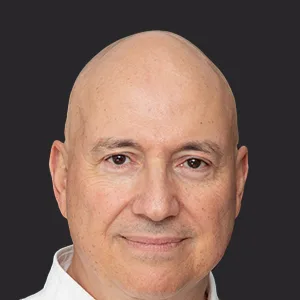
Today’s doctor Peter me Hellos and how do we live longer? Peter me Helloses are in house genius that specializes in science, history and a few other things medicine. Doctor Peter tell us, where where are we going to this week?
Well, today we’re going to basically summarize some of the things that have happened today. I’m going to call it lessons learned from COVID. And what we’re noticing now is we’re noticing an uptick around the New York City area, around the country, and around the world of COVID cases starting to uptick. The good news is there aren’t as
many hospitalizations and death as we initially saw with the initial variants that we’re quite bad. But what we’re noticing is that about forty six and one hundred thousand cases in the New York City area are being seen. And we’re also noticing that the hospitalizations have also trended slightly upward, but still not that bad. And when I talk about
lessons learned from COVID right now, we’re in a different place because we do have anti viral treatments. You know, they all everything has side effects and they’re not perfect. But we do have mild nupervir. We do have the pas of it available, so we do have something if given early, to slow down viral replication. Another interesting thing
that came out was if you go to a PubMed there was a major review of the literature for example with hydroxychloroq when and a lot of the studies that they found were initially were initially thought that it did not work at all because they were giving it to people two to three weeks later. And then the studies
when they looked at it in people that they gave it the first two or three days that it did help block the cytokine storm. So it is an anti inflammatory that’s been around for a while and it does.
It was shown in other studies around the entire world when they looked at hundreds of studies that have given the first three days. Like many other things like tammy flu, if you give it the first two three days, it works well. When things are more advanced, it’s a little harder to treat, and we learned that you don’t die
from the covid virus. You die from your own body attacking the virus, generating the inflammation, the fluid and the lungs and that’s how people ended up on ventilators. We found out other interesting things like the vitamin D levels.
That they turned out that the people with vitamin D levels fifty and up were less likely to have severe COVID, which was very interesting and that might explain why in some parts of the world where it was very sunny and people at high vitamin D levels that they fared better than some of the areas that didn’t. Another interesting
thing is a common diabetes medicine called met foreman. Those people who are on met forman. The prestigious Lancet journal, the Infectious Disease section published that less chance of getting long hauld COVID if you’re on met forman, and in other studies they showed that people on the common diabetes drug bat format were less likely to end up in
the ICU, even though they might have been diabetic or overweight. So all this stuff coming out is very interesting and we’re learning much more about it. We also learned as a country that our supply chain is national security and that we need to be making our own medicines, our own products, our own drugs. As we just learned the
other day that they put a Tower, for example, on semiconductors coming from China, until then the Chinese said, okay, fine, then we’re going to stop supplying the rare earth minerals. And then you couldn’t even make those chips anymore because without those rare earth minerals, and they’re the biggest producer of rare earth minerals in the world, So, you know,
supply chain issues. Being national security was a lesson learned from COVID. And also our hospitals need to be better prepared. We need to take care of the nurses, the doctors, make sure that we’re training peace people to take care of the baby boomers and the future generations.
Doctor I mean, I let you talk how some of the vaccines are around, and some of them have gotten a bad reputation as far as possibly causing blood clots. And we know me and you have a lot of friends that had blood clout problems. How does that help, How does that knowledge in the future help us prevent
those side effects?
Well, I think that all vaccines, if you look at them, have a certain percentage of side effects. Thank god, the side effects are relatively small, but that all needs to be looking at because it does appear there was a study in Ireland by the Royal College of Surgeons in Maryland that showed that the spike protein in COVID initiates
the climding cascade. So it does make sense. And initially, I, you know, some doctors when I told them, I started hearing about cases of iclots is, schemic optic neuropathy and vain occlusions and they said, oh, no, it has nothing to do with COVID. But now the publications are coming out, you know, left and right, So I think the spike
protein from COVID itself is worth And yes, the vaccine is designed to make a spike protein, so there are going to be some side effects, but you know, overall we have to look at how many lives were saved.
But like with any medicine, they’d be side effects. If aspirin were to come out today, John guess what it would be prescription if people knew that it was a powerful blood center, that it can cause peptic ulca disease and high doses of its interactions of other issues. For example, if it’s given to children, there’s a Stephen Johnson syndrome.
So everything has side effects, and that’s why you need to talk to your doctor, consult with your physician and discuss whether the vaccine is appropriate for you, if it’s going to be something annual. None of this has been determined because there’s so much data being collected right now, and hopefully now with you know, these megacomputers that we
have and we can look at analyze the data, will have better answers to give people advice and doctors on the frontline advice on how to advise their patients to move forward. But nothing is without side effects.
Thank you so much, doctor Pina Mihlosa. Anything else going on at the may come.
Up well, I think right now one of the things is I just tell people, because we’re having a lot of wildfires and there’s been a lot of air pollution and air quality issues. I advise people with lung problems pre aditioning conditions asthma to stay indoors, consider getting a HEPA filter to keep in your room where you sleep
and keep the particles in the air lower. And also change the cabin filters on your cars because the last few weeks with these wildfires from Canada and other areas of the world, you know your car cabin filters also need to be changed, so I think that’s one thing.
Protect your respiratory air and consider wearing a mask if there’s an active wildfire or if there’s an alert that the air quality is poor outside. It’s not a bad idea to wear an N ninety five mask if you have any type of compromise lung situation to stop those particles, because our lungs are like a big vacuum cleaner.
Understood, Doctor Peter Minhilo’s have a great weekend and we’ll catch up with you again real soon.
Thanks for always getting the truth out on the Cats round Table.
Sunday, August 6, 2023
Lancaster Barnstormers at Staten Island FerryHawks SIUH Community Park
Eric Shuffler Founding Partner, River Crossing Strategy Group
Life in the City is deteriorating before our eyes.
Peter King Former U.S. Representative from New York
Migrants in New York.. running out of space.
Robert Holden Former New York City Council Member
Ukraine offensive, progress or stalemate.
Tidal McCoy Venture Capitalist & Former Asst. Secretary of the Air Force

Evidence of society breakdown.
John Chachas Investment Banker, Founder of Methuselah Advisors
West Central Africa, Niger coup.
Former Deputy National Security Advisor Victoria Coates




Conflicts in Africa and Ukraine.
Dr. William J. Parker III Retired U.S. Navy Captain; National Security Analyst
Interviews Steven Dubb, Principal Beechwood Organization.
Michael Stoler Real Estate Expert
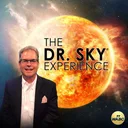
Mars volcanos. Was there once a sea?
Steve Kates Space and astronomy broadcaster (Dr. Sky)
Dr. Peter Michalos
Limiting Sugar and Choosing Whole Foods to Support Healthy Aging
Dr. Peter Michalos WABC Medical Expert
Protect Your Skin From UV Radiation and Reduce the Risk of Skin Cancer
Dr. Peter Michalos WABC Medical Expert
Processed Foods and Mental Healthcare Failures Threaten Public Health
Dr. Peter Michalos WABC Medical Expert
