


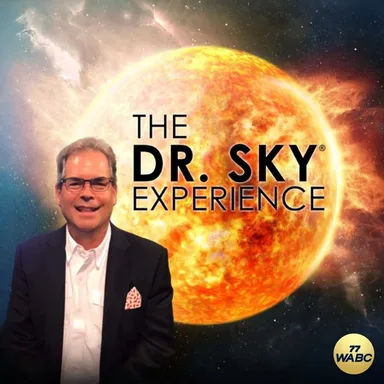
Steve Kates Space and astronomy broadcaster (Dr. Sky)
The skies of December.
Transcript
Automated transcript · uncorrectedWhat is today is Steve Kates, otherwise known as doctor Sky, a good friend, well an astronomer A looks through the heavens and gives us the what’s going on in the mysteries of the week, Steve Kates, what the heck is going on out there?
Well, good morning, John, and good to be back on the Cats roundtable here. Happy holidays as we move into the month of December. Amazing how fast things happen. A couple of stories too here John, we got two news stories and of course our mystery of the week, but it starts off with SpaceX again, John, this is interesting.
We know what happened on this launch of the big Starship rocket. You know, they had to blow it up, but they learned a lot. So here’s the latest the Starship two. That’s the booster that’s on top of the on top of the booster, i should say, the rocket itself.
They’re going to make a new and.
Improved one ten meters longer, more fuel and payload. This is the rocket that will get people to the Moon and Mars. Let’s wait because this is something made out of dameless steel, which is really incredible. And finally it has new raftor engines. Given it twenty percent more thrust, it’ll have nine raptor engines on that second stage, which
is the spacecraft, instead of six. We all know that the big Booster has thirty three. So John, it’s interesting to see what they’re going to do because the reason for the larger size they’re going to have to refuel that big spacecraft, the big upper stage in space. So they got more room.
So we wished them well, of course I understood.
I mean, have they figured out what went wrong with that previous rocket that blew up? What was it? Thanksgiving wheat?
Yes, John, there’s actually the eighteenth of November, and here’s what they think they do know. Now, obviously the engines work. This time the separation, they tried this thing called hot staging where they fired up the engines on that second stage before the first stage burned out. But unfortunately, when they did that release, the big booster rocket was supposed
to turn around and believe they’re not come back in soft land back at the launch pad. Well, things didn’t go right, so this time they had to push that destruct button. It’s going to be a long learning curve for SpaceX. It’s a very expensive learning curve. But I’m confident, just like many in the space industry, this will be
the primo rocket system to get us off the planet and then move on to the different planets and of course going to the planet Mars.
You know, there’s something else.
Have they figured out yet how they resist the radiation involved where they say they haven’t figured out at last discussion, they haven’t figured it out.
They haven’t, John, and you’re right.
The problem is with humans on board or animals in space, how much radiation penetrates the hull of these spacecraft. So they really haven’t figured that thing totally out. You know, in the nineteen sixties when we went to the Moon with Apollo, many people said, now we could never have gone to the Moon because they would have died going
through the Van Allen Belts. Well that wasn’t true. Those spacecraft had shielding. But they haven’t really perfected this shit. And of course there’s something that has a big concern for long duration space missions because guess what if you and I were to go to.
Mars on a spacecraft.
Now, it’s going to take us nine months minimum to get there. It’s a problem that they really need to solve. And we’ll report on that as we hear what’s coming down the pike. But John, the second story I wanted to mention was this large sunspot group that’s on the Sun just.
This week, a big M nine class flare.
What’s that? That’s more than an average power flare this weekend? Guy walking into the sky in the northern sky make it to see the Aurora borealis. But the concern is the big coronal mass ejection that comes out of this thing.
Later Jenny tramps at one point eight million miles an hour from the Sun.
It takes hours out get here.
But where we right now, we’re in the throes of the solar cycle twenty five, which of course may peak right around April. What’s to say about that? Very interesting that we’ll talk about the mystery of the week. Now this is interesting too. How did the ancients predict eclipses?
Now this is bizarre because we have the big total eclipse coming up in April. But let’s go back into the history briefly. The original predictions of eclipses were done by the ancient Babylonians, and they found out that there’s a cycle, which we used today called seos that’s about eighteen years eleven point three days to be exact. Eclipses
repeat in a series like this. But John, this is amazing. They had no computers, and what did they do They mark down their information on clay tablets. But the Greeks, of course, get it even better. They themselves developed a device called the anti Cassira mechanism. Hard to pronounce, what is it. It’s a small computer with wheels and dials
and numbers, and they, above any group in the world, had the lead on science with this thing, like you’d hold in your hand and turn the different dials with numbers. My goodness, John, isn’t that amazing how they could figure out eclipses? And today with our modern computers, it’s a sinse to do it.
But this is I’ve seen.
I’ve seen, doctor Steve. I’ve seen that it was brought to the Museum in New York on loan, and it’s amazing that it’s two thousand years old or whatever, or even older. How they did it, I mean, you would think you would think that something like that. Somebody had to help them, somebody.
More than I would imagine.
Yeah, it’s amazing, John, It’s almost unbelievable because even then they didn’t have I mean, they knew about the stars. They obviously knew about geometry, sacred geometry too.
But you’re so ray. How the heck did they predict this?
And they found this under the Mediterranean Sea, you know, in case in all kinds of you know, debris over the course of thousands of years. But some astronomer actually did one of these, he actually reproduced one, and even he was looking at this, going, this is just unearthly otherworldly that they’ve able to figure out eclipses, because nowadays, John,
we have eclipses right down to the second we know exactly where they’re going to work her. Pseudos to both the Babylonians and the ancient Greeks for trying to go out there and doing it successfully, going where no humans have ever gone before at that time to predict these amazing events.
This is quite amazing.
Well, Steve Kates, doctor Sky, thank you very much. All Americans are looking forward to you, listening to you every Sunday morning to see what’s up.
You know what’s up, well, John, it’s a high honor. Happy holidays, and always check us out at WABC radio dot com for the late information on all these realms, including American exceptionalism at the Doctor Sky Experience.
Happy holidays to you and your family. John
Sunday, December 3, 2023



Governor Hochul's "Clean Slate" policy is a mistake.
Ray Tierney Suffolk County District Attorney

President Biden has to stay supportive of Israel.
Alfonse D'Amato Former U.S. Senator from New York


Remarks on the death of Henry Kissinger and Richard Nixon
Ed Cox Chair, NY Republican State Committee

President Biden must not weaken on supporting Israel.
John Bolton Former U.S. National Security Advisor

Virginia's citizen safety is a top priority.
Jason Miyares Former Attorney General of Virginia



This week's guest: Ari Hirt, Managing Director, Walker & Dunlap
Michael Stoler Real Estate Expert

Steve Kates
Exoplanet Radio Signals, SpaceX’s Heavy Rocket Test and Nuclear Propulsion
Steve Kates Space and astronomy broadcaster (Dr. Sky)
Supersonic Jets, SpaceX’s Next Starship Launch & Trump’s Golden Dome Defense System
Steve Kates Space and astronomy broadcaster (Dr. Sky)
The Science Behind Hurricanes, Cosmic Radiation and the Universe
Steve Kates Space and astronomy broadcaster (Dr. Sky)
Ben Franklin, Mars, and Asteroid Mining
Steve Kates Space and astronomy broadcaster (Dr. Sky)
The Search for Dark Matter and the Mysteries Hidden Beneath Antarctica
Steve Kates Space and astronomy broadcaster (Dr. Sky)
Earth's Extreme Forces and the Fight Over Pluto
Steve Kates Space and astronomy broadcaster (Dr. Sky)
