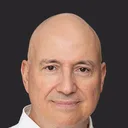
Exec. Director Kidney Foundation Saskia Monteiro Thomson
Great strides in treating Kidney disease.
Transcript
Automated transcript · uncorrectedSunday morning. What us today is Saskia Montero Thompson, and she is the executive director of the Kidney Foundation serving Greater New York and Connecticut. Well, Saskia, So many people are having problems with kidneys, and I felt that you should come on and talk about the progress they have made and what’s going on and who is most at risk.
Yeah, thank you so much for having me. So I do work for the National Kidney Foundation serving Greater New York and Connecticut. And I’m so glad you asked that question because there are thirty seven million Americans that have kidney disease, and ninety percent of those people don’t even know it. So why is that. It’s because kidney disease
has no symptom. So it’s one of those things that you really need to be aware of and to be proactive and asking about your kidney function so that you can stop it or slow to progress. Because there are, as you indicated, some great new developments. So one in three people is actually at risk for kidney disease, and
that’s because the risk factors are diabetes, high blood pressure, and obesity. All of those things put a strain on your kidney and can lead to what we call chronic kidney disease, which is basically the strain on your kidney starts to impact the function of the kidneys over time.
So it’s like any other chronic disease that you have to manage over time.
We understood and once I guess your creatin level goes above a certain thing, So in other words, people should watch the creatin level when you take blood tests and if it gets too high, then you might need a kidney transplant. Is that correct?
Yeah, So basically there’s two tests that test for your kidney function. The creatin and ratio is actually a urine test, and then the blood test that you’re talking about measures how well your blood is filtering, how well your blood is working to filter the toxins out of your body.
So both of those tests taken together are really important. And the good news is is that you’re probably if you’re going to the doctor, you’re probably getting those tests. You maybe not be talking about it, But what happens is when your creatinin level gets too high, that means there’s protein in your urine that means that your kidneys
aren’t working optimally. And the EGFR, which is the blood test is a score of how well you’re filtering the toxin. So you want that to be high. I mean, your kidney function is high. So what happens when you’re when your kidney function is declining, you either need dialysis, which is a process of filtering the toxins out of your body,
or a transplant to stay aby.
As you said, and the transplant, there’s so many people on the waiting list. What’s the waiting list then?
Yeah, so in New York right now, the waiting list is five to seven years. And that waiting list really refers to people who are on the deceased organ waiting list, you know, unfortunately when somebody passes away, but they do give a gift of life. That’s what that wig.
And it’s five to seven years, my god.
In New York.
Yeah, and sadly, the tolerance for dialysis is it about five years, So it’s not a great solution.
So so in other words, if you have to take dialysis, you could only do it for five years and then the tolerance level on your human body starts to.
Have a problem. And so if it takes seven years, there’s a two year lap. How many people a year die from needing die meaning a kidney and nikennyon.
Well, so the statistic right now is twelve twelve to fourteen people die each day waiting for a transplant.
Twelve to fourteen people die each day waiting for transplant. That is a lot, right.
That means twelve people are going to die today. Twelve people died yesterday and that’s not okay. So now how do you improve that? And that’s what we’re really focused on at the National Kidney Foundation. Well, one way is through a living donor. That’s when somebody can will donate their kidney to another person. Now, what’s amazing about the
human body is that you can live. If you’re a healthy individual, you can live with one kidney. You can live with their a healthy life. And in fact, only the healthiest people are able to donate their kidney. That’s what all that testing is about. And you can designate.
You know, let’s say I wanted to give my kidney to my friend, but I’m not a match. What I can do is using the National Kidney Registry, I can donate to another person and through an exchange program that the person of my choice will receive a kidney.
Understood, Now, how can people get more. You have a website.
We do. We have a website at kidney dot org and that is an amazing resource. It has everything you need to know about kidsys disease, how to manage your kidney health, what you need to know, what you can eat, all of all of the resources. We have great little videos.
But you know, going back to the first point, the most important thing about kidney disease is to have an awareness about it and to get tested, especially if you have diabetes or high blood pressure, because you really are at the greatest risk and when you catch it early, there are a lot of new therapies available to stop
or slow the progression of chronic kidney disease. And you can also make significant changes improvements by managing your diet, avoiding and said which will be like I newprofen being hydrated. So there are things you can do. Awareness is key, intervention is key.
Well Saskio Mantio Thompson, executive director of the National Kidney Foundation for Greater New York and Connecticut. Thank you so much, and God bless you, and God bless America and hopefully we can help more people.
Yeah, thank you so much for having us. I just want to say one more thing. We’re having an awareness walk on November tenth, Sunday, November tenth in New York City, and that website is Kidney walk dot org, slash and YC.
And it’s a great way to learn more, get involved, really really help us save lives. Thank you for having me, John, Thank you
Sunday, September 22, 2024
The Venezuelan gangs. What should we be doing?
Bill Bratton Former NYPD Commissioner

Candidate for Governor Fight to resist imposed green laws on citizens.
Patrick Morrisey Governor of West Virginia
The country is at a crossroads in this election.
Jay Clayton Director of National Intelligence

How did Israelis blow up pagers? Does it mean war?
General John Teichert Brigadier General, USAF (Ret.)

AM radio has a big victory this week. Voted out of Committee 45-2.
David Donovan Senior Policy Adviser, NYS Broadcasters Association


The toll on Trump's assassination attempts.
Dr. Ben Carson National Advisor for Nutrition, Health, and Housing, U.S. Department of Agriculture; Former Secretary of Housing and Urban Development

What are rouge waves? Look for Venus in the western sky.
Steve Kates Space and astronomy broadcaster (Dr. Sky)