


Transcript
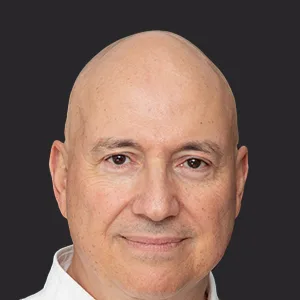
Automated transcript · uncorrectedSunday Morning with us is doctor Peter Mihelos, and his nickname we love to call him Live Long and prosper and he works very hard to make sure our listeners live longer so they can listen forever. Doctor Peter Mihalos, what’s our tip for today?
Well, today we’re going to talk about a very important part of our body for longevity, and that’s our lung And it turns out that we take twenty three thousand breadths a day, every twenty four hour period, and our lungs are basically the place where all the efficient energy transfer of oxygen happens. And we need oxygen because that’s
our gasoline for all the chemical reactions in our body that keep us alive and keep us going, and moving oxygen around the body is so important. And what’s really fascinating is our brain, which is only two percent of our body weight, assumes the majority of the oxygen that’s about twenty percent. And then of course our liver where
a lot of our metaboligy.
Mean our brain consumes twenty percent of the oxygen. Considering is only you.
Know a handful, that’s it, because that’s where it all happens. The power of the human brain and other mammalian brains suck up a lot of oxygen because there’s a lot of think about a supercomputer that’s like these supercomputers that they’re building in AI need a lot of energy and the power grid. Same thing in our bodies, and our
heart is after, the liver is after that, and then is the heart. The heart consumes about eleven percent, so we use up a lot of oxygen. And that’s why our lungs are so important to keep them healthy. And one of the first things that we tell our audience is how bad smoking is. And smoking is a real issue.
And I learned that lesson in medical school during the anatomy lab and we had to dissect human cadavers and some people in our class were smokers. And when we opened the lung, think of the lungs as a vacuum cleaner and a vacuum cleaner bag, and you only get one and that’s the last the lifetime. And when we
opened up the smoker’s lungs, they were like black tar inside, whereas a healthier person, even though they were older, their lungs were pink and healthy the tissue, and that scared several at least five that I know of. Firstly, who just brought their cigarette right after seeing that, So every time you smoke a cigarette, you really have to think
of that. And also the lung is damaged in something called COPD chronic obstructed pulmonary disease. That smoking makes things narrower. And also of course we know that smoking effects lung cancer. And also people who smoke have a four time greater risk of macular degeneration lungs. In order to keep them healthy, of moderate exercise every week, using your lungs is extremely important.
And the other thing is like, for example, after surgery, they give you something well the incentive sparometer breathe in so that you can continue using your lungs and expanding. And I tell people when you go down to the ocean, or if you go down to Coney Island on the beach and smell that beautiful clean air, or if you’re
down in Saint Petersburg, Florida, four hundred Central Avenue on the rooftop and breathing in that fresh air, take the deepest breath you can and then take one more in elation on top of that, and that really expands your lung because we forget to use our entire lung capacity.
Think of a balloon. When we breathe is only partially filled. You take some good deep breaths and you fill up your lungs with fresh air. It’s extremely important. Other things you can do to protect your lungs are in your house to have a Hepa air filter system in your central air conditioning. If you don’t have central air conditioning,
use a portable Pepa filter in your bedroom. And a lot of times when you go change the filter and you see all that smoke and dust and black soot on the filter that would have been inside your lungs, but instead it’s absorbed by the filter. Especially when we had those Canadian wildfires, there was so much sut all
over the filters and also the cabin filters of cars. We found that the cabin filters of cars also need to be changed twice a year. And also all the microplastics in the air, and you know, people say, my car tires wear down, and guess where all that rubber goes When you’re on the highway, especially if you drive
a convertible or your windows are open, a lot of those microplastics are going inside the lungs and that is not a good thing. There are also things you can do with food, things like blueberries and olive oil, and dark leafy vegetables and fatty fish like salmon that are a wild caught, not the ones that are fed in
captivity and that are fed corn, which is not natural. Those foods turn out to also be good for the lungs. And also coffee helps the lungs too, and that’s why asthmatics tend to like coffee because coffee has something called a phospho diastrois inhibitor, which in English means that it causes the little tiny airways to open up wide, and
that’s why you feel you can breathe better after you have a cup of coffee. And that’s the basis a lot a lot of the early asthma drugs like theopolin and one of our friends who made one of the first patches for that kind of stuff, and that those drugs turned out to be things that have the same
compound that coffee has that can make you your lungs to open up wider and breathe better. So these are some of the things. Also when it’s a day where it’s as ozone alert, ozone turns out to be bad or pollution day, and you can look up that online in your area. You have those warnings when you listen
to the Weather Channel. People with mung problems need to stay away and avoid that, and of course try to stay healthy not get sick, because in the United States we still lose forty five thousand people a year from influenza, and what happens is that affects our lungs and when your lungs swell up. The same thing with COVID. When
you get fluid in your lungs, that blocks the oxygen transfer and that’s how people actually die from COVID and from influenza and pneumonia. So staying up to date on things like your pneumonia vaccine are important, and getting treated early when you have influenza, and taking the anti virals when you have COVID as well. Those things are very
important so it doesn’t end up with secondary pneumonia. So treating your lungs very healthy, breathing the cleanest presciest air that you can stop smoking, moderate exercise, and the foods that we talked about to keep our lungs healthy. And we need our lungs for the long haul for longevity and staying healthy.
Well, doctor Peter Michlos, thank you for filling us in. And there’s so many other questions. And I guess we need healthy lungs because that’s a vital part of our party. But the fact that twenty percent of the oxygen is eaten up by the brain is phenomenal. I mean, I’ve heard.
I mean we’re capable. Our brain is capable of doing so many visions a day, so many calculations a day. We don’t have a computer that works as well as our brain yet.
No, it’s our supercomputer, and we have to feed it good food, healthy food, and fresh clean air filled with good oxygen. And keep listening to WABC for more interesting health tips and factoids so we can continue to live long and prosper.
Thank you so much, and we’ll catch up again real soon. Thank you so much.
Thank you John for always getting the truth out on the Cats round Table.
Sunday, September 22, 2024

The Venezuelan gangs. What should we be doing?
Bill Bratton Former NYPD Commissioner
Great strides in treating Kidney disease.
Exec. Director Kidney Foundation Saskia Monteiro Thomson

Candidate for Governor Fight to resist imposed green laws on citizens.
Patrick Morrisey Governor of West Virginia

The country is at a crossroads in this election.
Jay Clayton Director of National Intelligence

How did Israelis blow up pagers? Does it mean war?
General John Teichert Brigadier General, USAF (Ret.)

AM radio has a big victory this week. Voted out of Committee 45-2.
David Donovan Senior Policy Adviser, NYS Broadcasters Association


The toll on Trump's assassination attempts.
Dr. Ben Carson National Advisor for Nutrition, Health, and Housing, U.S. Department of Agriculture; Former Secretary of Housing and Urban Development

What are rouge waves? Look for Venus in the western sky.
Steve Kates Space and astronomy broadcaster (Dr. Sky)
Dr. Peter Michalos
Limiting Sugar and Choosing Whole Foods to Support Healthy Aging
Dr. Peter Michalos WABC Medical Expert
Protect Your Skin From UV Radiation and Reduce the Risk of Skin Cancer
Dr. Peter Michalos WABC Medical Expert
Processed Foods and Mental Healthcare Failures Threaten Public Health
Dr. Peter Michalos WABC Medical Expert
