


Transcript
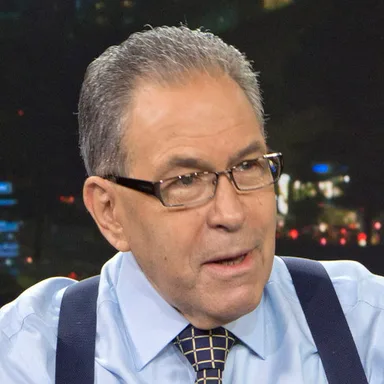
Automated transcript · uncorrectedGood morning. This is Mike Stola for the Stolar real Estate reporting on the Cats Roundtable this morning. I have an individual who is called mister Brooklyn. Even though he grew up in Chicago, went to the school in Boulder, Colorado, he knows in Brooklyn market exceptionally well. His name is Dan Marks. He is the CEO of Terror CRG. So
what’s going on in Brooklyn?
Hey, Michael, thank you so much for having me on the show. It’s a real honor. There’s a lot happening in Brooklyn. There’s always a lot happening in Brooklyn. So you know, obviously from a Brooklyn real estate perspective, like everywhere, the market has been down from a transaction a dollar volume over the last few years. But we’re really really
optimistic going into twenty twenty five into twenty twenty six for a lot of different reasons.
So what are some of those reasons.
Well, the four to twenty one A extension and the forty five X TAXIMAMA programs are now in effect.
And what effect this is going to have on Brooklyn projects specifically, Well, it’s.
Going to wake up the Brooklyn development market. You know, we’ve been sound asleep actually forced hibernation for the last two and a half years, and now there’s an abatement that actually can unlock all of the demand that developers want to put to work. You know, they really want to be building in the borough, but without a tax incentive,
you can’t really do it unless you’re building condo and so condo development has propped up the development market over the last couple of years, but it’s not enough to support the demand that Brooklyn has from a population standpoint.
So this is we’re expecting a big development boom.
Because of this. So what does the developer get tax benefits? What are the other benefits?
Really that’s the biggest one. I mean, you have certain obligations. You have to provide affordable housing requirements, and there’s different requirements for different sized projects, but by and large it freezes the property value taxes and gives them an abatement for up to thirty five years, depending on the project that they’re building. And without it you can’t really get
these projects de pencil.
And what percentage of the units have to be affordable.
Twenty five percent? Generally if you provide more you can get different texts.
Now is a scept to one hundred and thirty percent of AMI or is it no, No.
They’ve they’ve removed that highest level of AMI, so now you have to blend down lower, which actually, practically speaking, isn’t that bad on paper. At one hundred and thirty AMI actually worked out really well, but oftentimes the rent for the one hundred and thirty percent AMI was so high it was hard for actually people to rent those
units because their market rate units were about the same price.
Okay, you have a number of new developments opening up in Brooklyn. Let’s talk about some of them. You know, the ones near your office on Dean Street and so on. Yeah.
Sure, I mean the old program that expired a couple of years ago. There were a lot of developers that were rushing to meet those deadlines, and so development has been continuing. It just no new development has entered the pipeline for the last two and a half years of any real significance. So we’re starting to see a lot
of the projects that started a few years ago really start to take shape. And I think the neighborhood where it’s most prevalent is in the Guanas neighborhood, which was rezoned back in two thousand and twenty one. And since then it’s completely changed. You walk around that neighborhood projects have topped out, they’re getting skins put on. I mean,
it is absolutely transformed.
What are the rint requirements on the Gowanas projects.
Well, it’s the same, it’s the old four program, so it’s SEV seventy five percent market rate, twenty five percent affordable.
Let’s talk a bit about the Red Hook. An interesting market.
Redhork’s always been an interesting market. You know, it’s a little bit of a transportation desert, if you will. Some people call it some parts of it at least, but people who live there love living there, people who work their love working there. We’ve seen a lot of development happening there, both from an industrial standpoint and a residential
development standpoint. Bungalow just recently purchased a property and they’re gonna be putting a movie studio there. So in addition to that, the Columbia Waterfront, just the State of the city just announced that they purchased property from the Port Authority and they’re gonna be building a tremendous project along the waterfront there, which should help shape because it really
does connect a Red Hook down there.
So let’s talk about green Point. It’s significant property development taking place there.
Yeah, green Point Landing.
When it’s completed, we’ll have fifty five hundred apartments with a tremendous amount of open space. It’s a twenty two acre site partnered between Brookfield Properties and park Tower Group. Almost three hundred units of that will be affordable. So that is by far the most significant project being built in green Point right now. We’re fortunate enough to work
with them in some capacity to help with some of the leasing that they have. But yeah, we’re We’ve always lovet green Point. We’re working on a large industrial project up there right now. It’s it’s a pro it’s a neighborhood that you know, still stays true to its core with the people who’ve been there have been there for
a very long time. But along the waterfront you’re starting to see that transformation really happen.
Speaking of the waterfront and the other areas, let’s talk about Williamsburg. It’s like twenty years ago or twenty one years ago that the first developments went into a place, you know, with shape is crossing and so on.
I think Williamsburg is a great example of when rezonings happened, how long it actually takes for it to really take full effect. And so, yeah, it was twenty years ago or so where that entire industrial area along the waterfront was repurposed into mixed useton residential.
It’s completely changed now.
You have you know, top of the line retailers, restaurants, music venues, beautiful towers along the waterfront, but still has that sort of neighborhood charm. And then you look at other neighborhoods that also went through those larger neighborhood rezonings.
Downtown Brooklyn was shortly thereafter. Even East New York was just recently rezoned over. You know, during the Deblasio administration, Guanas got rezoned. And there’s still a couple other neighborhood zonings that are still in the works right now, but it takes time for them to really reach their full potential.
Guanis is just at the very early stages of it though.
You know, with regard to those neighborhoods, Let’s talk about hospitality because I know that the heritage property was basically in bankruptcy and so on.
Yeah, look, I mean hospitality was obviously dramatically impacted by the pandemic. You know, twenty twenty was a severe blow to that industry, and you know, I think we’re starting to see it come back. If you go out there now on the weekends, you see the bars and restaurants, especially in neighborhoods like Williamsburg, are absolutely packed to the gills.
You go to Brooklyn, Bridge Park, you go to parts of downtown Brooklyn. I think hospitality is doing pretty well, so in major sort of tourist hubs. I think in Brooklyn they’ve done well, but there’s still a long way to go. We’re definitely not past the pandemic ripple effect of some of the major shutdowns that we saw.
What about the City of Yes program.
Yeah, the City Yes program, I think is probably the most exciting new program, and.
Really try to explain there’s a.
Lot to it.
There are some parts that I think most people are excited about, which is adding some more density into lower density areas, allowing an far bump or a floor ratio bump, and neighborhoods that have really been low density to try to improve the number of affordable housing units that are available to the market. That’s one thing, But for us,
the City ofs is really a one two punch, you know, as far as spurring the activity in the market. So you have the forty five x the new tax abatements that everyone’s been waiting for. For the last two and a half years, you’ve had interest rates go up, up, up, up up, and finally they’ve stabilized. And now we have
the city coming in and saying we want to do more also, and so from our perspective as transactional brokers in the market, it’s really good news because there’s always this huge demand in Brooklyn, and if you provide the incentives for people to build there and to develop there, they will do it.
And they’ve proven it time and time again. Williamsburg, you just brought up earlier downtown Brooklyn. Go on.
As you give people incentives and reason to build in Brooklyn, they will build.
And they will continue to build. But if you take those incentives away, they will stop.
They have to talk about Connee Island, specifically in Conne Island with the casino.
I love it, I think, I mean, it’s such a natural fit. I mean, it’s always been America’s playground. It’s such a wonderful place to spend time. You’ve seen a tremendous amount of new development happening down in Coney Island and adjacent neighborhoods of Coney Island with waterfront views absolutely special place. And I saw the renderings that were sent
out by Thor and their partners a couple of weeks ago. I think it just it looks like a fairy tale. I mean, it looks absolutely amazing. So obviously we’re we’re very pro Brooklyn where we would love to see some major development happening down in Coney Island. Would produce a tremendous amount of jobs from a construction standpoint, and then
ongoing jobs moving forward. So I think that would be such a great, great thing for the.
For the city. What neighborhoods we were talking the other day, you know, Flatbush, Midwood, What what neighborhoods do you see the most activity taking place?
Well, we’d like to see more activity across all the neighborhoods. You know, the last couple of years it’s been it’s been so slow. So I think there are there are specialized buyers, investors and developers in each one of these neighborhoods.
And so as as you know, our team focuses across the entire Brooklyn market and We have specialists in each one of these neighborhoods, and so I wouldn’t say there’s one in particular that’s generating the most amount of buzz and activity right now.
Of course, pre pre.
Pandemic, it was Gwanas because that was the biggest rezoning and that was the most exciting, bigger footprints. But I don’t think there’s one clear winner as far as most active neighborhood right now.
Well, what’s happening with Docs seventy two.
Don’t know exactly.
I know for sure that I think everyone was hoping that it would be full and fully leased up at this point and you know, activated the way that it should, because it is such an incredible project. It’s literally a skyscraper turned sideways with unbelievable views.
And how’s it doing unleasing?
I think it could be doing better, you know.
I think, you know, Doc seventy two was anchored by we Work, and they got some bad luck because we work.
Everyone knows the story if we Work.
I think at this point, you know, it’s six hundred and seventy five thousand square feet, which is a lot to fill, and we Work was intended to take half and I think they probably have less than half. Now they have signed some leases, but like office property owners across the city, the pandemic was really hard and it’s
the market is really slow to get back to work.
So who’s buying. When we spoke the other day, you mentioned that families are buying the old line families.
Yeah, I think people who are less dependent on expensive debt, people who are balance sheet buyers.
It depends on the size deal.
Also, you know, if we’re talking about the headline buyers, the people that end up in the major publications and the people that you want to talk to, those are going to be more of the family, long term family hold buyers. But there’s plenty of activity on people that don’t make the headlines, that don’t make the newspapers where
they’re finding value. A lot of transactions are happening in the smaller mixed use, in multi family transactions because they’re not subject to the stabilization laws that were packed passed in twenty nineteen.
And I think if you look at something, if you look.
At you know, we’ve got every market report going back to twenty ten on our website, So if you ever interested in what’s going on there, we have all the data. If you look at the trends when the incentives are in line in Brooklyn. When when the capital is cheaper and the incentives are in line, the market booms. So
look at twenty twenty two, money was really cheap. People were tired of sitting on their couch. Everyone wanted to be back in Brooklyn, and all of a sudden we had nearly a record breaking year of nine point five billion dollars. When the money starts getting more expensive and you take the four twenty incentive away, you see a
huge dip into twenty twenty three into twenty twenty four now, and so our expectation is that we’re we’re going to around the corner.
So I think there’s a great deal taking place in Brooklyn, and I think that I would like to thank my friend Dan Marx, mister Brooklyn CEO of Terror CRGI, for being here. See you next week.
It’s a real pleasure.
Sunday, June 23, 2024

The state is still reeling from Governor Hochul's congestion pricing ruling.
David Paterson Former Governor of New York

Wins Gracie award for her talk show on WABC
Cindy Adams New York Post Gossip Columnist

Quality of life in the City. Taking illegal bikes off the street.
John Chell Former NYPD Chief of Department

Education has slipped in America. Need to catch up.
Martin Hassner Executive Director, Liberal Party of New York




Climate activists deface Stonehenge.
Steve Kates Space and astronomy broadcaster (Dr. Sky)

Michael Stoler
The Stoler Report with Michael Stoler: David Schechtman
Michael Stoler Real Estate Expert
The Stoler Report with Michael Stoler: Eli Weiss and Andrew Albstein
Michael Stoler Real Estate Expert
The Stoler Report with Michael Stoler: Eli Weiss and Andrew Albstein
Michael Stoler Real Estate Expert
