


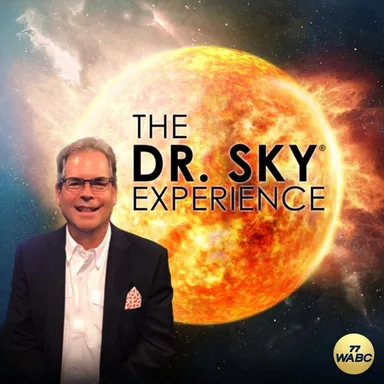
Steve Kates Space and astronomy broadcaster (Dr. Sky)
Climate activists deface Stonehenge.
Transcript
Automated transcript · uncorrectedWit us today is Steve Kates, otherwise known as Doctor Sky, and he entertains us every Sunday morning with looking at the up in the skies and wondering what the heck is up there? Well, Steve Kates, what’s new this week?
Well, good morning, John, Happy summer to everybody. As everybody probably knows, the summer saustice occurred last week. And now, of course temperatures unlike here in Phoenix, well, where the temperature was like almost one hundred and ten, we understand much of North America, the United States is getting those almost triple digits in some areas. But John, there’s something
very interesting to talk about with that beautiful full moon that occurred on Friday, called the Strawberry Moon. Every eighteen and a half years, the moon and the Sun and the Earth alignment causes something called a lunar standstill. Sounds dramatic, doesn’t it. What it means is people who watch the moon rise even tonight, they may notice that it rises
way to the far south southeast, which is unusual. And the reason is at this time of year, the moon reaches what they call its lowest declination in the sky. This occurs over the next few months. It’s a phenomenon called the lunar standstill. How about that pretty exciting.
Well, you know it only comes around every how.
Many years, about eighteen and a half years, but you see it for a few months on either side, and especially this one occurring so close to the summer solstice. People may notice that beautiful moon tonight which is just past full. But it’s sure the heck looks John full to me. That’s amazing. But you know, there’s something else
that attaches itself to this lunar standstill. We talk about Stonehenge, and this is interesting. According to great archaeological studies, it’s believed that Stoneheens was built by Celtic high priests called Druids about twenty four hundred you know, twenty four hundred BC.
These stones that are thirteen freet tall, they marked maybe it’s a graveyard, maybe it’s a time machine, but mark the location of the summer sustice and winter solstice. But John, here’s something sad. It’s been reported just over the last few days that climate activists have actually defaced Stonehenge. Get a load of this. We don’t make this stuff up
with orange paint. So isn’t that a disgrace too. Obviously one of the longest living, you know, monuments on the Earth to what might have been a great civilization talking about the coordination of the Earth, the Moon, and the Sun.
How about you, Well, I think it’s horrible that they try to deface it. Hopefully it could be fixed relatively easy. But there’s a lot of crazy people in this world, and and I worry about it.
I do too, John, It’s getting crazy. But on the positive side, we go to space. Now we talk about Boeing Starliner. Well, knowing all the things that Boeing is going through, their Starliner was set to return maybe this week, but now it might be moved all the way to June to twenty sixth because they have issues with these
thruster and rockets. It’s on this particular spacecraft. But what’s interesting they’re saying now return of the two astronauts is June the twenty sixth, four fifty one am Eastern daylight time. Of all places, John, like I mentioned last week, a soft landing, the first for a you know, US space crew or craft that’ll land on land in White Sands,
New Mexico. Well, we hope that they can figure out the problems with the Boeing Starliner, as it’s obviously been in controversy for quite a while.
Agreed. And you saw that article about Boning that Boeing and Airbus have been accused of using a possibly using fake titanium. And we don’t know the what the store or what the truth.
Is on that yet. John. It’s a sad story. And hopefully these things be corrected because they’re flying public obviously you and everybody would agree need to have confidence in the ability for the manufacturing of these very sophisticated air quest But we go on, John, here we go the mystery of the week. How about this one? What are some of the most things excuse me,
one of the most important things people need to watch during summer? Oh everything. He talks about tornadoes when we talk to weather. But John, it’s all about lightning. And here’s some statistics. Sad as it is, since two thousand and six, Florida had the most lightning kills, meaning sadly, people died eighty eight people. Texas came in with thirty
nine and Colorado with twenty five. But here’s the point. Lightning can be most dangerous over open water. Many people may or may not know that. But the boat electricity that comes out of one lightning bolt, which is a negative charge, John, get a load of this is about fifty thousand degrees fahrenheit, five times the temperature of the
surface of the Sun. That’s incredible. So everybody needs to pay attention to what happens with thunderstorms and lightning. But there’s a positive side, as we can do.
Do ships get hit pointed often?
I don’t know that for sure, John, but I can say this much. If they have those large masks out there with of course radio and all kinds of communication, I wouldn’t be surprised if they do get hit. But there’s a positive side to conclude the mystery of the week that obviously this particular lightning and when they happen,
how about this one hundred lightning strikes occur per second on the Earth and that’s amazing. But what it can do, it helps create something in the atmosphere called ozone, which is triatomic oxygen. Oxygen is two ty atomic oxygen which we need is three. So lightning with a negative charge actually does create this particular phenomenon called the return of
what we need in our atmosphere to protect us from the ultraviolet rays of the sun. So you give a little, you get a little. But people just need to be very careful as they go out, and especially at beaches.
I mean not to alarm people. I mean people know if it’s going to have a range shower or a thunderstorm, probably take shelter. Of course, common sense rules there. But John, we always remind people to do what go to the Doctor Sky Experience, brand new content up there to talk about the lunar standstill and everything that people would want
to know at of course WABC radio dot Com, the Doctor Sky Experience and John, always a privilege an honor to be with you on the Cats Roundtable as we talk to what millions of people around the world who listen to the great talk Radio seventy seven WABC.
Thank you, Steve Kats and we’ll talk to you again.
Wilso, thank you, John, appreciate it.
Sunday, June 23, 2024
The state is still reeling from Governor Hochul's congestion pricing ruling.
David Paterson Former Governor of New York

Wins Gracie award for her talk show on WABC
Cindy Adams New York Post Gossip Columnist

Quality of life in the City. Taking illegal bikes off the street.
John Chell Former NYPD Chief of Department
Education has slipped in America. Need to catch up.
Martin Hassner Executive Director, Liberal Party of New York




Steve Kates
Russian Satellites Track U.S. Spacecraft as Japan Targets Mars’ Mysterious Moon
Steve Kates Space and astronomy broadcaster (Dr. Sky)
Deep-Space Mysteries, UFOs and the Orionid Meteor Shower
Steve Kates Space and astronomy broadcaster (Dr. Sky)
The Mysteries of Mermaids, El Niño and the Antarctic Ice
Steve Kates Space and astronomy broadcaster (Dr. Sky)
Exoplanet Radio Signals, SpaceX’s Heavy Rocket Test and Nuclear Propulsion
Steve Kates Space and astronomy broadcaster (Dr. Sky)
Supersonic Jets, SpaceX’s Next Starship Launch & Trump’s Golden Dome Defense System
Steve Kates Space and astronomy broadcaster (Dr. Sky)
The Science Behind Hurricanes, Cosmic Radiation and the Universe
Steve Kates Space and astronomy broadcaster (Dr. Sky)
