


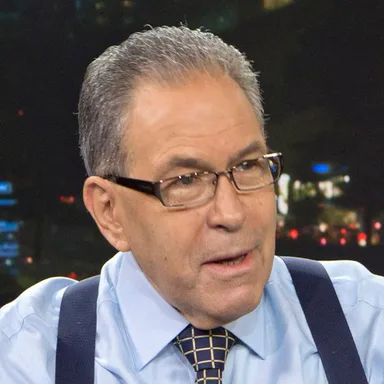
Michael Stoler Real Estate Expert
Interviews Joseph Pistilli CEO Pistilli Real Estate Group Chairman of Board First Central Savings Bank
Transcript
Automated transcript · uncorrectedGood morning. This is Michael Stoler for the Stolely Real Estate Report on the Katsman Titi’s round Table this morning. I have the opportunity to have a friend, a banker, a real estate owner, a special person by the name of Joseph Pistelli who is the CEO of Pistelli Real Estate Company. And Pistelli Real Estate Company has been around
since nineteen seventy five. They own property in every borough upcepts for Staten Island, specializing in the residential rental market. Since you’re a residential key, let’s talk about what’s your thoughts about the residential market with regard to after the twenty nineteen legislation.
It’s nice to see you again, Mike, and I hope everything’s going well.
It is, thank you.
I see the residential market as one that’s bounced back. It’s strong again. That definitely has come back. I think that the change is in the regulatory process of the residential market that has happened since twenty nineteen has definitely changed how investors are looking at the property, how new investors are coming in, and how banks are looking at
that particular type of real estate. The laws that the changes that were made truly, truly changed the environment of commercial real estate in New York City.
So how do they change them? And I failed to say that you’re also the chairman of the board at First Central Savings Bank, correct, Okay, which is a bank who lends to the real estate industry and who understands what’s happening. Word, So let’s talk about what happened in twenty nineteen and what effect it’s had with the MCI’s
major capital improvements and so on.
So in twenty nineteen, actually what happened was probably the most reasonable affordable housing program that the City of New York was ever able to accomplish. Rent stabilization is association. Those regulations had changed. And it’s not to say that regulations are not a good thing. They are a good thing.
They’re not a good thing when it’s bad regulation. But they actually did was change the vacancy factors of when a tenant moved out, regardless of what their rent was paid in regardless how long they lived there. You were no longer allowed to upgrade that apartment. You were no longer allowed to put it out for some form of
market rent. And I think what’s important in that change, What really took place there. It’s not to say that someone can get an apartment for fifteen hundred dollars a month or whatever the rent may be. What it actually did was take apartments off the market from being made available for other people. The most important thing it did
was take about the true culture and philosophy of what the program was about, and the program is about maintaining and preserving good housing stock in New York City or in any place. Once that happened, neighborhoods like the Bronx, which were coming up through not only affordable housing programs, but investors were going in to fix up properties and
put them on the market for rent, it was no longer just the affordable housing program available. People began to say, it’s a good deal to go there, it’s a good future. I’m not sure that’s the case any longer, not only for the Bronx, but for any neighborhood in New York City.
So I think that’s the first thing that’s happened with that change, or some of those changes.
What about the thought of converting some of the office buildings to residential I think it’s a.
Very expensive proposition to do. We have a very eclectic portfolio. We have office buildings, some that we’ve developed, others that we purchase, just as well as condominiums of co ops and we’ve developed.
But you’ve converted industrial properties to residential over the years.
I’ve done that as well as built office buildings from the ground up.
What about the situation with the cost of conversion of these properties, no incentives for the landlord to put money into properties today and the topic of warehousing of apartments.
Right, so on the incentive process of I’d like to just if I may discuss, I believe that the City of New York should be able to come up with a formula to offer incentives to office building owners. There are two components with the office building. One of it you have rentable and usable square footage space that you
use that in your formula. But I think now that we don’t know when these office buildings will be fully occupied. I know that in our culture, in our own portfolio, we are definitely negotiating with tenants whenever we have an opportunity to adjust their rents to give incentives to move them to stay on in our buildings. We’re not at
a rate of vacancy that we’re suffering with that, but we don’t want to go any further than we need to go with that. But I do think that the city in New York would be ahead of the game by being able to offer incentives to property owners with a formula to move that incentive to the tenants.
Okay, so now I’m going to turn it around to your banking heat in this environment, how do you look to financing real estate today?
We look at it the same way we did before the complexity, but.
The pricing has gone up substantially. I mean, you had loans at three and a half and now they’re at six percent. How do you under write the deal?
It’s difficult to underwrite certain deals. I think there are more owners that are going to be writing checks to put more equity in those properties if they want to keep them in order to get them financed, or they’re going to be looking at alternatives such as selling them.
And where do you think it’s the best opportunity. I know that you were very bullish for a couple of yeers on the Bronx. What’s your thoughts today about the other Burroughs.
I think I’m a Queen’s boy. I love Queen’s I think it’s a great place to invest. I think it’s very, very ethnically diversified. I think a lot of companies find a lot of convenience there. So I think that Queen’s is a very good place to invest. I think the Bronx is good too. We have a project we’re looking now.
We’re doing a zoning change a very small piece of property. We’ve owned it for twenty five thirty years, so we’re going to try to put up about ninety units. Their ninety five units. I’m looking at doing the whole thing one hundred percent affordable.
So people hear the point one hundred percent affordable. You’re a developer, you’re a capitalist. How do you make money if it’s one hundred percent affordable?
Well, I think that the the the way to make the money with that. Now, I’m not a professional on affordable housing. I have family members that are, and I hope to use them to accommodate us to make that that switch over. No, we’ve always been a straight or the dogs build a developer.
What about retail? You know, borrough retail I think has returned. It’s neighborhood retail is an important factor. How do you see the retail market?
I think retail’s coming back, except if you’re driving in Manhattan, you see a lot of vacancy store if the store, if the store. I think a lot of avenues such as Madison Avenue, which you’ve got very very high end stores who didn’t really care if they sold a brace or a watch or a T shirt. It was really
a marketing device of saying we’re in New York City, Madison Avenue. I think with that being said, Mike, I really believe that our elected officials need to bring New York City back by letting people know this is where it’s happening, this is how it’s going to happen. And I think that I think our city or elected officials
and state they’re missing that they’re missing that moment of saying COVID is over and COVID is over. You know, there’s a remarkable because this is nationwide’s some degree what’s really happening. When you listen to this the governor of Florida speak and you listen to what he says he’s done, and you listen to what he says he’s going to do,
he is saying nothing but one thing. The American dream is in the palm of his hands if we want it. And that’s how I interpret with that man. And the results are the longitude and latitude of Florida, and people should look at that stake.
So have you bought your next property in Florida?
I think I missed the boat.
You think you missed the boat. I don’t think Joe Pistelli has missed the boat too much as a banker, as an owner. And I’d like to thank Joe Pistelli for being here today. I’m slowly reporting on the Cat’s round Table. Thanks again, Joe Michael, thank you
Sunday, June 18, 2023

Subway Marine indicted…just wrong.
Peter King Former U.S. Representative from New York

Will the legislature come back to finish business?
Zach Williams Transportation Reporter, Bloomberg Government
Redistricting favors Democrats. GOP must hold maps.
Ed Cox Chair, NY Republican State Committee

Radio program, Sundays 3:00-4:00 PM EST, 770AM radio. David Schoen guest.
Roger Stone Political Strategist & Consultant
No Labels looking for a third Party candidate. Waiting till Spring of 2024.
Former NC Gov. Pat McCrory
Commissioner Sewell resigns, new Commissioner not yet named.
Bill Bratton Former NYPD Commissioner

Fastest star in the universe. New moon, dark sky.
Steve Kates Space and astronomy broadcaster (Dr. Sky)

Michael Stoler
The Stoler Report with Michael Stoler: Eli Weiss and Andrew Albstein
Michael Stoler Real Estate Expert
The Stoler Report with Michael Stoler: Robin Schneiderman
Michael Stoler Real Estate Expert
The Stoler Report with Michael Stoler: Winston Schromm
Michael Stoler Real Estate Expert
