


Transcript
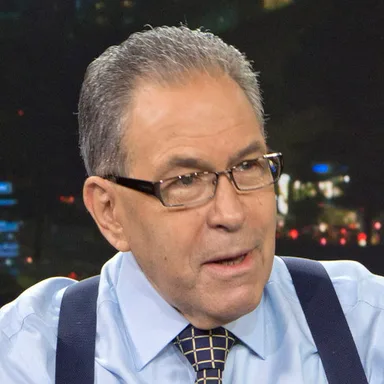
Automated transcript · uncorrectedGood morning. This is Mike Stola for The Stolar real Est. They report on the Cat’s Roundtable. Everybody comes to New York City to go dine. People want food, they want specific type of foods, and they love birds, other bakery items, cakes.
So where do you get the best food in New York City produced by people who are the manufacturers. So today at the studios we have Keith Khane, who is the principal at Allwasher’s Bakery. Thanks for being here.
Good to see again, Michael.
And thank you for bringing some bread that these people at the studio are very happy to enjoy.
I’m really happy, and I was taught long ago when I was a child never to show up somewhere empty handed.
So let’s talk about the difficulties of operating a bakery in New York City due to the regulations, potential congestion, pricing, and so on.
I think small business in general is a tough business to be in a major metropolis like New York City. I’ve owned the business now for going on seventeen years.
The company was found in nineteen sixteen.
Nineteen sixteen, and I took it over in two thousand and seven. At the very end, I went to see how well I were do in small business when you had a financial collapse that you haven’t had since the Great Depression. And each year it is as soon as you think you’ve made some headway, something else happens. Right
twenty twenty, we were chugging along. It looked like we were doing well, we got our numbers right, and boom, COVID happen, and it puts you right back in the place. And then you have all the other forces. You have city new city laws. You’d mentioned congestion pricing.
What effect is congestion pricing going to have on your manufacturing and retailer.
Well, I don’t know about the retail but in terms of manufacturing, we delivered to top restaurants and retailers in the city. It’s going to cost us more to do our deliveries. In turn, we also purchase from other vendors.
So for every truck that stops off, I believe the congestion pricing was about thirty five dollars per vehicle. So I’m planning on all my vendors to be charging me more for my goods.
And you have to do simultaneously.
Simultaneously and services, right, So it’s not just a truck bringing me flour. How about the plumber that has to come right and work in your bakery, or the electrician or whoever it is. It’s going to cost more, and it’s it’s like a tax, and it’s going to be a pass along tax.
So when you bought the chain, it had one store on the east side, it.
Had one store at three or eight East seventy eighth Streets right off Second Avenue. And now we’re on our third retail store. So we have one on Amsterdam and eighty first. And I ventured into the suburbs, so I opened a store in Roslin Heights off Willis Avenue.
So how difficult was it to deal with the landlords today? Uh?
You know, I will tell you this. It’s here’s the weird part. New York City’s tough. Opening up in the town of North Hempstead in Rosin Heights was just as tough. So I guess you know they talk about New York tough.
I was prepared for it. But a lot of these regulations, and again it’s not just building code, it’s the Health Department. It’s all of these things that add up to big numbers. And it’s also not only building the store, but it’s the cost of doing business right. Your rents are going up three four percent every year. Inflation also really really,
I think hurt a lot of the food businesses in the city.
So here here’s the question, why do you go out to Long Island. You’ve had your foothold in New York City.
I think COVID was the impetus to it and to see how we can create value to the company and branding outside of New York City. And what I realized is that Roslin Heights mimics the Upper East Side, so you had a huge influx of restaurants established restaurants here in the city. Filich A t bar Pietro’s open up there.
There’s a slew of people that have ties here to the city that are also tied to Rosalin Heights, whether they had originally lived in Rosalin Heights and moved to the city now or vice versa.
During COVID, when did you up the Bronx factory.
Bronx factory opened up November twenty twelve. We’re in the Hunters Point section. We had expanded that factory as well, and that is a different style of business. It does give me the ability. If business is not where we need it to be from a sales level, I can go out and get business. And one of the growth
areas was our parbek frozen now, so.
Yeah, explain that. I think it’s very interesting. People don’t know about that.
So we aren’t first to market at all. But we’ve always been known for high quality product, even way before I the bakery for over one hundred years and have been able to create that same level of quality and product excellence and be able to flash freeze it and ship it now nationally, so in the responsibility of the
retailer or food store.
So what happens when it’s flesh.
Well, it’s very simple. It is ninety five percent baked. The end user, all they need to do is pull it out of the freezer, take some thaw out of it, and put it in an oven. We recommend three seventy five between five and eleven minutes, depending upon the product, and you have a product that is as good or
better in some cases and what I created on a daily basis.
Now there is a new plear proliferation of bagel stores opening up. How do you see that?
Listen, that’s the hot new thing. It’s bagels and pizzas. Right, they are very profitable on its own, but you also have a more crowded market. Right. Pizza originally was you had some pizza place is people made their name and other people jumped on it. So now you have pizza that you’ve never had and a quality level, but you
also have that plethora of pizza places top a bagel, great product. They are saturating the market now. And you know for me all those places, not pizza so much, but bagels. There’s a huge influx of bakeries coming. They all pull some business, so the competition level has increased.
Let’s talk about the bakeries. I mean many years ago, I’m a baby boomer, they were major chains who were baker baking products. So what’s happening today? New cookie stores, the new David’s.
Yeah, I remember David’s cookies very well. I actually sell bread to a restaurant tour who was the originator of David’s cookies. But you have Chip City, you have other cookie stores, you have Insomnia so and again they’re very smart.
They’re way smarter than me because they’ve been able to product with high demand and low labor doing breads and a lot of the stuff that we do on that artisan level needs a huge amount of labor.
So where do you see the growth in these difficult times.
I see the growth in redefining war washers in the respect that I’m going to leverage more social media to drive a new customer so they understand that history is still there, the impeccable quality of the product, and that experience of having an iconic bakery that you get to go to.
And what happens to the stores that have, you know, breadlines their own companies. Are you changing all washes becoming a national name?
It is, I hope. So on the wholesale level, I don’t know if we’re going to expand retail. Retail is a much more difficult business. But retailers who are really good at retail will tell me wholesale is way more difficult.
How do you find new bakers? I mean, labor’s tough. We develop them in a lot of cases. A lot of times I would rather have a neophyte come who wants to learn how to bake or has some skills, and we can teach them. Many years ago, I was a line cook in college and I went to the owner.
I said, hey, you know, I don’t have any experience. Is that okay? He said, you also don’t have any bad habits. You’re hired, so that stuck with me.
So I think it’s interesting to know how do you do business in New York. I’m happy that we have the best bred in New York and also available around the country. And I’d like to thank Keith Cohne for being here today and I’ll see you next week.
Thank you, Thank you Michael. It’s great seeing
Sunday, August 11, 2024
Country is facing a dire choice in November.
Alfonse D'Amato Former U.S. Senator from New York

Kamala has a lot of ground to make up.
Judge Jeanine Pirro U.S. Attorney for the District of Columbia


The cost of political correctness.
Charles Gasparino Fox Business Senior Correspondent and Columnist
This year's presidential election is pivotal for the Country.
Kevin McCarthy 55th Speaker of the House
Still so many unanswered questions about Trump's assassination attempt.
Ron Johnson U.S. Senator from Wisconsin

The Middle East is on the verge of all-out war.
Alan Dershowitz Harvard Law Professor Emeritus
Behind the scenes of President Nixon's resignation.
Ed Cox Chair, NY Republican State Committee

Fate of the astronauts in the Boeing Starliner space module.
Steve Kates Space and astronomy broadcaster (Dr. Sky)
Michael Stoler
The Stoler Report with Michael Stoler: David Schechtman
Michael Stoler Real Estate Expert
The Stoler Report with Michael Stoler: Eli Weiss and Andrew Albstein
Michael Stoler Real Estate Expert
The Stoler Report with Michael Stoler: Eli Weiss and Andrew Albstein
Michael Stoler Real Estate Expert
