


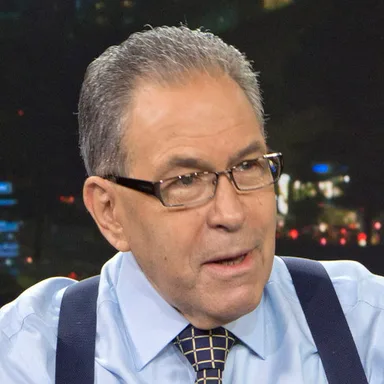
Michael Stoler Real Estate Expert
This week's guest: Andrew Goldberg, Vice Chairman, CBRE
Transcript
Automated transcript · uncorrectedGood morning. This is Michael Sola for the Solar Real Estate Report on the Cats Roundtable. Retail a word that was personifying bad times, especially with the Internet retail. What’s really happening in retail? I don’t know the answer. So today I’ve assembled the leading mavin of the retail world.
One of the three founding members of the Edward S. Gordon Retail Group, the one and only Andrew Goldberg. Thanks for being here, Angel.
Thanks for having me. Michael, what a nice introduction.
So when you went over there, you were the first vice chairman of CBRE.
Yeah, I was there for thirty years, so I was an overnight success.
It took thirty years for that vice.
Chairman came about twenty.
But yeah, So how’s the world look today, you know, especially after COVID. We’re at a different time today and.
Very different time in retail. You know, when COVID nineteen we were going it was slowing down a ready, right. The market’s peaked in around sixteen fifteen sixteen, and things were starting to slow. But then when COVID hit, everything you know, came to a halt. So most retailers spent you know a couple of years almost trying to figure
out the situation and figure out their stores that had no growth, that had no you know, changes, most people just kicked the can. And now what we’ve seen last year, in twenty two and in twenty three was that businesses needed to start to move forward again. And that’s when we started to see some real aggressive growth and new
entrants come into the market, people changing concepts. Retail, you always need to keep moving forward, and we had a couple of years.
Of just stop now, you had said a couple of weeks ago, I think to a member of the press that the world of the retail ownership of properties has continued from many years ago when it originally started.
So, going back when I started in the business, and even before then, a lot of the European designers were owned. They were family owned businesses, multi generational, and they owned a lot of their real estate. So it wasn’t uncommon, you know, in Europe in all the major cities you find that they owned their real estate. And then some
of them were coming here and they were buying the buildings here. As companies grew, it became less desirable for them to own the real estate, and as they went public, a lot of those companies owning the real estate wasn’t the best use of the cash. And it seems like we’re now going back full circle to you know, some
of these companies buying the real estate.
Would you consider it certainly the prices that they’re paying ridiculous because they seem rather high as compared to the rest of the market of the real estate world.
I wouldn’t say ridiculous. I’d say that it’s a very finite market that we’re talking about. That we’ve seen the trades in right, We haven’t seen a lot of trades throughout the city. We’ve seen so far. The two big ones that everyone’s talking about are sitting in you know, fifty sixth and fifth. And when you realize that for
these brands, and they’re big luxury groups and they’re public, but they’re really controlled by family shareholders, that it’s not the worst use of cash to own the asset. But more importantly, it allows them to tie up the space for their brands.
And it also protects them on rent increases and.
They can figure out how they want to allocate the expenses to the store on rent versus how they want to allocate it throughout the corporate structure.
What’s happening on Madison Avenue today. This Madison Avenue had really been hurting.
So Madison has gone through a huge evolution. It was COVID really hurt Madison and Fifth for that matter. But when you walked Madison a year ago, it was a lot of vacancy. And now we’re seeing that there are leases that are you know, store is coming, stores under construction.
A lot of shifting was Madison, you know, fifty seventh to sixty second, sixty third you saw a lot of activity, and then now going north up to seventy second, there’s many of those spaces all have for rents, have coming soon signs. So we’ve seen a tremendous amount of space come off the market and we’re going to watch as
in the prime part of Madison, two buildings are going to be coming down. So you can have a full block empty on fifty eighth to fifty ninth, and then you have up on sixtieth another development, So those tenants all need to come out. They’re all relocating elsewhere on the avenue, and then over the next several years you’ll
start to see those spaces come back on the market again.
The restaurant business seems to be growing, especially your firm recently took care of the OVA lease at the Farley Building.
Yeah, the you know, FMB has been a real driver, right, Luxury and FMB have really been driving a lot of the deals that are done in the velocity that we’ve seen over the last year, everything from the quick serve, grab and go stuff to the full service restaurants. I think that as the coming back to work and figuring
out how to make office buildings the most desirable as they can be with amenities in the building as well as restaurants at the base. So the bitter restaurant tours are making deals now, they’re able to grow and landlords want them in the buildings.
So let’s talk a little bit about the area on the far west side in Hudson Yards for retail.
Well, I mean that’s basically a new city came into Manhattan and it’s been over the last few years or many years, but it’s now fully developed. The buildings are all up up through the second phase of Hudson Yards, so the office space is all released. From what I know about office leasing, it appears.
That the office space is not a problem. I think the retail with the question was when Nieman moved out and to be taken over by Wells Fargo, reduced the but.
They had a lot of retail there. I still think again, the office space, the office buildings need the retail. The two live together, right. You need to be able to service and provide goods and services for the tenants in the buildings. So they had a lot of retail space there.
I think when they were designing and building and leasing Hudson Yards, everybody was going bigger and bigger with retail. Then as the project got fully developed and people were living in it, it started to realize that retail wasn’t as necessary as they originally thought, and they were able to get back the box and they had Wells Fargo.
And my understanding was others that were looking at that as really modern office space, I think it’s the right thing to do. So now you have at Hudson Yards, the tenants, certain tenants on the ground floor all doing really well. You have now a lot of great F and B and less space I think will help that project.
What about the Farleo station and the Morning and Station.
Yeah, they did a great job. Well, just did a great job. I think with all of you know, the new again, a lot of F and B, a lot of you know, there’s people are walking through those buildings, not just as a place to take a train, but they’re actually going there if they work and around the area,
and they’re using it as their paths to walk through to get from you know, Penn Station.
Right. But the irony is you go down to the Fulton Market and Westfield wants to give up their space, okay, because it’s like different market and there’s a lot of people there, surprising different.
Deal structure also for what was going on, and I don’t vaulted. I think Westfield’s starting to rethink some of the decisions they made or what they’re doing going forward as a company. So I just don’t know how that fits into.
What about the gyms and the boutique gyms, so lifetime Fitness and that type.
And we’re seeing a lot of the bigger gym operators now all coming, not such little boutiques anymore. It’s a lot of the big guys are coming. And you read that Chelsea Pierce signed the big lease and they’re reported to be running around for more space. Crunches out in the market. New York Sports so we’re seeing there are
big guys that are looking for large blocks of space to do gyms also now, So it’s that was another one of those COVID businesses that really stalled and slowed down, and now they’re coming back and looking. The biggest issue for them is just finding the amount of space they need and the configuration that works, at economics that work.
And what about pickleball, which has become a So I.
Just had this conversation before I came here about people looking to do pickle and podel podell is a new thing that people were trying to open up a pickleball padel club and trying to find space in the city.
So I’m sure you know, we’ve seen some pickleball open up, I know on the far West side and on West forty second they put it into the Lifetime over there. So it seems to be taking on a lot of you know, momentum.
To go back to your early career and family, you were in the bagel business. Okay, there is you know, Goldberg’s Begels. Everybody knows that in the Hampton’s and parts in New Jersey and other areas there are stores like bagel stores, you know, raising Kine and all these others, and also what’s your thoughts about those coming in here
coupled with the fact of what’s happening in Times Square with sixty one million visitors last year.
So a couple of different things there. Right when you look at Times Square again, over sixty million people coming in to visit Times Square, they’re there. It’s it’s just a sea of people. And what we’ve seen now is that a lot of fast food or a quick service going in there. And it’s the Raising Canes which has
a line at all times. We’ve seen, you know, McDonald’s open up their new Counts Popeyes and it’s just a lot of gramp and ghost fast turns. And I think that’s what it is. That’s where the people are, and that’s what you’re catering to. And they’re seeming to have huge success, and the rents came down to levels where you.
Can do that and you can make a living and.
They can make the money. The bagel stores are a little different. Those are local, more local businesses.
But the irony is you don’t have any local operator’s opening the stores. You have chains up opening stores. So there are more of those. So as I would say, on my TV show. I always had a crystal Apple.
I don’t have it over here. The crystal apple, I think is shiny because I think the world of retail is very successful and I think it’s going to only get better. And I’d like to thank Andrew Goldberg of CBRE for being here today. See you next week.
Thanks for having me. Michael. Always nice to see you.
Sunday, March 24, 2024
Governor Hochul still facing crime problems despite the National Guard.
David Paterson Former Governor of New York

Both the City and state are facing severe budget problems.
Hank Sheinkopf Political Consultant

Senator Menendez will not run as a Democrat.
Eric Shuffler Founding Partner, River Crossing Strategy Group
The time for electric vehicles has passed.
Steve Moore Economist; Co-Founder, Committee to Unleash Prosperity

Israel's continued bombardment of Gaza.
John Bolton Former U.S. National Security Advisor
Invasion on the southern border.
Tommy Tuberville U.S. Senator from Alabama; nominee for Governor
The great solar eclipse April 8, 2024
Steve Kates Space and astronomy broadcaster (Dr. Sky)

Heavy metals and your health. Mercury and arsenic levels.
Dr. Peter Michalos WABC Medical Expert
Michael Stoler
The Stoler Report with Michael Stoler: David Schechtman
Michael Stoler Real Estate Expert
The Stoler Report with Michael Stoler: Eli Weiss and Andrew Albstein
Michael Stoler Real Estate Expert
The Stoler Report with Michael Stoler: Eli Weiss and Andrew Albstein
Michael Stoler Real Estate Expert
