Transcript
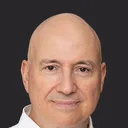
Automated transcript · uncorrectedSunday morning. Well, a lot of things are happening in the world with us. Today is Nathan Simonton, and he is a commissioner with the Federal FCC, the Federal Communications Commission, and there are many things happening at the Federal Trades Commission that he wants to make the public aware of.
And good morning, Happy Sunday morning. Where do you want to begin on a Sunday morning.
Well, John, it’s great to be here talking with you, and I thought maybe the public could do with an update and a little bit of an explanation about what the current controversy about CBS News is all about.
Well, yes, there was a big controversy at CBS, which up to now had a very great reputation, and all of a sudden, it seems like they edited Kamala Harris’s interview and they’re refusing to put out what they did.
Yeah, that’s right, John. So with broadcasting, it’s an interesting situation compared to other kinds of media because there isn’t any agency in the United States government that can tell the social media site what to do, or that can tell a streaming site what to do, because that’s fully First Amendment protected speech. And with broadcasting, we try to
protect speech as much as possible at respecting the First Amendment as well. But with broadcasting it’s a little bit different because when we broadcast on a frequency within a certain metro area, you’re excluding everyone else who would like to use that frequency. So since there are limited channels, then we said that there’s a slightly heightened interest in
what people are allowed to say and do in broadcast news versus other media. Now, the relevance here is that we’ve got a concept called broadcast news distortion at the Federal Communications Commission, and we have to be really careful about what that means. Doesn’t mean that that we disagree with the coverage. It doesn’t mean that the coverage has
an editorial point of view that’s all protected. It doesn’t mean that the Commission is deciding if the coverage is true or not, because we’re not a truth commission and that’s not within our powers. But you can possibly find yourself in the realm of a broadcast news distortion complaint if you take the presentation of an event and event
and deliberately alter it so that it shows something different than what you recorded, and that’s that’s the allegation that was brought by a group called the Center for American Rights against CBS in association with this interview.
And then does that mean CBS I understand from what I’ve read, is they made alterations so the candidate that they were interviewing looked better instead of looking bad. And when they just when the world asked them for a transcript, they refuse to put out a transcript.
Right, And it’s not within my powers to say whether whether they did alter or selectively edit the footage in such a way that it would be broadcast news distortion. I mean, obviously, you know, whenever you do any kind of any kind of media that isn’t totally live coverage, there are going to be editorial decisions. You know, you
might record forty minutes of footage but only have time for a ten minute spot, and you’ve got to make decisions about what you include and what you leave out. We understand that, and we want to protect that for sure, and we certainly don’t want to sit and censor the news or be too particular making news producers look over
their shoulders. But with the allegations here, it’s an interesting point because there’s it’s an interesting procedural posture if you sue someone, then you get discovery, so you get the court will order that party to let you look at their records if the suit goes far enough. That isn’t the case here. This is a public complaint, and so
what they’re really asking is for the Commission to reach out to CBS and ask for this transcript or for other information to get assurances that the news was not in fact distorted. And the particularly interesting wrinkle here is that the SDC doesn’t even regulate CBS because CBS, the network, is not a broadcaster itself. However, WCBSPV, the New York
CBS station, is owned and operated by the network, So there’s a further question if even assuming the network did something, it doesn’t become an SDC issue until the station cooperated with that knowingly. And so there are a lot of steps to get into a broadcast news distortion claim, and these are very rare, John, I got to tell you,
the last one that I could find that actually got litigated was broad in the last century. So we don’t normally get complaints that are worth pursuing, so much so that we don’t even really have standard processes for it.
At the Commission, So this is sort of unexplored territory for all of us. Understanding in my own yeah, in my own view, CBS probably could get out from under the allegations by releasing the transcript. If they did that, then the complainant would have no basis upon which to pursue a complaint, because the evidence would be out there
showing that the Commission had no grounds to pursue a complaint. But until that happens, then it’s it’s sort of up to the FCC’s internal processes to decide if there’s going to be any investigative attempt on our parts, or it’s up to our one to one communications with CBS to see what further gets there.
And I think it’s more serious if they don’t release the the implications in the transcript before the election, then they wait till after the election, then it doesn’t mean anything.
Well, that’s that’s the difficulty, is that they’re just since there isn’t any kind of standard process and there shouldn’t be no way of forcing the commissions to take this up, then this would become an after the fact resolution of the complaint. It’s precisely because complaints of this type are show rare and so rare with any potential merit that
we’re sort of in uncharged territory here. I guess the last thing I will say on this front though, as far as what the procedural posture might look like. The last time that one of these was litigated, the DC Circuit came back and told the FCC that we were being a little narrow in how we looked at that issue.
So they said that, for example, we didn’t necessarily need cutting room floor evidence to show that something had been changed. It could be enough to look at systematic evidence of an intent to distort, which could be proven by a variety of ways. So from my point of view, this area, this is an area of law and commission procedure that
in today’s highly regulated media environment, it would be funny if we didn’t at least try and figure out if there was a violation, and if there was, if the Commission can do something about agree.
Excuse me. The other big issue going on in Washington is I understand there’s a lot of controversy, and I think you were one of the ones that were upset about it. Is the fact that the Odyssey was sold to sorrows, and it went through the system too fast without the normal checks and balances. Let the American public
know more about that.
Yeah absolutely, So, John, know you’d have first hand experience with this yourself how difficult it can be to deal in a broadcasting license. If you’re trying to buy and sell broadcasting licenses, you don’t know how long it’s going to take, and you don’t really know what the standard for review is going to be until you’re in the
thick of it. I suspect this is your own experience.
Yes, I mean, we have to go through a lot of checks and balances. They check everything out on foreign investors and people that could change America without people knowing why it’s being changed.
Yeah. Absolutely. And the reason for that, John, is that the airwaves are a public truck. So the airwaves belong to the American people. No one has an inherent right to use them. You can get a license to use them, but to get that license, you have to promise that you’re going to act in the public interest, And of
course the public interest is a little bit hard to define. That’s like saying you have to be a good guy or something like that. But nonetheless, we can you know, we look at patterns of behavior, we look at the plans for how those airwaves are going to be used before we go out and write a license. Now, I
want to push back just a little bit on the idea that these licenses shouldn’t have been transferred at some point, because normally, when stations are going off the air or at risk of going off the air, and there’s a buyer and it’s a bankruptcy situation, the Commission tends to expedite things so that we can get the workers continuing
at their jobs, so that we can get that station making money again, and so that we can get more information out to the American public. We’ve got a bias in favor of more stations, not fewer, because we figure that keeps the public more informed. But what makes this case a little unusual I’d like to point to like
to point to a few elements. So first of all, First of all, the Commission attempted initially to affect the transfer purely at the staff level, without a full Commissions vote, and that announcement, a forty eight hour notice of that announcement came out the day after the August Commission meeting.
In other words, the day that a lot of people were going on vacation in the communications bar. Now Senator Cruz as well as senior sc people noticed that this was going on, and there was a protest raise. So the item got moved to being a commission level vote.
It didn’t get voted out until the September meeting, but that initial step in the process raised a lot of eyebrows because normally a transfer of two hundred plus broadcast licenses doesn’t just get done in a ministerial routine way at the staff level. So that’s the first thing. And then the second thing is when you look at the
item that actually got voted at the September meeting. And I’m sorry to say that it was a party line partisan vote, so we couldn’t really come to a full agreement. But that item that got voted out at the September meeting didn’t have a lot in the way of public interest analysis. There was public interest analysis of the waiver
for foreign investors, but there wasn’t a lot of public interest analysis around the outcome to the public of getting this license transfer. Now, I like media deregulation, and I would like it generally if we had less stringent and arbitrary public interest standards. But this is not the this is this is not the same kind of treatment that
I’m used to seeing of public interest analysis in much lower ticket m and a in broadcast. So I think those are the two things that raised the most eyebrows.
Understood. So, uh, what else would you like to tell the American people? I mean, we talked about the CBS problem, we talked about the Odyssey station problem. Is there anything else you want to tell the American people? We got another mettle of the two.
Left, Okay, Yeah, sure, I’d love to well, John, another thing that’s that’s frequently or that’s been in the news affair bit is there’s been a recent satellite explosion that was then this is an Intel stat satellite, the thirty three E, and it had been it had been launched eight years ago and was not, I don’t believe serving
the United States. It was mainly serving your Asia and Africa. But whenever a satellite blows up, the problem is satellite debris doesn’t go away very easily. It has to fall into the atmosphere and burn up. And then when you have satellite debris up there, it’s traveling at highly supersonic speeds.
So an example all you like to use is that a marble moving at these orbital velocities would have so much power it would be like a superpowered bullet that could blow up a car. So any orbital debris, even fairly small orbital debris, is bad stuff. Now, as for what the Commission is looking to do to manage it,
there are proposals out there. Everyone who wants to offer communications services really has to get an American license, regardless of where they want from and where their company is based, because America is so much of the world market. So there’s a lot we could do at the Commission both to require better orbital debris planning and then also to
get payments into the eventual removal of this kind of debris. And I guess the last thing I would add here is both China and Russia have tested satellite and anti satellite weapons and generated long lived debris plumes up there.
And this is this is a bigger and bigger issue when we’re talking about going from you know, three hundred satellites like we had twenty five years ago to musk Can alone having five thousand now is thatt licenses for seven thousand and there’s we’re going to have ten or fifteen thousand satellites up there before we know what’s what.
So it really behooves us to get out in front of it and plan for it.
Is there anything thirty seconds? Is there anything in the future that goes beyond air waves?
Well, I think there’s a lot of There’s a lot of ground to be explored. John, Now you’re familiar with the idea of a broadcast conto or a two D map covering, for example, a metro area and showing how the signals spread. But I think there’s a there’s a lot to be done in terms of three D mapping
for the higher frequencies that we’re increasingly seeing used with new generations of satellites and then also new generations of phones and ISPs. The thing is, these signals fade really easily. They fade if they hit a tree, they fade during a rainstorm. But they are also they can also be planned so that they reflect off buildings and terrain features.
So I think three GAM mapping so that you can have multiple users at different levels in a metro area is a really interesting possibility. The Commission shoul probably explore how to design a system like that and then get it communicated.
Understood well, Nathan Simonton say it right this time.
That was great.
Okay, thank you so much for briefing the American people, and let’s catch up again real soon.
I’d love to do that. Johns, you take care of Have a lovely day. Thank you.
Sunday, October 27, 2024
Waning days of the Presidential campaign name calling.
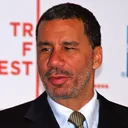
David Paterson Former Governor of New York


Book: The Big Guy: How the President and his son sold out America.
Miranda Devine New York Post Columnist
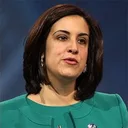
Special education decline in New York schools
Nicole Malliotakis U.S. Representative from New York
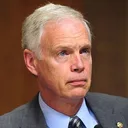
Still unanswered questions about Trump assassination.
Ron Johnson U.S. Senator from Wisconsin
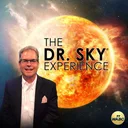
Boeing Intelsat 33E satellite blows up.
Steve Kates Space and astronomy broadcaster (Dr. Sky)