



Transcript
Automated transcript · uncorrectedGood morning. This is Mike Stola for the Stolar Real Estate Report on the Cats round Table. What’s happening in the hospitality business. The restaurants seem to be busier, it’s new private clubs are opening up. There’s a lot of things happening in the restaurant business after COVID. So today I brought a friend who understands the hospitality business. He
is the managing partner of the law firm of Kent, Beatty and Gordon and he’s also the head of the hospitality practice at the firm. How many years have you been there, Jack Gordon.
I’ve been practicing hospitality for thirty eight years. Kent, Baby and Gordon was formed twenty seven years ago. Prior to that, I was in the large firm practice.
So what’s your the nature of your practice today?
We do legal consulting for anyone involved with virtually any aspect of food and beverage. So you want to open a restaurant, you’re thinking of investing, you’re thinking of or franchising. You have a brand, whether it’s a wine or a spirit that you want to import or you want to export.
You own a hotel that you want to put food and beverage into you own an office building that you want to fit out with a restaurant or restaurants, you come to us.
So what’s happening today? According to some of my real estate experts who are in the leasing business, any restaurant that is available as being leased within a short period of time.
I think that’s true for spaces under ten thousand square feet. There’s a very hefty appetite if you will, to open new spaces. Tenants are so eager to do so that they’re willing to sign leases with virtually no negotiation, and I think that does not vote well for the future of those restaurants in years to come.
Why are tenants being offered these opportunities today.
Well, because they need to fill their vacant spaces, and because there’s such demand. It’s really a seller’s market. The buyers are looking for space and they’re willing to take it, even though the terms might not be as attractive as they were, say a year ago.
Okay, so here’s the question, what’s happening with these white tablecloth restaurants that we’ve had in the past. A lot of the restaurants burned in, you know, in other places like that what’s happening in that area.
Well, I think there’s an amazing amount of additional growth in that area because there are groups that are so well known today, celebrity base restaurant groups. A perfect example would be Dinex, Daniel Balloud, Yeah, exactly. And owners are devoting more and more square footage of their buildings like Manhattan Downtown or one Vanderbilt where Dinex is operating three
separate concepts within the same building. There’s a lot of private equity and fund money that.
So you’re seeing private equity funds and.
No doubt about it, it’s very new, but it’s no longer really new. I mean you go back five to ten years for the first ones ten million than one hundred million. Now there are at least a dozen that are looking to deploy upwards of a billion dollars collectively.
Okay, and they’re they’re looking at the Dinex or are they looking at the Carbone type. That’s the type of people that they’re looking at.
Yes, they’re looking for names because names fill seats.
Especially if it’s a Michelin.
Name correct like a Daniel Bullute correct or as Jean George.
What’s happening to buildings like four to twenty five.
Park well as is Gehen George for you. Four to twenty five Park has five thousand square foot pdr downstairs, very ornate and impressive main dining room and it’s branded with John George. Now that helps occupancy.
No question. Where are they getting financing today? You’re talking about private equity as private equity, that’s a separate thing. But are banks lending two restaurants again?
Not really? Not yet?
Okay? What about the situations where you the liquor license was always a problem? Is it more available today? Is a government pushing to be helpful?
Yes? And in fact a very timely question, because yesterday Governor Hochel signed into law a temporary liquor permit expansion which will really help new restaurants open, particularly smaller ones, because the current state with respect to the SLA application process is about nine months, and that makes it very difficult for a restaurant tour to incale when they’re not
yet certain that they’re going to be able to serve wine and liquor. Coupled with the fact that landlords aren’t really willing to make liquor licensing a contingency, so that the prospective tenant can walk. So yesterday, the new law permits a temporary license which should only take about three months to get from the time you apply, and so
you’d have that temporary license to extended its duration to one hundred and eighty days. So that should dovetail nicely with the formal application process. And so in that sense, yes, the the state is helping restaurants in New York City.
Let’s talk about the state really the federal government with the EIDL loans. Yeah, they were put in for COVID as.
Most people who took them out no or are now learning painfully. Unlike the PPP or the PPP two or the ERC.
The EI d L which stands for.
Emergency Injury Economic Injury Disaster Loan, right, they’re not forgivable. But what the SBA did was they put a lot of borrowers on a thirty month deferment program. And if you go back two and a half years, that’s about when they really needed the money. So that’s when that money was spent. Now they’re back into pay status, and
unless they can find some way through an offer of compromise or otherwise to reduce their liability, they have on their expense ledger, this expense that they haven’t dealt with in two and a half years. So that’s going to be difficult for a lot of restaurant tours.
Now, we were talking the other day about litigation. There’s a lot of people litigating after at restaurant owners, both customers and employees. Let’s talk a little bit about that.
Sure, there are a couple of firms that literally file thousands of a DA lawsuits a year, and they take two forms. They are the ADA A physical plant compliance lawsuits. Your your step to from the sidewalk into your restaurant is too high, you need a ramp. Your bathroom door handle is not handicap accessible, you don’t have appropriate signage,
your counter height is too high. And they’re expensive because you’ve got to not only pay to settle the case, you actually have to make your your venue. And that often creates a little tension, if you will, between the tenant and the landlord. If it’s a ramp to your main entrance, it really depends on what the lease says
in terms of who’s responsible. If it’s something inside the space, Like I made a reference to a door handled to a bathroom that’s almost invariably the responsibility of the tenant and the fault of whoever designed the space in when they were doing the build out. The second type of ADA lawsuit that restauranteurs in particular are facing our website
ADA compliance lawsuits and again thousands of me.
What do you mean by website ADA compliance?
Okay, So any place of public accommodation, like a bar or a restaurant, if they choose to have a web presence, if they choose to have a website, because you don’t technically need a website, but in reality you do, that website must also be ADA compliant. So what the website host needs to do is if you are a handicap
person and you pass over a photograph, it needs to either audibly describe what that photograph depicts or pop up a little bar that in print tells you what’s there. And these are very expensive, and because companies like AUDIOI will come and fix your website and provide you some limited form of indemnity. But again, you think your website’s
perfectly compliant, you went to a webmaster, they designed the website. At the time it was designed, it might have been compliant. But you know, this week’s special oops. Now you have an image on the website that’s no longer a DA compliant that has to comply with WCG standards.
So it seems that it’s not user friendly by the government to be operating in too many restaurants. Now we have like a minute left. What’s happening in the Lower East Side. I noticed when we were talking, you were saying there’s a lot of people going to Avenue A that they at one time wouldn’t be there. Yeah.
I think if you go back thirty eight years to when I started practicing, virtually nobody wanted to open a restaurant east of First. It was like a wall. Now those spaces are being snapped up for restaurants, including higher quality service than even fast casual. I think people are no longer afraid to go to the l Ees.
So I see there’s going to be a great deal for fast casual. And the other business that’s growing is the private clubs, the z z okay and some of the others. So I think I think the restaurant business is fine. There are problems, but there’s always been problems, but people always want it to be in the restaurant.
Business, and people still do and people like to be associated with the restaurant business because.
It’s cool as my as my friend late Arnold Pennas said to me, you know, do you want to invest in PJ clocks when he invested in it, and I said, if Arnold, if I invested, it’ll go bankrupt. If you invest it will stay and make profit.
And so it happens.
It has. I’d like to thank Jack Gordon today of Kent Beating and Gordon for being here today. See you next week.
Sunday, October 27, 2024

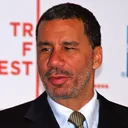
Waning days of the Presidential campaign name calling.
David Paterson Former Governor of New York


Book: The Big Guy: How the President and his son sold out America.
Miranda Devine New York Post Columnist

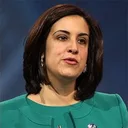
Special education decline in New York schools
Nicole Malliotakis U.S. Representative from New York
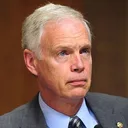
Still unanswered questions about Trump assassination.
Ron Johnson U.S. Senator from Wisconsin

Boeing Intelsat 33E satellite blows up.
Steve Kates Space and astronomy broadcaster (Dr. Sky)

Michael Stoler

The Stoler Report with Michael Stoler: David Schechtman
Michael Stoler Real Estate Expert
The Stoler Report with Michael Stoler: Eli Weiss and Andrew Albstein
Michael Stoler Real Estate Expert
The Stoler Report with Michael Stoler: Eli Weiss and Andrew Albstein
Michael Stoler Real Estate Expert
