


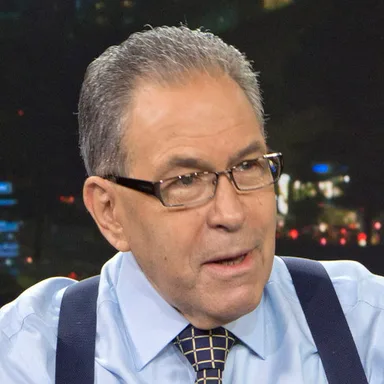
Michael Stoler Real Estate Expert
The Stoler Report with Brian Steinwurtzel
Transcript
Automated transcript · uncorrectedGood morning.
This is Mike Stola for the Stolar real Estate reporting on the CATS round Table. There’s a lot of office buildings that are being converted to residential. So today I’ve been able to bring to the air my friend Brian Steinwertz, who is the co CEO and a principal at GFP Real Estate Advisors.
Thank you for being.
Here, Thanks for having me so all of a sudden, you guys have been very active in this business. Why do you want to convert office buildings to residential?
Well, unfortunately, there’s a lot of distress in office buildings, especially downtown, and so what we’re seeing is a huge supply of office space and therefore distress pricing. And so what we’re doing is buying those with the hopes of converting them to residential and therefore create housing and create a profit along the way.
Now, how expensive is it to buy the office buildings today? Because of the condition we’re in and the treasuries and the economy in general, you.
Know, the buildings that have a lot of vacant space are not that expensive, and that those prices have been falling. So we’re looking at pricing, you know, certainly less than two hundred dollars a square foot. The ones in Midtown are there’s a lot more office demand and those buildings are worth more.
Okay, but if you require something for two hundred dollars square foot less than less than two hundred dollars a square foot, what’s your quest the conversion? Okay, you know you have to take the property into a different condition.
You have to take out the use of the industrial from space to residential.
What do you do with that?
I mean, so, look, the most expensive thing that we have is time. Right, the cost of our money, our investors’ money, and our loans is by far the most expensive thing. So you need to have a speed of execution.
We need to be able to do these projects and get to TCO within two years, maybe three years max. So’s there’s three things that we need. One is we need to be as of right, so we need to know that we’re able to do it without having to get any kind of variances or approvals from the city.
The second is that we need to know that these buildings are empty or that there’s a path to vacancy. And again that’s about the time that takes to execute these projects. We don’t want to have tenants that are in our way. And the third is it has to make economic sense.
Right.
If the first two don’t work, we don’t spend any more time on it. And if the first two work, then we spend a lot of time on it.
So let’s talk about some of the conversions. You have one of the largest conversions downtown. Talk to me about that.
So, so twenty five Water is a one million score foot I think it was a one point one million score foot office building when we started on it. We went through three different iterations to buy it. So the first two times it failed because the lender wasn’t willing to take a discount on the project. The third time
we ended up with permission to speak to the lender and so we were able to acquire the loan at a discount, and we were able to acquire the property from the sponsor. You know, that building requires, as my partner Nathan Berman says, every hoop and gymnastics routine required for a conversion. So that building has light wells. We
are stripping the facade and putting new window wall on it. We’re adding ten stories to the top of the building, redoing the plazas. There’s one hundred thousand square feet of amenities. It is.
It is anything you can do in an office building to turn it into a residential building, and it’ll it will be a great one, you know. But that required the lender to come to the table and take a discount on the project. It also required the tenants that were there to signal to us ahead of time that
they were willing to leave the building.
In order for us to do the tenants were in the building, there were only four, so it.
Made it a lot easier. JP Morgan was the largest tenant, very sophisticated group. They had been trying to exit that through subleas for quite some time and they they were, you know, difficult to negotiate with because they want a bargain.
Who doesn’t.
But once we reached the economic deal to pay, work was done in days.
Two of the other tenants hies the other.
So one tenant had at least expiring, so that that wasn’t complicated. We just let them stay till the end. And then the third tenant had at least that went on for another two years, but they hadn’t occupied the building since COVID, and so we gave them permission to exit.
Their lease early and we actually ended up downsizing them to another one of our buildings, so that worked out for both of us in the sense that they got longer space, but smaller space at an economic price. And the last one was a daycare group that had another location down the street, so they just moved there the
kids from our location to the other location.
Now you’re also doing a couple of other buildings, so let’s talk about those.
So the other one that’s been I guess announced publicly is called two to two Broadway, so that is on the corner of Fulton and Broadway. That building is two thirds vacant, so there’s a very large block of space that’s available, and we will be converting that. There are some other tenants that are there and they are welcome
to stay through the end of their lease if they want, but we are hopeful that they will relocate and we will be able to convert the entire building at one time.
With regard to conversion of Midtown anything in the hopper on that.
I think the prices in Midtown have come down to the point where it makes sense for some buildings to go forward, and it’s it’s like a psychological process. You know, there’s denial. You know, people have to then recognize that it’s not going to come back, and then you.
Know, they sort of faced reality.
So a lot of it is really in the capitulation of pricing, and there’s a lot of Unfortunately, there’s a lot of office stock that isn’t getting leased and the owners of that or the lenders on that are coming to a realization that if they want liquidity, they will have to drop their prices.
What about taxi bacon. It’s the last time Lower Manhattan had a substantial amount the conversion was what we call four twenty one.
G’s right, So it’s a big week right now. The governor announced on Monday that there was a housing deal and a deal for the entire budget. We haven’t seen the actual wording of it, but it seems that the programs they put forward they have credibility, especially on the conversion side. I can’t speak to the new development side,
and I think there will be those that will take advantage.
Of those programs.
And what are the programs, You know, it’s rumor until we see the wording, but basically there’s a roughly a thirty five year tax abatement if you get the project going before the end of twenty twenty six in exchange for that, you have to produce affordable housing for twenty five percent of the building, and that affordable housing has
to be at eighty percent.
Ami band okay with up to.
Household family of five could probably be earning one hundred and fifty thousand.
Yeah, there’s different bands, different bands, and it has to average eighty percent, So some will be a lot less and some will be a little bit more. And then you know that twenty five percent, as I understand it has to be spread equally throughout the building.
Now, will you have to change your plans because if you want to take advantage of these tax abatements.
No, So we will analyze it once it comes out and decide for our existing projects if it’s worth doing or not. It is a zionderstand an opt in program. But my understandings that we would not change our plans.
We are the most important part of the conversion is creating a very efficient building. So you’re building a new build out of the ground project, you want to get over ninety percent efficiency. So the conversion, the closer you can get to that, the more profitable the project will be, and the more likely it’ll be to go forward. So,
for example, our project at Water Street will be eighty six percent efficient, which is really efficient for an office conversion.
Right, you are planning to go ahead without any tax abatements.
To find, so yeah, look going for it on a market rate project. It’s a function of how little you can pay for the land and the building, and then how much the renovation costs. So at a building like twenty five Water where you have to carve two light wells, add ten stories, strip the facade, what you pay has
to be a lot less than a building, let’s sa say like two to two where it’s a very vanilla conversion. There’s the facade is in great condition and the window penestration is actually perfect for residential, so there’s a lot less work that has to be done.
What about the possibility of just knocking down the building and stuff from scratch.
The time is our number one expense, So the time to take to knock down the building and then rebuild it with new foundations is very difficult to pencil out.
So have you thought about that?
It’s we haven’t found a circumstance where it pencils.
It makes it worthwhile.
Also a lot of these buildings are built well for residential. They have very tall ceilings, you know, the one like to to to the fenestration is great and there’s very lost, very little loss base in the center. And the ones that have even bigger floor plates like twenty five water when you’re carving the lightwells out, it becomes very efficient space.
Okay, what about the let’s say the garments sent to buildings having them converted so residential.
Yeah, that’s a great question.
We own a lot of buildings in the Garment Center, and the reason why we’re not converting our existing buildings is primarily because they’re full. So we’re very fortunate we have a great tenant roster. Before COVID, we’re ninety nine percent least. Now we’re probably back up into the nineties.
My uncle Jeff Garral is doing an incredible job, you know, keeping these buildings least and so those buildings haven’t really been candidates. But the biggest problem we have in the Garment Center is really the zoning, and the city has started to tackle that. So the city has four different rezoning projects going on in Manhattan, but those will take
years to do, and our number one rule when we’re trying to look at these conversions, they have to be as of right and none of the garment Very little of the garment center, I should say, is as of right.
But aren’t they planning to do as of right in the garment center? They say that they are.
I mean because we have a lot of these buildings between eighth and ninth Avenue, which are you know, their office, but they’re not doing well.
It’s a very difficult area.
The streetscape, you know, has been tough, and I think that we we as a community need to do a better job in how the street feels to to our our residents and our and our and our occupants.
Let’s talk about your conversions in the Lowlands City.
What you’ve done, so, what we’ve done along in Long Island City is primarily industrial to office or industrial to life science. And we’re fortunate that each of our projects is almost entirely occupied, if not entirely occupied. I’ll do life science first. Do we have an industrial building that we moved a lot of those existing tenants to our
our existing portfolio, and then we built that building, uh, basically new building around the old building. So now it’s like a mix of the old and the new.
It looks beautiful.
We’re fortunate that we had a number of tenants, including NYU, that leased that building. It. We hope that it will be entirely leased by the end of this year. And you know, we consider it to be a great a great success.
I think.
I think Long Island City is an incredible mix of residential, office and now life science and it’s one of the premier neighborhoods that very few people in New York know about.
It’s a hidden gym, it really is.
And it’s it’s one, two, maximum three stops away from Midtown Manhattan. In fact, where we’re sitting is one stop from that Life Science building. That’s great.
I’d like to thank Brian Steinwerch for being here today. You know, I’ll see you next week.
Great. Thank you.
Sunday, May 12, 2024

Bodega workers have a right to defend themselves and their business.
Fernando Mateo President, NY State Federation of Taxi Drivers

Will Biden be replaced as nominee? Is RFK Jr. influencing the race?
Dick Morris Political Strategist and Author

Inflation is creeping back, and the Fed seems helpless.
Steve Forbes Editor-in-chief of Forbes


Border crisis has reached an alarming level.
Marsha Blackburn U.S. Senator from Tennessee; nominee for Governor

A huge sunspot could interrupt communication.
Steve Kates Space and astronomy broadcaster (Dr. Sky)

Michael Stoler
The Stoler Report with Michael Stoler: David Schechtman
Michael Stoler Real Estate Expert
The Stoler Report with Michael Stoler: Eli Weiss and Andrew Albstein
Michael Stoler Real Estate Expert
The Stoler Report with Michael Stoler: Eli Weiss and Andrew Albstein
Michael Stoler Real Estate Expert
