


Transcript
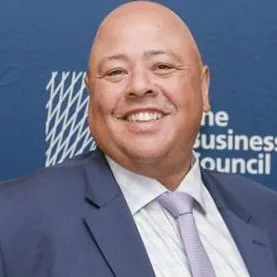
Automated transcript · uncorrectedAn update on Albanie. What the heck is going on with some important bills with us today is Paul Zuba, and he’s the senior vice president of the New York State Business Council and representing over three thousand companies. Paul, what’s on your mind this Sunday morning?
Well, John, we’re coming towards the end of session. In all likelihood, the Senate will finish up just before you know this Sunday when folks share this interview, and it’s possible that in all likelihood that the Assembly is going to come back the following week. And there’s some interesting bills that are being considered by the legislature that whether
or not they pass this year, are going to come back in some form at some point. And one of them’s a bill that is called the Extender Producer Responsibility And you know, those are those are big words for the public, right, like you know what the heck does Extended Producer Responsibility mean? And the bill is designed to
take waste out of the waste stream. So it’s designed to make sure, you know, there’s less plastics in the waste stream, there’s less cardboard, there’s less things that are there in the wat stream, which is all good, right, It’s all good. It’s about the environment, it is it is very good, kind of you know thing that I
think we all want. But what people are not telling the public is that this is the most extreme bill in the country. There are similar bills in other states. There’s a similar bill in Minnesota, which last I checked was a blue state with a blue governor who actually ran for vice president. There are other versions of this
bill that work and are workable, workable for consumers, and workable for businesses. This bill is so extreme. It’s even more extreme than what they tried to do in California. And Gavin Newsom, who is like the progressive Darling, actually put his foot down on the bill that was in California because it was costing it would cost consumers too
much money. So what this bill would end up doing is it would require companies also to completely reconfigure their packaging of products. Right, so I’m.
Saying that some products might go away.
Some products actually might go away. The way the bill is written, there are some products that might go away. So for example, when you go to the grocery store and you go and buy you know, the cheese that comes in those those plastics you know, slices, I think they call them craft singles. Those will likely go away.
There are beverages out there that will likely go away. There are are you know, things that you know, soft drinks and different things that we purchase that will likely be taken off the shelves. So they’re going to take all these things off the shelves, things that consumers, consumers want, they are going to it’s going to there was a
study done. It’s going to cost consumer households at least seven hundred dollars more in costs because the costs are going to go up because businesses are going to have to reconfigure everything, and it’s and they’re going to lose products that families use, love our everyday products. For a bill that could be fixed, like I said before, there
are other bills in other states that work that do exactly what the intention of this bill is, which is to help the environment. But instead we have a group of advocates who have taken the position that it’s our way or the highway, and we’re going to we know better, We the advocates know better. We know what’s best for you,
mister and missus public because we know more than you, So we’re going to do it our way. Even though there’s other ways to fix it, We’re going to do it our way. We don’t care if you get upset that certain things that you love, that you buy, that your kids love, are taking off the shelves. We don’t
care that it’s going to cost you more money. We just think it’s the right thing to do. And that’s a fundamental problem of what’s going on, not only in Albany in New York State, but every state in the Union, is like, when are people going to start listening to the voters, to the consumers to stop doing these things
and being a state in which we’re going to determine what’s best for you. We have a bill I don’t think it’s going to pass. We have a bill here in New York that’s going to ban, you know, those candy cigarettes. I think every kid, every kid’s had the candy cigarettes at one point in their life. And I
get it. You don’t want to promote smoking, and I’m not saying that you should promote smoking, but seriously, don’t we have better things to think about than that. Don’t we have a housing crisis to think about it? I mean, we have energy.
The amount of laws they’re passing. They’re going to decide what time we are allowed to go to the bathroom so we don’t use too much water at the same time.
Absolutely, And one of the things that we’re hearing from from businesses and why businesses are so frustrated with New York, why businesses want to leave New York, is because they’re tired of all this legislation that makes it more difficult for them to operate in New York. They’re tired of all these regulations that make it more difficult to operate
in New York.
It was just there was just The worst part is where they’re putting in that they want all electric buildings, and the truth is the state doesn’t have enough electricity and enough and they’re trying to do windmills, which is stupid because it’s going to increase the court of electricity maybe four hundred percent.
They don’t have enough electric To your point, we talked about this last time. You know, there was an independent study that showed we do not have enough power on the grid. And the fact is that by twenty twenty, twenty thirty, I believe it is the peak, the peak need for electricity is going to be in the wintertime,
so we don’t have enough juice on the grid, and people might wake up in the middle of like twenty degree weather with their power going out. Again, we’re passing these laws, we’re during these regulations, and it’s like no one is thinking about the everyday person. No one’s thinking that, you know, oh, so what it’s going to cost you
an extra So what that’s only X amount of dollars a week. Well, someone who’s working class, that means something. Well, I was talking.
About like Long Island, Long Island. One of the estimates is that the people live in Long Island, if they’re paying two hundred dollars a month in elect bills, once all the energy companies pass on the course of the windmills, they might be paying eight hundred dollars a month.
And that’s and that’s a lot of money. And a perfect example is I had a conversation with a legislator about this bill I was talking about before this environmental bill, and I told them, you know, this is going to cost households seven hundred dollars more a year. And the person was like, well, so what, that’s only X amount
of dollars a week, and I’m like, how how like are you? Do you understand what’s going on? Do you understand that that’s seven hundred dollars? You’re mean something.
There’s a lack of common sense in Aubany, and somebody should sit down and say, let’s have some common sense. Well, we’re out of time, pull and let’s hope that that this weekend, before they finalize these bills, that some common sense prevails.
Hopefully that hopefully common sense will prevail. But I’m only hoping, but maybe maybe we’ll get lucky.
Well, let’s pray
Sunday, June 15, 2025
Tariffs will have a minimal impact on inflation.
Ed Cox Chair, NY Republican State Committee
The riots are well coordinated. Who is behind them?
Peter King Former U.S. Representative from New York


The wave of attacks between Israel and Iran.
Alan Dershowitz Harvard Law Professor Emeritus

China is trying to smuggle biological agents into the US.
Gordon Chang China Analyst & Author

Do the Russians have a satellite with a kinetic weapon?
Steve Kates Space and astronomy broadcaster (Dr. Sky)


Paul Zuber
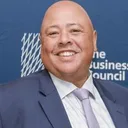
Climate Mandates Are Hurting Working Families
Paul Zuber SVP, NY Business Council
They Need To Fix The Climate Law In Albany, To Make Life More Affordable For New Yorkers
Paul Zuber SVP, NY Business Council
New York will face a $34 billion budget gap over the next 3 years.
Paul Zuber SVP, NY Business Council
