


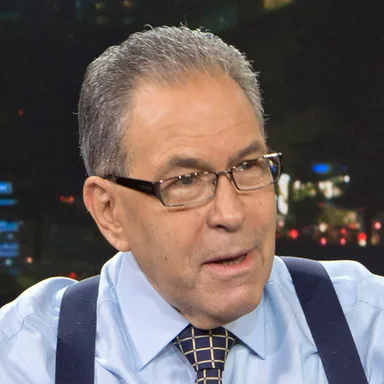
Michael Stoler Real Estate Expert
Interviews Paul Massey founder/CEO of B6 Real Estate
Transcript
Automated transcript · uncorrectedGood morning. This is Mike Stoga for the Stowly Real Estate Report. What’s happening in investment sales? What’s happening in the New York City real estate market? I have a legend over here, my friend Paul Massey, who is the founder and principal and CEO of B six Real Estate.
Thanks for being here today.
I’m loving being here today, Mike. Everyone, and by the way, everyone loves what you do here. We’ve all appreciated it for a long time.
My pleasure. So what’s going on? How are sales these days?
We thought, well, it’s been a grind. It’s been a grind for a couple of different reasons. We’ve had rent regulation in twenty nineteen that have really really thrown cold water on the regulated apartment building market. And we had COVID, so the office building market has been challenged. Velocity of sales is approaching back to what might be considered healthy.
We normally sell about three thousand buildings a year in New York City year, it’ll be around twenty five hundred, so we’re getting back towards what you might consider.
The velocity is there, but the sales volume is down right right.
Sales volume is normally spread. The averages out forty five billion in New York City in the five boroughs. Some years it was sixty seventy five million, but it’s way down and it’s this year it’ll be twenty eight million.
We’re projecting next year or this year twenty twenty five to be around thirty million. So the absolute dollar of reinvestment in the city has been challenged.
Now who’s buying, who are coming here? We have new investors from around the world.
Yeah, you know, there’s a flight to safety every time there’s any uncertainty in the world. So we’re seeing a lot of foreign investment, and foreign investment runs seven eight percent of the total every year.
Any specific countries biking up.
I think Germany’s big Now. I think I think we’ll see Career continue to invest, but all the healthiest economies people will come here because they’re spreading the chips are on.
Okay, what about the twenty nineteen Act having its effect on the investment sales and just in general the community.
Yeah, I think that was a calamity. I think what happened was the Senate in Albany flipped from Republican control to dem control, and it was payback time. So effectively, the law that was passed, which was meant to help people who were struggling, was saying, you can’t raise your rents and you can’t fix up your buildings and pass
the increase along to the tenants, which meant that buildings we used to sell where there’d be a four or five percent return going in for the investor, and they would legally drive it to an eight percent return refinance it put it on the shelf. That business flipped upside down.
So now we’re selling those buildings a seven or eight percent return going in because people are fearful that inflation, taxes, operating.
Expenses, insurance specifically.
In specifically insurance are going through the roof. So there now they’re feeling like I’m buying it at eight and I might be driving to a four. Nobody wants an investment like that. So but the deep thing that people don’t think about is that forty five percent of New York City’s one hundred and fifteen billion dollar budget comes
from those buildings. So if you hobble those buildings and you make a twenty million dollar building worth ten million dollars, the city’s assessments start tanking. They can raise the tax rate a bit, but there’s they’re going to be five billion dollars shortfalls with the city in the next few years because of that regulation. Women living with it for
five years. There’s been no velocity of apartment building sales. But the sad thing is, if you really think about it, when the city has a five billion dollar budget shortfall, the variability of the city’s budget between pension payments, payroll bond payments, there isn’t that much flexibility. So the first thing to go or social programs hurting directly the people
that the rent regulations were meaning to help. So it’s just it’s a really not well thought through attempt to regulate and it’s costing us.
What about the condominium development is taking place today? There are sales, There are definitely land sales, and they’re doing well. What’s your thoughts in general? And then I.
Think that’s a healthy place right now. I think we’re not. But you’re hearing about a lot of luxury condo sales, but we’re not really building housing the way we need to be. I think some of the new housing programs we’ve yet to figure out whether they’re really going to be effective. One of the issues about people who are
building condominians are that they they can afford to do it, even in a climate where construction costs are are going through the roof, so that’s really their only avenue to develop. I think there’s a lot of healthy development going on in Manhattan, is healthy development going on in Brooklyn, But overall, we need to be creating more housing, and I’m not
sure really on the road.
To do that. What about the casinos.
I think casinos are a thing, a way of life. I think they’re going to be everywhere. I don’t know how scalable they are, but I think one or two casinos in the city wouldn’t harve us.
Okay, any specific youth related decided to walk away from the casino on the West Side.
Yeah, I don’t think I understand that. I think the the Queen’s Casino.
Yeah, sorry, well Cones Casino.
Yeah, that makes sense to me. That makes sense. I mean that that’s a lot of real estate that’s going to get developed and become more productive. I think I think that probably helps us.
What about the cannabis business today, I.
Think if you really think about the scope of that business, it’s not big enough to really impact the city or to drive employment, or certainly to drive real estate. I mean, a cannabis shop should be about two hundred feet so that cannabis is not going to change the world in New York City.
What about the conversions today, the office to residential conversions, what’s your thoughts about that, because they’ve increased like tenfold.
Yeah, and I think some of them are going to be successful. I think the broad skis partnering with the owners of the Flat Iron building, that’s probably going to be the most successful conversion ever. I mean, if you look at that property running it as an office, what were you going to get for rent for that piece
of triangle that was part of the floor plate? You know, twenty bucks, thirty bucks. Now you’re going to sell it for five thousand dollars. It’s genius.
What about Mickey and Nophtali’s recent acquisition of eight hundred Fifth Avenue.
I think that will also be an immensely successful property. I mean, I’ve always thought that that was one of the best rental buildings in the city, and I think Naftali’s proved himself to be one of the most, if not the most talented converter out there, so I think that project is going to be a massive success.
What about the hospitality industry today?
I think that we have hobbled the hospitality industry catering to the Union’s no offense to anybody, but between the permits required and the union wage requirements and all the regulation around hospitality, as well as the fact that to support shelters, we have taken a lot of property off the market. We are a city that needs tourism, we
need hotel rooms. We need those hotel rooms to be reasonable and affordable for people, so we need to deregulate and free up a lot of hotel rooms.
Now, what’s happening in Times Square in general with retail, hospitality and so on.
I think it’s coming back in a significant way. I think retail on Fifth Avenue, Madison Avenue, Times Square all going through a resurgence. That’s predictable. I mean retail. Right before COVID, I thought retail took a massive knock, probably caused by technology, and I couldn’t believe it during COVID how much more of a hit it took. So to me,
it’s predictable that retail comes back, and I think we’re going to be very happy with what happens in Times Square on the main You know, in Soho on Madison Avenue, there are amazing things happening.
What about downtown. Downtown’s not really doing well. The conversions over there, why not.
I wouldn’t expect them to do well. I think a lot of those properties are physically challenged. I’ve already said I think that construction costs it through the roof, so you’re going to have a real challenge. I think we just need to embrace the fact that we want to get back to work rebuild the office market, I think.
But I think it’s going to come back faster than people think, because you know, look at people like Google or Amazon taking more space. They’re smart, they know that they know where things aheaded, and they’re going to need space.
I think we’re going to have have a resurgence of office buildings. We used to sell b office buildings for eight hundred bucks a foot. Now we’re selling them for two hundred and fifty bucks a foot. It’s unbelievable. But I think a lot of those are going to sort themselves up because I think there are a lot of
lenders who made at the time incredibly safe and boring loans on those eight hundred dollars buildings at four four hundred dollars three hundred and fifty dollars, and now that all has to be sorted out, but it will be in the city. Mike. I think a year and a half from now you and I will be sitting around
chatting about the health of the office market in New York and we won’t believe how how well.
Of the last question, what do you think of the what are the opportunities for an investor today?
I think the big opportunity is right what we were just talking about. If if you if you can find a B office building or even a C office building, buy it up now and just hunker down for a couple of years. Make your business plan that you’re going to hunker down, and that a year and a half
two years from now, you’re going to be flooded with tenants, and I think you’ll have bought it, uh bought cheap by the pound.
I’d like to thank my friend Paul Massi for being here.
Michael, thanks so much. This is great
Sunday, June 15, 2025

Tariffs will have a minimal impact on inflation.
Ed Cox Chair, NY Republican State Committee

The riots are well coordinated. Who is behind them?
Peter King Former U.S. Representative from New York


The wave of attacks between Israel and Iran.
Alan Dershowitz Harvard Law Professor Emeritus

China is trying to smuggle biological agents into the US.
Gordon Chang China Analyst & Author


Do the Russians have a satellite with a kinetic weapon?
Steve Kates Space and astronomy broadcaster (Dr. Sky)


Michael Stoler
The Stoler Report with Michael Stoler: Eli Weiss and Andrew Albstein
Michael Stoler Real Estate Expert
The Stoler Report with Michael Stoler: Eli Weiss and Andrew Albstein
Michael Stoler Real Estate Expert
The Stoler Report with Michael Stoler: Robin Schneiderman
Michael Stoler Real Estate Expert
