


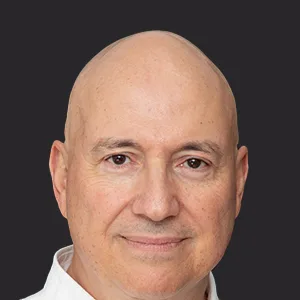
Transcript
Automated transcript · uncorrectedSunday Morning with us is Doctor Peter Mihllos, Live long and prosper and we all want to live wrong. Doctor, what’s our tip for this week?
Well, this week we’re going to talk about a fascinating subject, and that is how mold affects our health and how mold affects longevity. And mold is very fascinating because mold is nature’s decomposing machine and recycling machine, because basically it has these enzymes that break down all things like the leaves you see outside, the dead plants, the trees, and
eventually even us. We all get decomposed back to the original minerals that return back to the soil and feed future plants and breaking down things into smaller organic particles that insects live on. So basically, mold is very important in the outdoor world. The problem is that mold inside the artificial indoor world that we created, especially if there’s moisture,
that’s when it becomes a problem. And there are good molds like those used to make cheese like brie and stuff like that, because it breaks down with certain enzymes and creates nice things like cheese. But mold when it’s toxic and indoors. It can shorten lifespan, and it can cause asthma, allergic skin reactions. And the people.
I hear you, and this is important. Is mold a bacteria? Is it a virus? What is it?
No. Mold and mushroom are in the class of what are called fungi, and basically they’re larger than bacteria and viruses, and they’re actually able to secrete enzymes, and they’re basically the recycling they’re the recycling machines of the earth. And basically they’re the ones that eventually break down everything back and the nutrients and mineral into its more complex form
to a simpler form, and bring it back into the soil. But the problem is it’s a balance like everything else. And if you’re a child, a baby, a seen, you’re someone with low immunity, you’re more susceptible to the problems of bad molds which are found indoors. And the ones that grow indoors that we hear a lot about are
things like black mold, which can cause skin rashes and hives. And we hear about penicillium or christernium, which in more to damage buildings and that can cause bronchitis and asthma, and then you have the Fusarium type which can cause digestive problems, diarrhea, bloating, and you can even get from black mole nerve disorders, mood swings and even brain damage.
And the way you can test for this is through a urine test called the Vibrant Wellness Urine mold test, And basically what shows up in the urine is not the actual mold, but the metabolites of mold production. And there was one lady, for example, recently, I had sent to an integrative medicine specialist, doctor Magdalena in Southampton, and
she found that this person had two types of mold. And they went to five different doctors, dermatologist, skin biopsies, and they were getting all these skin rasures when they found out this person had mold. Then they found they gave the medicine that treats this mold and this person, after going to doctors for fifteen years, their skin cleared
up completely. So it is something real. But some mold can be toxic, like the one that can be in peanut butter that sits around when we were kids, that used to be in barrels of hardware store in the Delhi.
But then they found out that when crops sit around, like rice, corn and brazil nuts even sit around, there’s a mold call aspergillist that makes a toxic called athletoxin, and that can actually cause pancreatic cancer and liver cancer.
And that’s why Jimmy Carter’s family that were peanut farmers, they all got that type of a cancer. And that’s why they have to be very careful with the photo that you buy fresh. After you open it, it’s probably best to get rid of it within thirty days, keep it refrigerated, don’t let it sit around. But this aflotoxin
is a real, actual documented cause of cancer.
And that is another one. I eat a lot of figs, Remember the figs keep the stuff moving. And sometimes figs have a tendency to get some mold on them, right, And my wife yells at me, He says, don’t eat that fig with the mold on it. Now? Is that mold a bacteria virus? Say?
No, it’s a mold.
And if I swallow it, does it affect me to run away?
Well, in higher amounts, yes, that’s the problem because remember what we said. Eventually, if you left the figure out on the street. The mold eats it up and brings it back to the soil, to the earth, and the same way that mold is starting to chew away at it.
So your body can handle a certain amount, but if you get too much inside your gut, then you get an imbalance. But we need that balance of some good fungi in our gut. And we know that actually some of those good fungi in our gut, they actually help stimulate the immune system to create those T killer cells
that go after cancer cells. The problem is even if you have too much of a good thing, So it’s called that homeostasis, the balance of the good and the bad, because mold can also be very good. That’s what saved millions of people with penicillin. The doctor had some strip inside his refrigerator and he had some bread, and some
of the bread mold grew inside the refrigerator, and he saw that it was killing the trays of little disks that he was growing a bad bacterion, and that’s how penicillin was discovered. So it has to be a balance of the good and the bad. But yes, it is found, and there’s a test called the gut zuomer test and
you can find out exactly what’s going on in your.
For mold if it gets into your stomach.
Yes, once you analyze which type, then they tell you which foods to avoid that might be growing mold, like the ones we just discussed, like reducing rice that’s been sitting around, peanut but or brazil nuts, things like that that have been around too long. And also there are anti fungal pills that can be depending on which mold
it is that you have to take for a couple of weeks and it does reduce, then you repeat the test and the urine test that you can actually see that it actually gets reduced. But again this is not in the new healthcare system that we have with ten minutes with the doctor, nobody’s going to test or look
for these things. So that’s why there’s integrative medicine special But we’re going to be hearing a lot about it now with our new Secretary of Health, about the foods that we eat. Because even the cows they found that eat the bad corn that has this aspergillous affleotox, and we talked about they found it in the milk cows.
So our supply chain and our food chain is going to be looked at more carefully as we start getting healthier in the United States tex with our.
That’s an education, doctor, Thank you for the education this Sunday morning. Now, one more thing, Quist, we only have a minute left. Give us a teaser for next week. I understand that story that me and you talked about with Alzheimer’s.
Yeah, absolutely, Well, what they found the people, basically Nikadia, Alzheimer’s in the blue zone is almost non existence. And they found that the people who are more active, they walk to church, they socialize, they have constant stimulation, they have good blood pressures. They don’t eat a lot of salt, very little meat in the diet, lots of olive oil,
and lots of fresh herbal mountain teas from their gardens. And those people seem to have a lot less So like we always talk about in WABC, the Mediterranean diet, the olive oil, the fresh fish, very rare meat mostly on holidays, a lot of vegetables, lagoms, beans and that, and staying super hydrated and getting plenty of sleep because
we know that sleep also is when we do most of the cleanup in our brain. Sleeping on your side, not on your back, the cleaning system of the rain work’s more efficient and that helps reduce Alzheimer’s. And you can keep listening to WABC and we’ll talk about this more and how we tell our audience on health, tips
on how to live long and prosper and always discuss all these things with your physicians before you start any new program or diet program.
Thank you, doctor Peter Mihalosi. We’ll catch up again real soon.
Sunday, February 23, 2025
The Mayor and Governor Hochul will work it out.
Alfonse D'Amato Former U.S. Senator from New York


Trump moves to negotiate peace in Ukraine.
KT McFarland Former Deputy National Security Advisor

Governor Hochul and Trump joust for a position on Mayor Adams.
Dick Morris Political Strategist and Author


The Canadian aircraft accident. Pilot error?
General John Teichert Brigadier General, USAF (Ret.)


DOGE will eliminate expenses. And Kash Patel, FBI choice.
Marsha Blackburn U.S. Senator from Tennessee; nominee for Governor
This week's guest: Christopher Capece, President of Heatherwood Luxury Rentals
Michael Stoler Real Estate Expert
Asteroid potential in 2032 years.
Steve Kates Space and astronomy broadcaster (Dr. Sky)
Dr. Peter Michalos
Advances in Lung Cancer Detection and Personalized Treatment
Dr. Peter Michalos WABC Medical Expert
Healthy Eating, Stronger Immunity and the Science of Living Longer
Dr. Peter Michalos WABC Medical Expert
Limiting Sugar and Choosing Whole Foods to Support Healthy Aging
Dr. Peter Michalos WABC Medical Expert
Protect Your Skin From UV Radiation and Reduce the Risk of Skin Cancer
Dr. Peter Michalos WABC Medical Expert
