


Steve Kates Space and astronomy broadcaster (Dr. Sky)
Ben Franklin, Mars, and Asteroid Mining
Transcript
Automated transcript · uncorrectedSunday morning, 9-11 weekend. With us today is Steve Cates, otherwise known as Dr. Sky, and he always moves our minds. Tell us what’s on your mind today, this long 9-11 weekend.
Well, good morning, John, and our hearts and souls go out to those that lost their lives and the families that still suffer in this horrific attack, hard to believe, 25 years ago. But, John, as we reach out to the universe, here’s an interesting story with a little bit of Americana around America’s 250th anniversary. The question is, did
Benjamin Franklin really fly his kite? Well, John, a famous painting from a 19th century American artist, Benjamin West, depicts Benjamin Franklin flying a kite during a thunderstorm with a metal key attached to the string to demonstrate electrical properties of lightning. Well, he was an avid scientist, as many people know, one who explored the nature of electricity. But John, originally,
Franklin wanted to post a metal pole atop Philadelphia’s Christ Church to test this, but he couldn’t do it. He wanted to try another way. So he and his son, William, launched a kite in June of 1752, as the story claims, and claimed to notice a static charge along the string of the kite. But, John, the interesting part from history
is Franklin only told one person about his results, and today many claim that the whole story is fiction. But giving credit to Franklin, he did explore the nature of electricity well before other scientists. Amazing trivia from Americana, don’t you think?
You know, Steve Cates, you’re right, it’s amazing trivia, but the fact is, the word electricity, how can he even dream about it and... That way, I’m scratching my head just about that point.
Sure. Well, absolutely. Because back then, very few people knew anything about what we know today, of course. But a great mind like his, I mean, he was more than just a great patriot to America. And many people, when you ask the kind of funny question, is what president is on the $ 100 bill? Some people go Franklin, but
he was never a president. But his scientific interest, John, delved everything from chemistry, astronomy— A great tribute to a man. Whether or not that story is true, he wanted to learn about electricity. But, John, let’s talk about one of the most amazing subjects that you and I agree on, and that is stories about Mars. Scientists are now finding
more information about the geology of Mars. And here’s a fact. Mars has no magnetic field. It lost it billions of years ago. We’re not sure how. But new data from orbiting spacecraft, John, show that Mars may have had significant volcanic activity, obviously, in the past. with vast pools of liquid magma underneath the surface and evidence of past tectonic plates.
So Mars, John, may contain significant deposits of valuable minerals deep in the Martian subsurface for who knows, for future mining and things that we need to do if we go to Mars to learn about how to build things.
So that’s amazing. The mystery of Mars continues.
Well, there might be other, well, planets or asteroids or that are a lot closer than Mars. And I heard that Elon Musk is going to announce that he’s going to go hunting for minerals on asteroids.
That is true, John. And the big one that’s in the center of everybody’s attention is the asteroid called Psyche. We have a spacecraft headed there. What is it? It may be the metal core of an old planet. And if somehow we could tug it, hopefully they do it right, It might be the first quadrillionaires in the future. This
is probably hundreds of years from now. But mining minerals from asteroids is a very, very big deal. We always end off, John, on the mystery of the week. Here’s one. What is the Fermi Explorer mission? Well, John, with Voyager 1 about to reach one light-day distance away from us in November, that’s 16 billion miles, a private space company
is looking to launch a spacecraft possibly as early as late in 2029. to reach Alpha Centauri, and that is one of the closest, if not the closest, star system a little over four light years away. And this proposed craft will carry a copy of the Voyager golden record, something that contained evidence, whoever finds it, of what life
is and was here on this planet, and all other artifacts from people in the digital form. But, John, it’ll take 77,000 years to get there. But guess what? AI, John, is now intersession. It’s a big deal here. It also has plotted the quickest and fastest path once the spacecraft is launched. Who knows? But, John, it’s only 4. some
light-years away. Can you imagine what billions of light-years, just to show you how big the universe really is? Well, Dr.
Skye, I think it’s a waste of money because that is just somebody... You know, until we develop warp speed, unless we have it through any UFOs or UPAs or whatever you want to call them, until we develop warp speed, to spend money to launch a craft like that is just a waste of money. And, you know, I’m the
first one to spend money on outer space, but I got to tell the truth when the truth is warranted.
And always truth is important, John, and we say, like you and I agree, the Mars exploration missions probably be the focus of attention from space and privatized space companies. But first, we have to get to the moon. John, in closing, September skies. There’s only nine days till autumn.
Many people around the country with the Super El Nino can’t wait for cooler temperatures. And don’t forget the beauty of the Harvest Moon, John, a beautiful, magnificent moon on September the 26th. as we talk about everything that goes on out there in the great universe.
Well, Steve Cates, Dr. Skye, I enjoyed listening to you every Saturday morning and Sunday morning, from midnight Friday night through Saturday morning and midnight Saturday night to Sunday morning. Thank you so much for entertaining us, and I’ll catch up with you again real soon.
Thank you, John, and to everyone, have a great Sunday. Thank you, John, for the opportunity.
Sunday, September 13, 2026

9/11, Global Initiatives, and Affordable Healthcare
Bill Clinton 42nd President of the United States
"Our Enemies Want to Sow Dissent Inside the United States"
Jay Clayton Director of National Intelligence
"The Big Government Socialists Are a Disaster for the Country"
Newt Gingrich 50th Speaker of the House

Warns Florida Voters: "We've Got to Take This Election Seriously"
Byron Donalds U.S. Representative from Florida; nominee for Governor

Warns of Growing Threats to New York: Terrorism, Cartels, Drugs and Foreign Influence
Jamie McDonald U.S. Attorney for the Southern District of NY
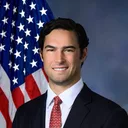
"Dems Are Nominating Their Crazies to Run for Congress"
Brandon Gill U.S. Representative from Texas

Honors 9/11 Heroes, Says FDNY Is More Prepared Than Ever
Lillian Bonsignore FDNY Commissioner
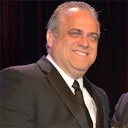
9/11: "We Can Never Forget…We Can Never Let This Happen Again"
George Venizelos Former FBI Assistant Director in Charge, New York


Sounds the Alarm on Anti-Americanism 25 Years After 9/11
Jesse Arm Vice President of External Affairs, Manhattan Institute


Mentorship, Financial Literacy, and Youth STEAM
Erik Cliette Executive Director, One Hundred Black Men of New York

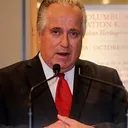
9/11, Italian-American Heritage, and National Unity
Angelo Vivolo CUNY Trustee; Restaurateur & Philanthropist

The Stoler Report with Michael Stoler: Robin Schneiderman
Michael Stoler Real Estate Expert


Tech Guardrails for Kids and TikTok's $400M Settlement
Lynn Shaw Founder of Lynn's Warriors

Steve Kates
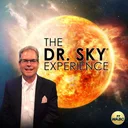
Deep-Space Mysteries, UFOs and the Orionid Meteor Shower
Steve Kates Space and astronomy broadcaster (Dr. Sky)
The Mysteries of Mermaids, El Niño and the Antarctic Ice
Steve Kates Space and astronomy broadcaster (Dr. Sky)
Exoplanet Radio Signals, SpaceX’s Heavy Rocket Test and Nuclear Propulsion
Steve Kates Space and astronomy broadcaster (Dr. Sky)
Supersonic Jets, SpaceX’s Next Starship Launch & Trump’s Golden Dome Defense System
Steve Kates Space and astronomy broadcaster (Dr. Sky)
The Science Behind Hurricanes, Cosmic Radiation and the Universe
Steve Kates Space and astronomy broadcaster (Dr. Sky)
The Search for Dark Matter and the Mysteries Hidden Beneath Antarctica
Steve Kates Space and astronomy broadcaster (Dr. Sky)
