


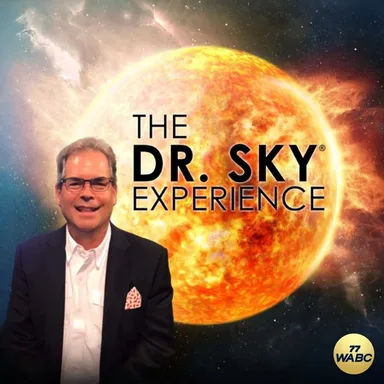
Steve Kates Space and astronomy broadcaster (Dr. Sky)
Venus and Mars converge in late May skies.
Transcript
Automated transcript · uncorrectedWith us today is Steve Kates, otherwise known as doctor Sky, and he makes us wonder. We look up in the sky and we wonder what the heck is up there? Steve? This is Memorial Day weekend. What’s going on?
Well, Good morning, John, Happy Sunday to you, and a happy Memorial Day. As we celebrate, we don’t say happy. We say it in the sense of remembering those that served our country. And I do appreciate that moment in time too to share it. But John, we talk about from the world of astronomy something called super nova and
people think they know about these things, and astronomers particularly have analyzed some things, and we find out that there’s really two types of super and nova. What is a souper and over it’s basically one of them. Is when an old star very large can’t process nuclear fuel, it has what would be called like an astronomy in terms
of like a heart attack, and the world of astronomy, the star collapses. Now we find out John, this this week big news a galaxy twenty one million light years away called a pinwheel galaxy. I’ve observed it in telescopes.
It’s something you need a telescope for there’s a soup andova there that exploded. It’s called SN twenty twenty three IXF for those that want the technicals. So what does it mean. It’s actually the brightest super andova that we’ve seen in a distant galaxy for so long. But people may be scratching their head and say, well, how does
that affect us? Well, John, the most brilliant supernova ever in history that we know of recorded mankind history happened in the year one thousand and six AD when a star in a southern constellation called Lupus, visible in the northern hemisphere only seventy five hundred light years away, exploded.
It was the brightest object in the sky, almost as brilliant as a half a moon. And it was a little different type of supernova called a type one A in which two stars collide. Let’s say to keep it simple, but John, this is so amazing because this super andova was recorded by the ancients. They even do two pictures
in the rocks and the petroglyphs, and they described it. But here’s what happened. The Earth got hit by yamma rays. So what we’re saying is this super and ova that’s twenty one million light years away. It doesn’t affect us.
But John, there are stars within let’s say a couple of hundred light years away, maybe five hundred to be exact, that could go the same way. So aren’t we lucky that we don’t have one? But we’re kind of well overdue for a big super and nova near the Sun.
Isn’t that amazing?
That is amazing? And it’s just you know, I paused there for a second to think about it and what else is going on? I mean, I love these things that you tell us on a Sunday morning because it just expands the mind absolutely.
And closer to home, John, we were talking about super and nova. About a year and a half ago, there was this giant volcano that exploded underneath the ocean. It was called the Honga Tonga super volcano. Well, it was imaged by weather satellites. And why we’re talking about it is it actually caused what’s called the giant plasma bubble.
It sent electrical energy, it went around the Earth many many times, and it actually caused an interference with the upper atmosphere called the ionosphere. Now we talk every week basically or every other time, we talk about the Sun.
Here on the show, on the Cat’s Roundtable, we talk about the power of the Sun causing you all this changes to the atmosphere. But this explosion of the volcano, John actually caused an interruption in the Earth’s upper atmosphere, which is even more amazing. But we continue on with these great mysteries, and I promised the mystery as we
do each week, how about this one. We really don’t know enough about the internals of the Earth. We think we do now. If we look in southern Canada, or maybe the mid part of Canada, there’s this big take called the Hudson Bay. A thousands of years maybe even more, there was this giant glacier that covered much of North
America two miles thick. Well, now, John, they’re saying since the glacier melted, it probably pushed rocks deeper into the Earth. And what’s so important about this. It’s called the gravity anomaly. In other words, less maths, less gravity. So if you go up to that area, you’re not going to maybe five pounds lighter, But it does affect other things here
on the Earth, which is very interesting. And there’s another field off of Brazil called the South Atlantic anomaly. Now that one they think is caused by a big bubble of matter like material that comes out of the Earth to change and warp the magnetic fields. But this one in the Hudson Bay, the mystery is how the heck
did that really form. Some say the rocks are pushed into the Earth, thus there’s a change of gravity. But from physics, less maths, less gravity, what an amazing story at least I think so.
Well, it is amazing, and look it is. They say that the Bermuda Triangle there might be a magnetic anomalies there. Yes, that planes to deal strangely with their instruments, and they also like the Saint Pete Tampa area where we talked about, which is no hurricanes hit Saint Pete Tampa and the Indians believed there was an old sacred burial ground. Well,
I think it’s a magnetic anomaly. So when the hurricane hits towards Saint Pete Tampa, it eithers zigs left or zigs right.
Absolutely, John. My point is, and you’re explaining it very well too, about what’s going on out there, obviously, but the point is, as much as we study the outer universe, you know, millions billions of light years away. We still really don’t know what’s really underneath our ocean, really understand what’s deep inside the Earth’s core, and all these mysteries
that we bring to the audience here on the Cat’s Round Table every Sunday. It’s just so fascinating to share this with people. And we always remind people to look up into the sky. Doctor Sky always reminds what always remember took, keep your eyes to the skies. But this week, John, if people look out into the sky just after sunset,
high in the northwest, is Venus. Amazing, beautiful, brilliant planet. You can’t miss it even if you’re in downtown, say Manhattan, or in big cities to wherever the Cat’s Round Table is heard, bar and wine. But Venus is now moving up in the sky towards the planet Mars, and they’re both in the area of the constellation Gemini and Cancer
the Crab. So you can see one planet that’s closer in that’s Venus than the Earth, and one planet that’s farther out. This is amazing stuff. And they finally, John, I’m going off on another tangent here. We found out that that little Japanese, little spacecraft from a privatized company called Takuto Are. We now find out that one of
these amazing spacecrafts, and I’m very proud of it because I know the folks here in Arizona that helped design it. It’s called the Lunar Reconnaissance Orbiter and it’s actually image for anybody that doesn’t believe we went to the lunar surface with Apollo missions and manned landings. It actually sees down to the surface the tracks of the footprints and
the tracks of the rovers. But it found the location and the debris field of where the Hakuto are literally crashed into the Moon. Either it ran at a propellant or it just couldn’t shut its engine off. So great technology, great stuff, and we always tell people John to go to the Doctor Sky Experience proudly here at WABC Radio
dot com to learn so much more about these mysteries. Always have proved an honor to be with you and the listeners on the Cat’s Roundtable as we expand our minds on Sunday mornings.
Steve Tates, I look forward to talking to you again real soon and if there’s any real, real mystery, make sure we’re on Monday through Friday between five and six, make sure.
You text me absolutely John, and always a great remembrance to those that gave their lives and those of course that serve in our military. They’re proud heroes and we’ll never forget them.
Thank you, thank you, and God bless have a great Memorial Day weekend.
Thank you, John,
Sunday, May 28, 2023

The city and state and federal governments have to get the migrant situation in hand.
Peter King Former U.S. Representative from New York

New York City is going to turn around. Remember the Vets today.
Bruce Mosler Chairman of Global Brokerage, Cushman & Wakefield

Between crime and the mentally ill, businesses are closing all over the Country.
John Chachas Investment Banker, Founder of Methuselah Advisors
The satellite business both public and private cause for concern.
General John Teichert Brigadier General, USAF (Ret.)

The country is in dire straits. Leadership is vacant.
Judge Jeanine Pirro U.S. Attorney for the District of Columbia
Interviews Jason Richter, Managing Principal, Capricorn Realty Advisors
Michael Stoler Real Estate Expert
Steve Kates
Exoplanet Radio Signals, SpaceX’s Heavy Rocket Test and Nuclear Propulsion
Steve Kates Space and astronomy broadcaster (Dr. Sky)
Supersonic Jets, SpaceX’s Next Starship Launch & Trump’s Golden Dome Defense System
Steve Kates Space and astronomy broadcaster (Dr. Sky)
The Science Behind Hurricanes, Cosmic Radiation and the Universe
Steve Kates Space and astronomy broadcaster (Dr. Sky)
Ben Franklin, Mars, and Asteroid Mining
Steve Kates Space and astronomy broadcaster (Dr. Sky)
The Search for Dark Matter and the Mysteries Hidden Beneath Antarctica
Steve Kates Space and astronomy broadcaster (Dr. Sky)
Earth's Extreme Forces and the Fight Over Pluto
Steve Kates Space and astronomy broadcaster (Dr. Sky)
