


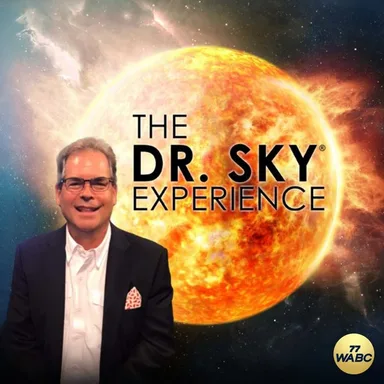
Steve Kates Space and astronomy broadcaster (Dr. Sky)
Astroid on a collision course with Earth.
Transcript
Automated transcript · uncorrectedWell, there’s breaking news. NASHA has made an announcement that’s their warty chances of an asteroid hitting the Earth has increased. Doc this guy, Steve Kates, Sunday morning. What do you think does NASA usually do those kind of breaking US segments?
Well, good morning, John. No, this is quite unusual in itself because we’re talking about, just so people know, an astroid known as twenty twenty four letter of y R four. It was discovered back at the end of this year past year, I should say, December the twenty seventh. And now it’s quite unusual, John, because normally it takes a
long time to calculate an actual orbit for this particular asteroid or any other. So the important news, the breaking news part of this is its probability of impact goes up to two point three percent, which means one in a forty three chance, which may not sound like a lot to the average person out there and even to
some trained scientists.
But this is an.
Interesting story because the asteroid, at least we know now has that potential of impact on the Earth around December of twenty thirty two. So it is noteworthy of being a breaking news story for sure.
And let me ask you when we spoke before, they were going to have a reevaluation in twenty twenty eight, and all of a sudden, a little while later, they’re having a reevaluation.
Now what do you think course that, Well, you’re the only answer I can give here and always being honest with you when the audience is these massive telescopes that we now have on the Earth, more information probably has come through by these particular astronomers. But I’m going to hold caution to the wind too, because we keep hearing
about these type of things in the world. We know that in twenty twenty nine, another asteroid that’s been tracked regularly, called a puffue, is scheduled to come well within the geo synchronous orbit plane, which is some twenty two thousand miles above the Earth, and that also has the chance, they say, on a second appearance around the Earth, of
actually having a small percentage of striking the Earth. So the answer simply is this, with these massive telescopes, and by the way, most of the large telescopes in the world that are doing serious science, the optical telescopes, are located in the mountains of Chile. So my speculation is that they’ve taken a look at different images of these objects,
this particular object which gives us this unusual increase up to two point three percent percent and one in a forty three chance of asteroid twenty twenty four y r four making an impact on the Earth. This is quite interesting and unusual in my opinion.
And we did talk before that it’s unlikely they’ll do with what it was like in the movies. Have elon musk lend a I guess say rocket on it and it up because you have too many pieces to deal with at that point.
Absolutely, John, And it’s reminiscent as to remember, destroying an asteroid is even a more complicated situation. You know, many say fire and nuclear missile at it and destroy it. But as we mentioned in our previous report on this object, the destruction of an object like this is still rather sketchy.
We do not know its composition at least right now. The speculation is it’s considered to be a stony type of asteroid, which means it’s probably a little less than solid, as if it were just a piece of solid nickel iron.
We don’t even know that for sure, but some speculation say that. So it’s quite interesting to see that this particular object has a very reminiscent size of what happened here in Arizona fifty thousand years ago when an asteroid of equivalent size struck the Earth and created at least that ground zero a mile or so crater with a
great destructive force. So, obviously, John, this is a great story to talk about and share with the listeners. Again, I’m going to take and have caution to the winds here and not sound panicky, but it is quite unusual when you get something going from a smaller percentage of impact, meaning about one point two percent now up to two
point three percent. And on a scale that astronomers really look at is called the Torino scale, and it goes from one to ten, and this particular object goes up to the alarming number three level, even though that sounds small on a scale of one to ten. But it’s also interesting that this has alerted the Planetary Defense program
that NASA has, so obviously eyes and ears, more eyes than maybe ears.
Are on this particular object. Steve Kates, thank you for the update. Keep us in form text me twenty four hours a day if there’s any updates. Thank you so much thank you, John, glad to be with you this morning.
Sunday, February 9, 2025
The quality of life in the City does not bode well for the Mayor's reelection.
Manhattan Institute Pres. Reihan Salam
Trump is moving so fast the judicial system cannot keep up.
Judge Richard Weinberg Retired New York City Criminal Court Judge; 77 WABC Host

The state is making it more and more difficult to do business here.
Paul Zuber SVP, NY Business Council

Announces his son, Griffin, to run for Staten Island City Council.
Vito Fossella Staten Island Borough President
The impact of Trump on local communities.
Joe Ithier Political Consultant & Community Leader
Challengers to the Mayor are coming out of the woodwork.
David Paterson Former Governor of New York
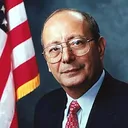

Military aid to Ukraine is essential for the strength of NATO.
George Pataki Former Governor of New York

The Democratic Party is floundering while the GOP is thriving.
Ed Cox Chair, NY Republican State Committee

North Koreans give missiles to Russians in Ukraine.
Gordon Chang China Analyst & Author
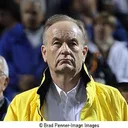
The shake-up of the Federal government is overdue.
Bill O'Reilly Host of No Spin News and Author
February has a full cold moon, and Venus is bright on Valentine's Day.
Steve Kates Space and astronomy broadcaster (Dr. Sky)

National Institute of Health. Clean air may lengthen life.
Dr. Peter Michalos WABC Medical Expert
Steve Kates
Deep-Space Mysteries, UFOs and the Orionid Meteor Shower
Steve Kates Space and astronomy broadcaster (Dr. Sky)
The Mysteries of Mermaids, El Niño and the Antarctic Ice
Steve Kates Space and astronomy broadcaster (Dr. Sky)
Exoplanet Radio Signals, SpaceX’s Heavy Rocket Test and Nuclear Propulsion
Steve Kates Space and astronomy broadcaster (Dr. Sky)
Supersonic Jets, SpaceX’s Next Starship Launch & Trump’s Golden Dome Defense System
Steve Kates Space and astronomy broadcaster (Dr. Sky)
The Science Behind Hurricanes, Cosmic Radiation and the Universe
Steve Kates Space and astronomy broadcaster (Dr. Sky)
Ben Franklin, Mars, and Asteroid Mining
Steve Kates Space and astronomy broadcaster (Dr. Sky)
