


Transcript
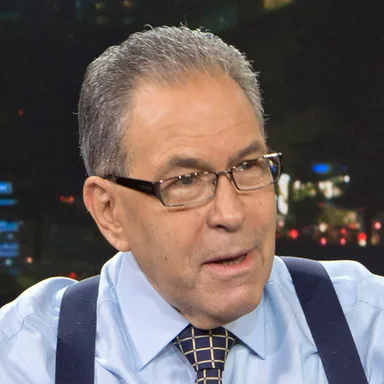
Automated transcript · uncorrectedGood morning. This is Mike Stole for the Stolyly real Estate Report. What’s happening in twenty twenty five? Are we going to see a lot of changes? Is real estate going to be affected by the new president? Is the real estate also going to be affected by the City of Yes and other programs Today to discuss that subject
and financing, I have my friend Dan Harris, who’s the executive vice president, chief Commercial real Estate Lending Officer New York Metro President for Ocean First Bank, Big Title.
Thanks for having me, Mike.
Okay, So what’s really happening in the financing world.
It’s good. It’s really changed the last couple of years because of commercial real estate concentration. A lot of the regional banks and the smaller banks have been on the sidelines. A lot of us are getting back into the business now.
We’re really excited about it. So for the first time in a long time, a lot of us are looking at deals and looking to put money out there.
Again, what type of deals are you looking for? It?
You know it’s commercial real estate. It depends. We’ll do most things. Obviously, banks with large office concentrations are going to be very reluctant to do more office just because of the perception of it, but retail, multifamily, industrial, you know, we’re open to look at all types of deals, as most of our competitors are.
You know, many times I have people talking about Fanny and Freddie. Would you explain to my listeners what Fanny and Freddy financing is.
Right in a multi family world, Fanny and Freddie buy multi family loans originated by others. They don’t originate loans themselves. They’re very competitive. It’s very hard for banks to compete with them. But they provide a solid source of financing for multi family housing, which is a public policy issue.
So there are a number of people out there that originate and sell to Fannie May, and then a lot of the regional banks originate and keep for portfolio. So they’re basically a competitor of ours, and they’re a very good competitor.
What’s happening. I know when we were talking the other day, you were talking about land loans, tract loans for single family and others, the dhhord and the Polthy people and so on. Let’s discuss that.
Yeah, we have a fairly decent multi residential portfolio where we either lend to the person who’s doing the site development, which is the roads and the infrastructure and the sewer and the water lines, and then someone else comes in and buys the improved lot to build houses on, or we’ll do all of it. We’ll do right from subdivision
site work through the final construction of the homes. There’s a great market for that. It’s not a lot around New York City. It’s more in southern Jersey, Maryland, other states. But the demand for housing is extraordinarily high, so they’re really solid loans right now.
Another topic that is very active is note financing. You want to explain note financing.
Sure During the bank slow down in the commercial real estate space, a lot of debt funds have stepped into our shoes. Life insurance companies have come in and taken some market share. What the debt funds generally do is they’ll lend on construction loans, renovation loans, gut rehabs. They’re usually short term lending. So what’s developed is a whole
secondary market where a debt fund will do the construction loan, they’ll do a gut rehab, and then they’ll lay off some of that to us. So we’ll lend to the lender, the lender being the debt fund, and the debt fund will lend to the person on the ground we’re one step removed. We’ve done a number of those deals for
a bank. It’s a nice deal because not only do you have our borrower who is the lender as a way out of the deal, but you have the underlying fundamentals of the construction. Loan that they’re doing is a secondary way out of the deal.
So normally, how much leverage would you provide to the.
Will usually lend to them fifty to sixty five percent of what they’ve lent to the developer.
Terms are you lending to them as well?
The beauty is they are usually short term deals two years, eighteen months or two years initially with a one year extension, and we piggyback on the exact terms that they have, and they’re floating rate deals. They’re sour floating, so you might see they’re lending it, you know, so for plus five hundred or six hundred, we’re lending to them, maybe
at a lower rate to them where they get a little bit of spread on our money.
What about hospitality financing.
We’ve done some hospitality hospitalities come back pretty strong after COVID. You know, it’s like anything else, it depends. But we do have a hospitality book. We’re not growing it rapidly, but it’s still it’s a solid business, especially in New Jersey.
We have a lot of our branches and we’re well known along the coast.
We do quite a bit of that now. One in the banks over the years at Ocean First board was Country Bank, who had a specialty with regard to restaurants. Let’s talk about that. Many people really does like lending to restaurants.
We love it. Most of our our customers are long term Country Bank customers, now Ocean First customers. That deal closed about four years ago. Almost the exact same group are still with us. We’ve done additional loans to them.
The difference in that portfolio, and they own a lot of Irish pubs in the city, is that they tend to own the real estate, so that makes it an easy deal. They do all their banking with us, and they’ve really been phenomenal borrowers of ours.
Let’s talk about the financing of multi family apartments, especially in light of the twenty nineteen AC.
I mean, we don’t do very much multi family construction lending in the boroughs or in New York.
I’m talking about refinancing.
I’m not talking about refinancing. We do very little of that as well. You have Fanny and Freddy as stift competition, and the people that have large regulated portfolios, they usually don’t pencil out very well. There might be too much debt of them, or even if there isn’t a lot of debt on them. You know, your net op income
on a regulated building is not going to go up over time, and that’s really hard to underwrite.
What about suburban office, you.
Know, suburban office, especially with congestion pricing. You know, people are avoiding office generally because of the taint. That being said, suburban office has been pretty steady. It’s you underwriteed to fifteen percent vacancy. The rents you know, White Plains all through New Jersey has kind of been steady for the last several years. Depending on the tenancy. It’s not a
bad loan to make, right now. What about the credit Oh, we love credit tenants. If there’s an underlying credit tenant, that’s terrific. But you know, that becomes a very competitive environment because people start lending on the credit worthiness of the tenant, not so much on the real estate.
What about the repositioning of males and other properties.
You know, there’s a couple of giant players out there. We have loans to a couple of them that buy malls cheap, you know, the old style malls that had the big boxes at the ends that have since And that’s a case by case basis. Some of them are they’re doing all kinds of things to them. They sell
off the out parcels, they reconfigure the think. The good thing about those properties are usually very well located, so to the extent there’s an alternate use like residential, there’s some real opportunity there, but it takes years sometimes to get those approvals done. And the change made.
What you’ve thought about the office conversion to residential in New York City.
It’s funny. A good friend of mine who’s renting at one Wall Street in a few weeks and that’s probably the biggest such job in New York City, six hundred some odd units. It’s beautiful. It’s right there by Trinity Church and Wall Street. It’s hard, and you know, they pulled that one off nicely. Not a lot of soul,
but I think that’s going to be a success. It’s really hard to do because you need a building with a lot, not too much debt on it, that’s zoned properly. There’s really no great tax incentives yet to do the job.
And you know, depending on the shape of the building, need an older building that has a lot of windows, or that is a narrower style building because you need light for all these apartments, and if you have a big square box, the interior units are going to be challenging.
You know, you’ll have limited light, or you’ll have very long railroad units which are not that desirable.
With regard to the president’s COO here, what effect do you think it’s going to have on commercial real estate?
Well, he’s a commercial real estate guy, and we’re all very optimistic that they will do things that benefit us. Today on the FDIC’s website, the new head of the FDIC is already talking about getting more focused on the credit of the banks and not into all these extraordinary things and extraneous items that they’ve previously been dealing with. So,
you know, hopefully the regulatory environment softens for banks and that will help all of us. Industrial.
I love industrial, especially if it’s close to urban centers. You know, last mile stuff is still very strong. Some of the very large boxes outside of the urban areas have been overbuilt to a degree, but there’s still demand and I still like it. I still love that asset.
Class transit oriented development.
I mean, everyone wants to be near transit hubs. But of course the cost per square effort of the land likewise is that much more expensive, and it’s really hard to the cost of building things. It’s very expensive to build existing stock. It’s fine, it’s great as long as it’s market rents.
So what about tariffs and its effect on the construction of new buildings.
I think we have to wait and see if they really happen into what degree. I think it’s heavy negotiating ploy and that it will just lead to better deals and not necessarily have long legs on them.
Okay, so I think you’ve had an interesting conversation with Dan Harris, Executive vice president, New York City Market President Devotion. First, thank you for being here. Thanks like
Sunday, February 9, 2025
The quality of life in the City does not bode well for the Mayor's reelection.
Manhattan Institute Pres. Reihan Salam

Trump is moving so fast the judicial system cannot keep up.
Judge Richard Weinberg Retired New York City Criminal Court Judge; 77 WABC Host
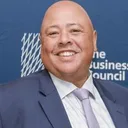
The state is making it more and more difficult to do business here.
Paul Zuber SVP, NY Business Council

Announces his son, Griffin, to run for Staten Island City Council.
Vito Fossella Staten Island Borough President

The impact of Trump on local communities.
Joe Ithier Political Consultant & Community Leader
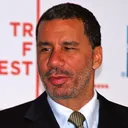
Challengers to the Mayor are coming out of the woodwork.
David Paterson Former Governor of New York


Military aid to Ukraine is essential for the strength of NATO.
George Pataki Former Governor of New York

The Democratic Party is floundering while the GOP is thriving.
Ed Cox Chair, NY Republican State Committee

North Koreans give missiles to Russians in Ukraine.
Gordon Chang China Analyst & Author

The shake-up of the Federal government is overdue.
Bill O'Reilly Host of No Spin News and Author

Astroid on a collision course with Earth.
Steve Kates Space and astronomy broadcaster (Dr. Sky)
February has a full cold moon, and Venus is bright on Valentine's Day.
Steve Kates Space and astronomy broadcaster (Dr. Sky)

National Institute of Health. Clean air may lengthen life.
Dr. Peter Michalos WABC Medical Expert
Michael Stoler
The Stoler Report with Michael Stoler: Eli Weiss and Andrew Albstein
Michael Stoler Real Estate Expert
The Stoler Report with Michael Stoler: Eli Weiss and Andrew Albstein
Michael Stoler Real Estate Expert
The Stoler Report with Michael Stoler: Robin Schneiderman
Michael Stoler Real Estate Expert
