


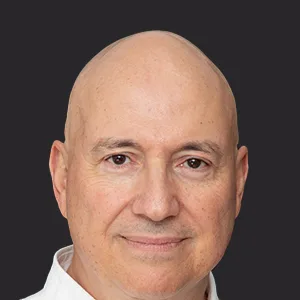
Dr. Peter Michalos WABC Medical Expert
National Institute of Health. Clean air may lengthen life.
Transcript
Automated transcript · uncorrectedSunday Morning. Well, a segment that all our listeners listen to and ask for is live long and prosper doctor Peter Mihelos and us, Oh, guys, we want to live to be one hundred doctor Mihlos. What is your recommendations today.
Well, today we talk about fascinating topics healthy air, microplastics, and longevity. And a very interesting study published by the National Institute of Health showed that if you have good air quality in your lifetime, you can live fifteen percent longer.
That it adds fifteen percent of your lifespan. So that’s that’s a big deal. So that’s something that we definitely have to consider and the importance I think in the new modern world that we live in that air filtration reduces our exposure to microplastics, bacteria and viruses.
Doctor, percent is a big number.
It is a big number. So people who live in these polluted cities get a lot more problems. They get problems with you know, heart disease, strokes, more shorter life spans, fertility problems, asthma problems, metabolic disorders. You know, that’s a real thing. You know, microplastics cause inflammation and oxidative stress and they’re also toxic to the brain. And now with
high powered microscopes they found micro and nanoplastics have been found in blood samples and lungs. I mean our lungs are like the vacuum cleaner that we see what happened in nine to eleven when people breathing in all that toxic dust. They were found in placenta and even breast milk of mothers and liver and even in the intestinal tract.
And you know, microplastics have been linked to all these different diseases. And another big source that nobody talks about is tire rubber. Everybody says, my tires are warn guess where all that tire rubber becomes. It becomes tired dust and ends up in our lungs, our waters, our rivers, our streams, and been found in our fish and even
on our plants. That’s why it’s important to wash off your fruits and your vegetables when you get them and rinse them off. And you know the importance of using things like vacuum hepa filters in your house and wet mops which help gather the dust. And try to eat more organic things and fresh foods farm to table and
fiber rich foods that are prebody foods to keep the colon moving along, because you know, the colon is really the outside of our body, even though it’s on our inside, because it’s exposed to the outside. So whatever microplastics and nanoplastics, if they’re super small, they get into the bloodstream. There’s even a company a guy who’s working on longevity, the
guy Brian Johnson, who’s trying to study longevity science. He’s around a lot and he even started a blood test where you mail in the sample the blueprint and they actually measure the amounts of microplastics in your bloodstream and also the tumor tumors that were biopsy. They also found it in tumors. But not only it’s not just the microplastic,
it’s the pollen, it’s the pet the dand or the dust mites and the smoke. And that’s why we always.
Now, is there a ranking? Everybody wants to know. Is there a ranking in the cities. I’ll give you an example, whether you live in New York City or live in on the on the Beach in the Hampton’s or you live in Miami, is there some kind of ranking that we could find.
Uh, yeah, you can, you can look look it up. Uh, you know, with a list of the most polluted cities in the world. The problems we’re all connected. The jet stream, the air moves around. But the cities that have some of the most polluted are in India and Bangladesh and China, you know, in New Delhi, Dhaka, Bangladesh, places like that.
On China, the big industrial areas, even Bangkok, Thailand, quality air was to be very unhealthy and they measure it as particulate matter that they know.
We’re better off in America then.
Well on the world scale, yes we are, but we also have problem here and a lot of our you know, larger, larger cities. But again, we’re all really connected. Just like when the fires were happening in California and guess what, nobody talks about it. But weeks later it was here too, in the air and in our lungs. And that’s why
it’s important to run HAPA air filters in your bedrooms and stuff. And you just look at your air filter at the end of the month. I changed mine once a month. They’re black and filled with dust that would have been in my lungs or in my skin, So I think that.
Unfortunately, I have three different air filters in my bedroom.
Yeah, and that helps, and that creates a cleaner environment. And what you can do it’s called the Tindal effect. You know in the movie theater when you flashed the light of the movie screen and you can see the dust in the air. Well, if you take a black flesh light and I’ve done it in Manhattan and I
look at it in the dark, I can see the particles when I do it out in the For example, if someone goes out to Montauk, you don’t see it with this fresh air. Wow, the mountains of Newpolts, New York, you just don’t see it. So what would we look.
At Because that’s interesting because a lot of our listeners living in New York, trist State area, Connecticut, New Jersey to Long Island, you know, Pennsylvania. So is this area better than other areas.
It Again, it depends on the area you’re in. But in Manhattan there’s tons of dust in particular matter, and there’s a lot of construction going on. Every time you see another building being torn down, guess what, there’s tons of airborne dust happening. And even you know, things far away the Canadian wildfires they made are you know, I
never my alarm that I have an air quality alarm. It was ringing in the middle of the night. I was like, what’s going on? And then I turned on my air hepophil to close my windows and an hour later it went back to normal levels. But it proved to me that wow, this is real. And basically, all
even the war that’s happening in the you know, Ukraine, all those bombs being dropped, all that dust, all that atmospheric dust going on and explosions and fires, guess what, it’s traveling around the world. Because it’s part of the air.
It is constantly moving around the world. So we all landt together. We have to try to keep the air clean and in our personal airspace, respect our clean air because that’s studied by the NIH that good air quality adds fifteen percent of life span. Has to be really serious.
You said you have an alarm that goes off. What kind of alarm do you have to detect the pollution?
It’s basically if they just go on the internet, they sell them on Amazon. You just put in air quality detector and it tells you the parts per million. It tells you the CO two and it gives you a digital readout and you know I’ll get you more information on it. You can show it on the on the website.
Will show it on a website. Yes, we can do that, all right? Anything else you want to tell already it’s on a Sunday morning.
No. I just want us to continue to stay healthy. Keep listening to WABC for more healthy tips on living longer, and continue to live long and prosper and always consult with your physician before you do anything medically.
Doctor Peter me hellos, thank you for letting us live longer in cloud bless you and Cloudless America.
Thank you John for always getting the truth out on the Cats round Table
Sunday, February 9, 2025
The quality of life in the City does not bode well for the Mayor's reelection.
Manhattan Institute Pres. Reihan Salam

Trump is moving so fast the judicial system cannot keep up.
Judge Richard Weinberg Retired New York City Criminal Court Judge; 77 WABC Host

The state is making it more and more difficult to do business here.
Paul Zuber SVP, NY Business Council

Announces his son, Griffin, to run for Staten Island City Council.
Vito Fossella Staten Island Borough President

The impact of Trump on local communities.
Joe Ithier Political Consultant & Community Leader

Challengers to the Mayor are coming out of the woodwork.
David Paterson Former Governor of New York


Military aid to Ukraine is essential for the strength of NATO.
George Pataki Former Governor of New York

The Democratic Party is floundering while the GOP is thriving.
Ed Cox Chair, NY Republican State Committee

North Koreans give missiles to Russians in Ukraine.
Gordon Chang China Analyst & Author

The shake-up of the Federal government is overdue.
Bill O'Reilly Host of No Spin News and Author


Astroid on a collision course with Earth.
Steve Kates Space and astronomy broadcaster (Dr. Sky)
February has a full cold moon, and Venus is bright on Valentine's Day.
Steve Kates Space and astronomy broadcaster (Dr. Sky)
Dr. Peter Michalos

Advances in Lung Cancer Detection and Personalized Treatment
Dr. Peter Michalos WABC Medical Expert
Healthy Eating, Stronger Immunity and the Science of Living Longer
Dr. Peter Michalos WABC Medical Expert
Limiting Sugar and Choosing Whole Foods to Support Healthy Aging
Dr. Peter Michalos WABC Medical Expert
Protect Your Skin From UV Radiation and Reduce the Risk of Skin Cancer
Dr. Peter Michalos WABC Medical Expert
