


Transcript
Automated transcript · uncorrectedSunday morning. Well, we are calling the former Prime Minister of Canada, Stephen Harper, and he is calling in from somewhere near the Arctic Circle. And mister Prime Minister, tell us, how is it up there?
Well, you know, I know that’s a stereotype of Canadians, but in this case it’s actually true.
I’m in a Calowit just the capital.
Of Nunavut, the Northern Arctic Territory, and a little bit, yeah, about three latitudes south of the Arctic Circle. And it’s it’s actually about sixty degrees almost sixty degrees here today. It’s nice. They have short they have a decent summer, but it’s a very short summer.
Understood. Well, mister Prime minister. There are so many things going on in the world, and I’d like to get your pective. Perspective. You were Prime Minister of Canada for how many.
Years, almost decade a decade, so.
You know the world, and right now you are also serving as the chairman of the International Democracy Union. Tell the American people about that.
So that is an organization.
It’s basically the federation or alliance of the world’s center right conservative parties set up during President Reagan’s presidency. Vice president then Vice President George H. W. Bush was one of the signators of our initial Our initial arrangements set up by the Republican Party, the Conservatives in Britain and Canada, the Christian Democrats in Germany, and we consist of about
close to eighty center right parties around the world. So we’re the parties fighting for conservative views of freedom, democracy, and markets.
Well know, conservative views and common sense views, in my opinion, goes hand in hand. Where should we Where should we start start in the world. I mean, there’s been so much going on in Israel and nin let’s.
Start with the good news.
Go ahead, you.
Say, John, Let’s start with the good news.
Yeah, I mean I do think we’ve had a tremendous piece of good news in.
The last couple of weeks.
That has been the action by the United States following upon action by Israel to cripple the Iron nuclear program, and we can you know, look, I think, John, it’ll be a while before we know the true extent of the damage, but I think it’s pretty safe to say that what the Iranians spent decades and billions of years
building has been you know, largely demolished in a fairly short period of time. And look, I have been saying for years, John, when I was Prime Minister many years ago, saying that the possibility of the Mullahs in Tehran possessing nuclear weapons was the single biggest worry we should have about global peace and security, and that has been at
least for the time being neutralized. Look, more neutrals, particular, President Trump’s action has you know, really shown that when the United States says that that regime will not be allowed to have nuclear weapons, that it means it.
And you know, can they rebuild?
Can they Well, of course I guess they can try, but the President’s there.
If they do, it’s going to be taken out.
So I think the Middle East to start with, and the wider world is you know, just immensely better.
Because of this.
This is a has been an enormous threat to the region, to the world. You know, Iran calls I remind my American friends, Iran may call all Israel the little Satan, but it calls America the Great Satan. And so President Trump was absolutely correct to take on a regime that was directly threatening the United States.
And the biggest fear was that Iran if they had a nuclear weapon, that they would share it with the other terrorist groups, the Hamasala and uh, the hoodies. I mean they’ve they’ve shared everything else with those terrorist groups.
Well, I was gonna say that, Ran, like Iran, has been a problem on many fronts. Obviously, the development of a nuclear weapons program has been a big thing, But the other has been this construction of this network of proxies, a kind of a neo Persian empire in the Middle East, the Humane Huthis, Hamas has Bela and other groups of
which through which it could well have created a dirty what’s called so called dirty bomb. So you know, and look at what Israel and the United States have done in recent months has been not just in the not just to severely damage I think probably end the nuclear program.
It’s been to seriously degrade the.
Capabilities of this network.
Look President Trump, Premiers Netna who as well especially, I mean, they deserve real credit when you look back at how this how they went about this, degrading the proxy network. Then several months ago taking out Iron’s air defense systems, just one one step at a time, making this country, making this regime vulnerable, and removing the threat, and John,
what’s amazing about it is you know, you know, you see people on some of your liberal networks and mine waving their hands about, you know, the escalation, et cetera. In fact, what we saw was when we actually had a plan and took on these people, it was quite doable.
And you know, a shame in a way that it took so many years and so many administrations to finally get this done. We could have saved ourselves a lot of trouble if we’d acted earlier.
Well, what happened, mister Prime Minister? Is it? The fact is when the previous administration in the United States get involved and caused the price of oil to go up double and triple, it made the Iranian country rich again.
And they did not stop it, for they were underlimited four hundred thousand bows a day production. They went to three million bows a day and they made Iran rich again.
Well they you know, our previous administrations did things that, as you say, pushed up the price of oil, made that regime rich. But even more than that, we will recall there was a nuclear deal between previous administration and the and and the Iranian government which actually directly transferred you know, hundreds of millions.
I forget how much it was.
I think it might have been to the billions, literally giving them money.
I know, mister prime minist, I remember the vision in my mind when I saw the pictures of the foreign currency on stacked up at the airport getting taken taking it off the airplane. Yeah.
Not not to be used for the benefit of the people of Iran, who have suffered immensely under sanctions and and obviously under the repression of the regime. But to go, you know, to terrorism, to go to building the nuclear program, to building other military capabilities. But as I say, once we actually took them on, you know, the the most
amazing thing was was how quickly it was done.
And there’s almost nothing they could do.
You know, they never were this regime never was any match for the United States or the Western Alliance more broadly, they were only a match for to be blunt for week leaders who were afraid to take them on. And when you actually, when you actually, you know, came down to brass tacks and took action, I say, with a plan,
it’s amazing how quickly we we reduced this worry.
Now, look, that doesn’t mean we should just declare victory.
You know, these are very bad people with very bad ideology, and they will probably find other ways to make mischief, but they have been seriously degraded.
Great. Now President Trump has came back from NATO, it seems like a lot different than eight years ago, seven years, six years ago, when NATO leaders were we’re quick to go around wanting to have quittures taken with him.
Yeah, well, you know, look, there’s an agreement on increased spending. To be frank with you, John, I mean, the numbers are extraordinarily high, and I don’t really know how, you know, take a country like cant I don’t really know how we would spend five percent of GDP on defense in the long term unless we’re actually at war. But nevertheless,
all NATO countries recognized, nor only recognize that more has to be spent, but are actually doing it this time, and so, you know, I think that’s an achievement now, I think that, to be frank with you, I think the challenge for the Trump administration is, you know, to make sure that this spending in these countries are aligned
in foreign policy, because you know, part of the part of the methodology the new administration has used the proud allies, including my country, has made them think they should act much more independently. So it’s great to see the additional spending, but we do have to kind of heal those wounds and make sure we’re actually acting together.
What else would you like to tell the American people? And when I when I say to the American people, I count Canada at the same time. You know, we’re all Americans and Canada and in the United States have been sister countries, brother countries, whatever you want to call it for for for forever. Are you worried? Johead?
Put it this way, John, We’re all we’re all North Americans.
We have a lot of common heritage and history, and we have had, you know, the largest trade relationship in the world, uh for a long long time. You know my perspective, and I know the administration has said some some other things, but you know, we have a trade relationship that is ninety eight percent tariff and irritant free,
or at least was that way before January twentieth. You Canada is the largest your largest export market, the largest export market for the United States by far, you know, and obviously some pretty vital minerals and energy, et cetera.
Crosses across it goes across the border.
So you know, I just hope our governments can find a way of putting this these various trade disputes behind us, which in the bigger picture I don’t think make any sense whatsoever.
We both have.
Enormous problem with the trade relations, the predatory trade relations that we have with China and have had for many years. I think we would be better spending our time working together on solving that than in having a trade.
War between us.
I note, you know, it’s I didn’t as you as you may know, John, as a conservative with the election upcoming Canada, was not what I was hoping for.
But I do think.
That the current Prime Minister, mister Carney has struck a better tone with President Trump and hopefully they’ll be able to, you know, work through these problems more productively than our than our previous government.
Well, Prime Minister, former Prime Minister Stephen Harper, thank you for calling in today and knowing President Trump for over forty forty forty five years. Once, if any Canadian uh sits down on an equal basis around the roundtable, a deal would be made that debt. I hope so I hope so too, but it will happen. Oh, thank you
so much for calling in. And please keep the American people informed of the common sense must prevail all over the world. And God bless you and God bless all of America.
Thank you, John. I always appreciate coming on your show. God bless all of you. God bless
Sunday, June 29, 2025
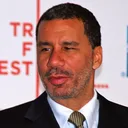
Mamdani has not explained how his suggested policies will work.
David Paterson Former Governor of New York

NJ Gov. candidate opponent endorsed Mamdani. Insulting to New Jersey residents.
Jack Ciattarelli Former New Jersey Assemblyman; 2021 and 2025 nominee for Governor of New Jersey

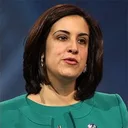
A lot of concern with the Democratic Party nominee.
Nicole Malliotakis U.S. Representative from New York
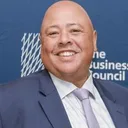
Affordability is the most important issue for New Yorkers.
Paul Zuber SVP, NY Business Council
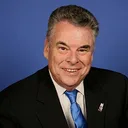
Mamdani will ruin the city of New York.
Peter King Former U.S. Representative from New York


A historical B2 air assault on Iran.
General Blaine Holt Brigadier General USAF (Ret.)
Interviews James Emden Executive Managing Director of ABS Partners.
Michael Stoler Real Estate Expert

Expected rate cuts, NVIDIA price target boost, FedEx beating Wall Street expectations, and more.
John Terrett WABC Financial Analyst

Is this international space station in trouble?
Steve Kates Space and astronomy broadcaster (Dr. Sky)

How can food poisoning be prevented and how can it be treated?
Dr. Peter Michalos WABC Medical Expert