


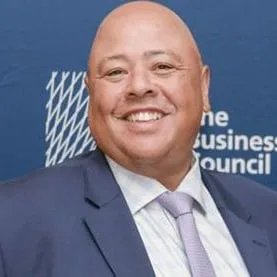
Paul Zuber SVP, NY Business Council
Affordability is the most important issue for New Yorkers.
Transcript
Automated transcript · uncorrectedSunday morning, Albany. Well, we always talked to Paul Zuber to tell us what the heck is going on with just legislature? Did they go home? Is everything okay? Well? Poor Zuber, what say you?
Well, the legislature did go home, and you know we’ll have we’ll have session again next year. But I think you know what’s interesting in Albany is the dynamics that are the result of the most recent primary in New York City. I think there’s a couple of things that we can we can take out of what happened in
the primary in New York City. One thing that I think is pretty obvious, and the other thing that that that that’s kind of scary for the entire state. And I think the first aspect of it is affordability is clearly the most important issue for New Yorkers. Whether they’re in New York City, whether they’re upstate Long Island, wherever
it may be, affordability is the most important issue. People are tired of living paycheck to paycheck. They’re tired of overpaying for things that used to be so much cheaper five or six years ago. People are frustrated, they’re angry, they’re upset, and that was clearly part of what happened in the primary. There was one candidate who addressed affordability,
and in my opinion, there was another candidate that really didn’t truly dive in on the affordability issue. Now, what is the scary part going forward for not just New York City and the rest of the state is this question that we’ve talked about before, which is what really is affordability right? And I think the scary part is
we’ve gotten to a point where people are offering simplistic answers for complicated problems. You know, I read somewhere where there was a state senator who I deeply respect, I consider a friend, who is a very very bright person, who said, what’s wrong with free bus service? What’s wrong with free childcare? And my answer to that would be,
there’s nothing wrong with it, but let’s be honest about how we can get there. We can’t get there by offering up simplistic answers that maybe the public wants to hear, but aren’t truly real. You know, recently I read there was a proposal during the mayor’s race where they wanted to make the minimum wage thirty dollars. We’re going to
make the minimum wage thirty dollars and create a living wage for everybody. But the problem with that is, Okay, in your mind, you’re going after these big companies, these big people who are making millions upon millions of dollars.
But the person who’s most affected by a thirty dollars minimum wage is the small business owner. How does the small business owner afford to pay his or her employees thirty dollars an hour if they don’t have the ability to create self checkout lines, they don’t have the ability to eat, you know, the added costs from I.
Mean, they are they trying to target people, non business people that that don’t really know how business works, or.
Yeah, well I think it’s I think it’s John. I think it’s you know, we we like, I’m in this bubble of Aubany, and you know, sometimes in some regards you’re in this world as well in terms of politics, and sometimes we forget that the average person doesn’t really get immersed in how things work in Aubany, like the
process and as well how things work on a business level. So when you say things to somebody that says, well, I’m going to freeze your rent. That sounds great, but we all know there’s a couple of issues there. First of all, the rent guidelines Board. They’re an independent entity.
You can’t it’s illegal for you to tell them that they got to freeze rent. Secondly, if you were to freeze rent, you and I both know the banks would say, well, that’s it, I’m not lending you any more money to build, and there would go all the potential affordable housing build out.
You know. So again, it’s offering these simplistic answers to complicated problems, and our problems go much deeper. I mean, we’re New York State is in a competition with every other state in the Union. We have electricity bills. Our electricity bills, our utility bills in New York State are over forty percent higher than some other states, and people
are leaving.
New York City is even.
More and New York City’s even and people are leaving because what we also have to remember when we think about this affordability and think about what we have to do, we’re a much more mobile society than we’ve ever been.
So I can leave New York and still work in New York. I can go to Florida. I could be an investment guy and go to Florida and still operate in New York because of Zoom, because of Microsoft Teams, because of all these things that we have now. So we have to be very careful when we try to
come up with these answers to the affordability issue. We have to understand the overall context of it. And and that’s what worries me more than anything, because I’m worried that this is going to happen not just on the city level, but on the state level, where we push out these proposals and we don’t think about the downstream consequences, right,
and so it’s just going to make New York more unaffordable, not more affordable.
And chaos instead of making small fixes here and there.
Yeah, and you know, and look, I mean, whoever ends up winning the election for New York City mayor, I just hope that they are realized that business is part of the solution, not part of the problem. So you need to bring business in and talk to them and talk to them about They need to be in the
affordability conversation, right, You just can’t exclude them from the affordability conversation. And say, oh, business is bad, so let’s tax the heck out of them. Let’s do this, let’s do that, because you’re just going to make New York one more unaffordable. And whoever wins this race, I pray that they have enough sense to bring business into the
discussion and into the conversation because affordability is the most important issue. It’s clear people are tired tired of being you know, piled on. But we can’t keep putting out these these proposals that we all know aren’t real. Well at least the people who are who who know what can understand the context of Albany and context of the politics.
They’re not real. And all you’re doing is giving people hope with actually no actual solution at the end of it. And so I’m hopeful that we can get past that because affordability is the issue, but let’s figure out how to deal with it and not just throw things out there that understood.
Well, yeah, let’s see how things sort themselves out. We’ll talk to you on next week and let’s all stay Tom and God bless New York and God bless America.
You two John, have a great weekend. Talk to you later.
Sunday, June 29, 2025
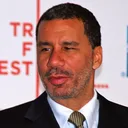
Mamdani has not explained how his suggested policies will work.
David Paterson Former Governor of New York
NJ Gov. candidate opponent endorsed Mamdani. Insulting to New Jersey residents.
Jack Ciattarelli Former New Jersey Assemblyman; 2021 and 2025 nominee for Governor of New Jersey
A lot of concern with the Democratic Party nominee.
Nicole Malliotakis U.S. Representative from New York
Mamdani will ruin the city of New York.
Peter King Former U.S. Representative from New York


A historical B2 air assault on Iran.
General Blaine Holt Brigadier General USAF (Ret.)
Interviews James Emden Executive Managing Director of ABS Partners.
Michael Stoler Real Estate Expert

Expected rate cuts, NVIDIA price target boost, FedEx beating Wall Street expectations, and more.
John Terrett WABC Financial Analyst

Is this international space station in trouble?
Steve Kates Space and astronomy broadcaster (Dr. Sky)

How can food poisoning be prevented and how can it be treated?
Dr. Peter Michalos WABC Medical Expert
Paul Zuber
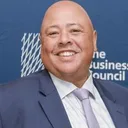
Climate Mandates Are Hurting Working Families
Paul Zuber SVP, NY Business Council
They Need To Fix The Climate Law In Albany, To Make Life More Affordable For New Yorkers
Paul Zuber SVP, NY Business Council
New York will face a $34 billion budget gap over the next 3 years.
Paul Zuber SVP, NY Business Council
