


Transcript
Automated transcript · uncorrectedSunday Morning, where with doctor Peter Midilos, who we have given the nickname to live Long and Prosper, and hopefully all our listeners will live long in prosper. Doctor Milos, what’s the big story this week?
Well, what we’re going to talk about today is because we’re hearing a lot about rising cancer rates, especially among younger people, and we first have to talk about what exactly is cancer. And normally a cell knows how to grow and to multiply. For example, our fingers know when to stop growing, or the length of our fingers or
the length of our nose or our ears. But what happens to a cancerselves is it lose that control and it starts multiplying wildly without any control, and it constantly is seeking out new blood vessels and it wants to grow and it doesn’t have the suppression mechanism to stop multiplying.
And a big study that was done in the EU last year showed that when cells multiply faster, they make more copying errors, and those copying errors end up becoming cancer and inflammation. So we know that in that study, they found that rising insulin levels and higher sugar levels, cancer cells grow faster. But it turns out cancer is
not just one thing. You can get DNA damage from radiation, just like years ago they used to use X rays on acne until they found out that getting exposed to radiation quoth thyroid cancer. Or we now know that too much ultraviolet radiation. People who hang out in the sun have higher incidents of getting melanoma, scram of cell, and
basal cell cancers. And again those are cells that start multiplying wildly and then they start taking over healthy cells. And the way cancer kills you, for example and the lung is when those cells are multiplying widely, they invade a blood vessel and then suddenly that blood vessel when they invade it, it breaks open and you bleed out.
That’s why people with these types of cancers can sometimes find themselves spitting up blood. The same thing happens with colon cancer. You can get a polyp, it becomes so big it starts bleeding, then you get blood blood in the stool, or it can actually totally obstruct you. So that’s why it’s important to try to catch cancers early.
The question is how to treat them. And some of the exciting things that are happening are cancer vaccines, and basically what they’re doing now is they’re taking markers on the surface of a cancer cell. A cancer cell has these types of activities on it that are like cloaking devices for those who are Star Star Trek fans, and
those cloaking devices cloak it so that the immune system doesn’t see it. So by analyzing a tumor and finding out the surface proteins or the surface keys that it uses to spread and to go against your body and spread throughout the body what we call metastases, which means going to the part of the body, then we make
vaccines that target those specific surface Like let’s say there’s a certain curve on a cancer cell, you go after that specific curve. You make a vaccine to attack that specific curve on the surface of the cell or that notch.
And that’s how these new vaccines and immune therapies are able to laser target. They’re like a targeted missile or a targeted drone hitting a specific site. And even now in Russia, they just announced a few weeks ago that they were taking samples of melanoma tumors when they buy up seed them and created vaccines against the surface proteins,
and they’re claiming that they have suppressed metastases throughout the body, and they’re doing clinical trials. And again, there are these different things happening around the world. That Oxford in England, there’s ovaria vacs, a vaccine they’re working on for ovarian cancer.
There’s one here right here. In the United States and the Northeast. They’re working on cancer vaccines that will attack breast cancer early on and even pancreatic cancers. Are we on the edge?
Are we on the edge of a lot of those kind of discoveries.
We’re on the edge where cancer is becoming more of a chronic disease. When you get cancer, it’s not a death sentence like it used to be, and if you catch it super early. There are some areas of the body that are really hard to treat. For example, something called the blood brain barrier, where the brain protects itself
by being shielded inside our skull. It’s hard for therapies or even cancer repair cells to get into the brain. And that’s why, for example, glioblastoma, which is a type of brain cancer which is on the rise, by the way, in the United States, that one is very hard to treat because you can’t get the medicines inside the brain,
and some of them where there’s a ton of lymph nodes and a ton of ways for it to exit and spread, are like the pancreas. That’s a very difficult. But again, if you catch it super early, there are procedures and some people end up doing very well and they can go on for many, many years. So we’re
making tremendous progress. We’re seeing oral pills, for example, there’s a pill that helps certain types of lung cancer. So we’re going to be seeing more and more treatments. And that’s why, you know, people always try to attack big pharma, but you really have to give them credit because investors put in millions of dollars. They don’t always make money
on it. But the American intellectual property is what drives the worldwide chores and treatments that we’re seeing throughout the world. So I think that’s a big, big, big deal and we’re going to be hearing more about it on WABC as these things start appearing. And also we talked about the testing, how very important to catch early tests and
the blood tests like the gallery test where you can spot fifty cancers. It’s going to change the way things once it becomes into mainstream practice. And I was just on the phone with a very prominent physician o BG y N doctor doctor Laurenki so Mals, who was telling me the story about how the gallery I test that
I told him about it to get it with a patient and they caught an early pancreatic cancer. They had a whipple operation and the doctor said that there were no lymphodes involved and they have a good prognosis. So to me, that’s an amazing thing and life No you you you gave you give the microphone and we talked
about it and they heard it, and she recommended it to this patient and they they found out they had early pancreatic and got an operation and got treatment and hopefully they’re going to go way beyond the six months that uh that many people do. So information is very important.
Knowledge is power when it comes to medicine. And keep listening to w ABC for more health tips and exciting news on the front lines of medicine that people can hear every week on your Cats Roundtable.
Live Long and prosper. Thank you so much, doctor Peter mihilloes. We’ll catch up.
Thank you John for always getting the truth out on the Cats round Table.
Sunday, December 8, 2024

Tariffs can ultimately lower taxes.
Steve Moore Economist; Co-Founder, Committee to Unleash Prosperity

The GOP has a good candidate to run against Alvin Bragg.
Ed Cox Chair, NY Republican State Committee

Brooklyn real estate market on fire.
Suzanne Miller President, Empire State Properties; WABC Real Estate Analyst
Congestion pricing on the shoulders of Governor Hochul.
Paul Zuber Executive Vice President, The Business Council of New York State

Alvin Bragg should have never brought charges against Daniel Penny.
Alfonse D'Amato Former U.S. Senator from New York

The City awaits the verdict in the Daniel Penny trial.
David Paterson Former Governor of New York

State legislator move to make New York Trump proof.
Vito Fossella Staten Island Borough President

Trump will double down on his FBI choice and DOD.
Dick Morris Political Strategist and Author

Daily provocations from China and Russia against the Philippines
Gordon Chang China Analyst & Author




China develops hypergravity machine that can compress time and space
Steve Kates Space and astronomy broadcaster (Dr. Sky)
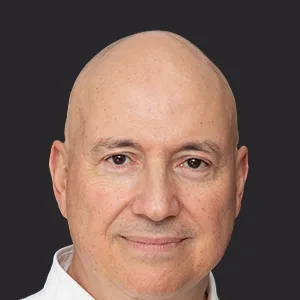
Dr. Peter Michalos

Fighting Cancer and Aging With the Latest Medical Advances
Dr. Peter Michalos WABC Medical Expert
Advances in Lung Cancer Detection and Personalized Treatment
Dr. Peter Michalos WABC Medical Expert
Healthy Eating, Stronger Immunity and the Science of Living Longer
Dr. Peter Michalos WABC Medical Expert
Limiting Sugar and Choosing Whole Foods to Support Healthy Aging
Dr. Peter Michalos WABC Medical Expert
Protect Your Skin From UV Radiation and Reduce the Risk of Skin Cancer
Dr. Peter Michalos WABC Medical Expert
