Transcript
Automated transcript · uncorrectedSunday morning. Interesting people. We meet interesting people every day. Today I’m with the CEO of a company called Markel from Richmond, Virginia, and it’s a twenty three billion dollar holding company. Its main business is insurance. It’s a legendary company.
It’s the Markel family in Virginia has been there for three generations. You’ve been there for thirty five years. I have.
Indeed, I started at age twenty eight.
So we’re talking to the CEO, the first CEO that’s not a Markel, his name is Tom Gaina. Thirty five years in the company, you’re the first one to rise to the rank of CEO. And tell me about about how did you get to rise to that degree? And it’s one of the most successful companies in America.
Well, thank you very much for having me in this. It’s fun to be here and spend some time with you. Like you, you’ve been a very successful entrepreneur. And the heart of being an entrepreneur is being observant and figuring out what people need or want, that they’re not getting what they need, or they’re not getting what they want,
or it’s not being served well enough, and that creates opportunity. So so really Markell is the same sort of thing. It started in the nineteen thirties with the very early days of the automobile and trucks and highways and things of that nature. And really for the better part of one hundred years, we’ve just always tried to be very observant,
figure out what people need and want, and see if there’s some way we can take care of them in doing so. And from a small family business, as you mentioned, we’re Fortune five hundred company worth about twenty three billion dollars these.
Days now, usually abide a third generation something, things begin to fall. What is a third and fourth generation doing.
I actually think that’s a great question, and sometimes it depends on how you define family. So again, I’m not a member of the Markell family. I’m not married to any MARKU. I have no blood or quote unquote strict familial definition of family. But when I started there, I was twenty eight years old and I’ve lived basically my
entire adult life there. So frankly, I feel like a fourth generation member of the family. And really that’s the kind of spirit we try to cultivate among people who work for the business, because, as the old saying goes, a good farmer farms for the next generation. And if you think about taking care of something not so much
for what it does for you, but what it does for those that come behind you. Well, that’s the broad definition of family that I think makes sense, and that’s what we try to do well.
People ask me why do I work so hard at my age and what do I want to accomplish? And if somebody asked you that question.
Well, I think there’s a couple of reasons. First off, when I came in the doornineteen ninety, we had about three hundred and fifty people, and so that’s three hundred and fifty jobs and three hundred and fifty people taking care of their family and three hundred and fifty people doing good things in their communities. We’re now up to
about twenty two thousand. So really what gets me out of bed in the morning is the idea that I’ve been part of a system and a business that solves other people’s problems and in so doing creates viable, productive lives for twenty two thousand people. And I would hope if we were talking three, five, ten years from now,
that that number is going to be twenty five thousand or thirty thousand or fifty thousand. We’re we’re going to keep growing and try to.
So you’re responsible that you have to make enough money and do the right thing for twenty thousand, twenty five thousand people to make them mortgage payment.
That’s exactly right, and that’s a big responsibility. But it’s also something I take great joy and pleasure in and I just like doing it.
Tell us about our country. We went in two different directions last four years, and right now we have a new president. Are we going in the right direction? You feel that our country? What I’m concerned about, mostly about for my kids and grandkids is we’re going to have the three hundredth anniversary of our country in twenty seventy six.
Are we going to be able to turn over that to our grandkids and say it’s your turn.
I’m very optimistic that that’s not only going to be possible, it’s going to be wonderful and we’re going to be surprised to the upside. So a couple of reasons there. One, this country is an amazing beast, and I see us do wrong thing after wrong thing after wrong thing, and sort of inflict beating after beating after beating. But yet
people and individuals and families and companies just sort of figure out how to adapt and survive and make good decisions and go on to do the next thing. And I think America is uniquely suited to do. That’s what we’ve done for generations, and I think we’ll continue to do that. And then the second thing I would point
to is that everything specifically that you would worry about are things you can identify and know that it’s a problem. The things that will solve those problems and make things better. In many cases, they haven’t been invented yet, so we can’t name or cite the things that will make it better.
But it’s a combination of the spirit and the willingness to keep doing things new technology, imagination, creativity. And that’s what we’ve done since day one, and I think we’ll keep doing it.
I’ve been a CEO for fifty years. You’ve been a CEO for a long time too. Do you think our country technology wise, it seems like we’re moving at warp speed.
I would agree to that, and I would also say that that pace of speed, the pace of innovation, has done nothing but go up for the last one hundred and fifty years or so so and sometimes it does seem like it’s coming at you so fast as you can’t keep up, But somehow you do. And there’s no
one who doesn’t face the same challenges, and somehow or another we all figure it out.
So you could assure the Markel family that in twenty seventy six, three hundred years of our country, that beard grandkids, great grandkids, great great grandkids are gonna be Okay.
Well, sure it’s a pretty strong word, but there’s two things. One, I’ll do the best I can, and there’s no more you can ask of somebody than that, and be the evidence and the data and the past would indicate that it probably will be. So you were kind enough to talk about being from Richmond, Virginia. Joco Patrick Henry his
famous one of his famous quotes is that I know of no way to judge the future but by the past. So if you look at what has happened in this country ever since it got started, somehow or another, we’ve met every challenge, we’ve overcome every mistake that we’ve made.
We’ve made doozies all along the way, But somehow or know that we get up and answer the bell for the next round of the fight.
Tom Gagner, CEO of the Markel Company, God bless you, God bless your company, God bless the Markel family, and thank you for coming on this Sunday morning. Thank you,
Sunday, March 2, 2025
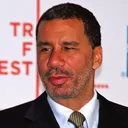
Don't understand the feud between Governor and Trump.
David Paterson Former Governor of New York
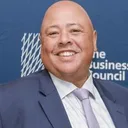
Mandatory EV figures are way out of line. 9% sales in 2024.
Paul Zuber SVP, NY Business Council
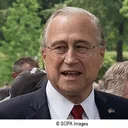
Property taxes and property taxes need to be lowered.
Candidate for NJ Gov Mario Kranjac
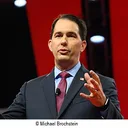
The Supreme Court in Wisconsin will influence labor law for the nation.
Scott Walker President of Young America's Foundation

Starting a new radio program on WABC daily 8PM – 9:00PM EST
Roger Stone Political Strategist & Consultant
European spokesman meeting between Trump and President Zelensky never seen before.
Mario Economou
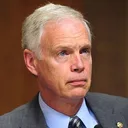
There are questions the former Administrations need to answer.
Ron Johnson U.S. Senator from Wisconsin
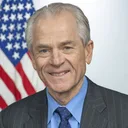
Tariffs on Mexico & Canada start Tuesday
Peter Navarro White House Senior Counselor for Trade & Manufacturing
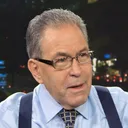
Asteroid has zero chance of hitting Earth.
Steve Kates Space and astronomy broadcaster (Dr. Sky)