


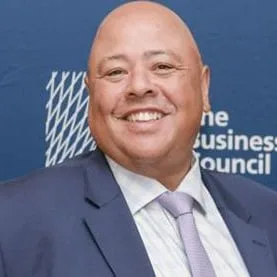
Paul Zuber SVP, NY Business Council
Mandatory EV figures are way out of line. 9% sales in 2024.
Transcript
Automated transcript · uncorrectedSunday morning, What is going on in New York State? What is going on in Aubany? What is today? Is Paul Zuber and he is the senior vice president the Business Council of New York. Well, Paul, is there any common sense in Aubany? What’s going on? Give us a pillac in.
Well, it’s debatable whether or not there’s common sense. And I think one of the things that concerns me is when it’s clearly there’s a lack of common sense. And you know, one of the things that has been brewing here in New York State, particularly over the last week.
I don’t know many callers and our audience understands that there is a mandate by the State of New York that by twenty twenty six, thirty five percent of the cars sold in New York State have to be zero emission theory means they’re not gas powered, and by twenty thirty five, all cars sold in the New York State
have to be basically actric vehicles. And you know, this is concerning because you know, when we get into this debate about like how do we reclaim the middle class voter, to me, this is a prime example of how we leave the middle class or the working class voter in the lurch. Because you know, the auto dealers, who, oddly enough,
are probably the most honest voice in this discussion, because I don’t know if a lot of the audience knows this. When an auto dealer puts a car on the lot, they actually have to pay back the manufacturer. So if you’re on Honda dealership, you have that car on a lot, you’re paying back Honda each month that that car is
staying there. So as an auto dealer, you just want to sell the car. So even the auto dealers are saying that, based on this upcoming change of thirty five percent, for every three cars that they sell, two of them that they’re going to get from the manufacturer will have to be evy vehicles and one of them will be
a gas power vehicle. And what they’re telling everybody is when that happens, you’re going to decrease the number of gas powered vehicles on a car lot. And we all know, we’ve all taken basic economics. Is supplying to men. When you have less gas powered vehicles on a lot, it’s going to shoot up the price of gas powered vehicles.
So now you, as an individual. If you want a gas powered car, you’re going to be paying more for that car, or you’re going to have to go to another state like Connecticut or Massachusetts or New Jersey and buy the car from there. And so what it’s doing is what this mandate is doing is it’s all it’s
doing is costing the consumer more money. The fact of the matter is, as much as we want to change the environment, as much as we want to do some of these things, electric vehicles are not selling. People are still nervous about electric vehicles because quite frankly, we don’t have the infrastructure to charge these vehicles. So people are
very worried that if they get an electric vehicle and they’re trying to drive from say New York to visit their cousin in Tennessee or Virginia, that they’re going to run out of power on the way there.
You might not find on the way there, you might not find electric station where there’s zigions of gas stations.
Yeah, absolutely, you might not find electrics. And that’s why consumers aren’t ready for They don’t particularly want it right now. And the thing that I find perplexing about this is who does this hurt most? It hurts. You know who hurts most is a working class because, like, I’m lucky enough that I live a good life, I make a
good salary. If I were to buy an electric vehicle, I could probably afford to put a charging station on the side of my house like some people do. But if I’m a working class person, I can’t afford to do that. I need that gas power car. I need a gas power car to get my butt to work right.
And now you’re telling me that you’re going to cost me more money for the gas powered vehicle, and you’re telling me that you don’t have the infrastructure yet to actually charge these electric vehicles. So at some point, you know, we have to start thinking beyond this ivory tower, Like we got to start thinking like somebody who is a
working class person, somebody who whether their son or daughter, wants to buy a new pair of sneakers, Well, I got to wait for the sale because I can’t afford to buy it at at costs. Like you know someone who when they want to go on vacation, they have to save up for the entire year because unlike some
of us, they can’t just put a credit card down and just go.
Well, we had a celebration the other day at WABC for Black History Day, and we’re talking about it when when President Biden raised the price of gasoline by two or three times the amount and raised the price of food by thirty or forty percent, who did it hurt?
It hurt the poor in the middle class. And then after the yeah, I mean that’s who they’re hurting me. Yeah, I don’t care if that’s mean is you know, as a consumer, I don’t care what it is. But people, people on a fixed income do care.
People on a fixed income do care. And people have to remember, like if I’m on a fixed income and I’m living in in uh Long Island, I have I have to get to work, and I usually get to work with a car. So if you raise my gas prices, if you raise the cost that is gonna it’s gonna
cost me to buy a car, it means something to me because it also affects the rest of my budget. Right, So now that that trip I was saving up for all year to take my family on vacation maybe doesn’t happen because now I’m paying more for my car. And and people have to understand that that is what’s going on.
So these these policies are great. You know, we’re gonna save the world, we’re gonna save the universe. But let’s do it with a little bit of common sense. Don’t do a mandate that you’re gonna put effect by twenty twenty six, which the auto dealers who have no skin in this other than wanting to sell cars, are telling
you that this is going to raise the cost of cars, and if you want to buy a car at a regional price, you’re probably going to have to go out of state. Again. To your point, John, I can get him.
If I decide I want to buy a das Parer car, it’s not really a big deal for me to go to Connecticut, New Jersey or Massachusetts and buy the car. If I’m a working class individual, that’s a problem.
We buy once in a while, we buy cars in Texas and they ship them up.
Yeah, I mean, And it’s crazy. It’s just pure craziness because.
Our politicians in our politicians in New York City, New York State are not business people. It’s like having a non business people putting them in charge of one of my companies. It doesn’t work.
It doesn’t work. And you’ve got to and you have to think about the everyday person and how they’re reacting to this. And you know, and this isn’t the only EV mandate. They’re also got EV mandates on trucks, on big trucks, and so all the trucks that are delivering you know, the food throughout you know the state, and
I think ninety percent of the deliveries or nine percent of the freight that’s delivered in New York, it’s my truck. Eventually they have to go to electric vehicles and guess what they cost more than the standard diesel semi. So guess who’s going to pay for that? Right? So if I if I’m if I’m a trucking company, and now
I’m paying you know, a third to a quarter or more from my truck because I’m required to have a semi that’s an electric vehicle. Well I’m passing that on to whoever I’m delivering a product to. I’m not paying it, right, So you know, this is like you said before, this is where people have to have some common sense. You know,
there there’s nothing wrong with trying to make the environment better. And I think we all agree that we want to make the environment better. But there are ways to do this in a common sense way that doesn’t hurt every day in New Yorkers. And it gets very frustrating when we constantly talk about affordability in New York but then
we don’t do things that actually deal with affordability, like we let something like this electric car, you know, mandate proceed down the line, knowing that it’s going to cost the people who can least afford it, it’s going to cost them more money. And you know, that’s a frustrating aspect of things right now. And to your point, this
is what common sense has to come in. It’s not a Democrat issue, it’s not a Republican issue. It’s a common sense issue, right you know, And we got to think about that man or woman who’s working at the Walmart, or who’s driving a truck or who’s driving a bus, who’s just trying to get by and they need a
car to do that, and they can’t have their gas prices can’t go up, and they can’t have their car prices go up, they can’t have their energy bills go up because at the end of the day, that disrupts every aspect of their life. Things that they buy for their kids, vacations, paying other bills. You know, working class
people are on a budget. I’m lucky I don’t have to necessarily be on a super budget, but they are, and we’ve got to stop doing these things that are costing them more money. It’s getting out of control. And if people are wondering why more and more New Yorkers are having a distrust for government, it’s because of stuff
like this.
Wow, that’s all I can say. You know, it took me a few seconds just to go, well, well, thank you Paul Zuber for calling in this Sunday morning and giving us an update what it’s going on your abany.
I hope common sense prevails and and let’s catch up again real soon.
All right, thank you, John,
Sunday, March 2, 2025

Don't understand the feud between Governor and Trump.
David Paterson Former Governor of New York
Property taxes and property taxes need to be lowered.
Candidate for NJ Gov Mario Kranjac
The Supreme Court in Wisconsin will influence labor law for the nation.
Scott Walker President of Young America's Foundation

Starting a new radio program on WABC daily 8PM – 9:00PM EST
Roger Stone Political Strategist & Consultant
European spokesman meeting between Trump and President Zelensky never seen before.
Mario Economou
There are questions the former Administrations need to answer.
Ron Johnson U.S. Senator from Wisconsin

Tariffs on Mexico & Canada start Tuesday
Peter Navarro White House Senior Counselor for Trade & Manufacturing

Asteroid has zero chance of hitting Earth.
Steve Kates Space and astronomy broadcaster (Dr. Sky)

Paul Zuber
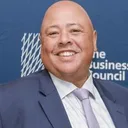
Climate Mandates Are Hurting Working Families
Paul Zuber SVP, NY Business Council
They Need To Fix The Climate Law In Albany, To Make Life More Affordable For New Yorkers
Paul Zuber SVP, NY Business Council
New York will face a $34 billion budget gap over the next 3 years.
Paul Zuber SVP, NY Business Council
