


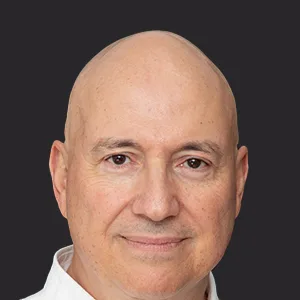
Dr. Peter Michalos WABC Medical Expert
Reducing your Alzheimer's & dementia and health span.
Transcript
Automated transcript · uncorrectedSunday morning. Well, this is doctor Peter Michlos, Live Wrong and prosper Uh. Doctor Milosha, tell us what miracles are you going to talk about this morning?
Well, today we’re going to talk about a very important topic that affects one in nine people in the United and Alzheimer’s disease is a form of dementia. And dementia is what happens when basically people start to have a bunch of symptoms together. It starts off with memory loss, cognitive decline, motor skills, and you start losing language skills,
and eventually you have long term memory loss where you actually can’t even remember your own loved ones. And it’s a serious disease and it affects forty four million people globally. Happens is that in the brain you find the clumps of proteins, well, beta amyloid plaques and how proteins which basically act like insulation that goes around and blocks the
electrical circuits of the brain so they can’t communicate each with each other. Those are the neurons of the brain, and there’s two types. There’s the sporadic type, which we don’t really know what causes it. And then there’s the familial type, and there are certain genes that are associated with Alzheimer’s and some people can even test pay for
the test on their own online or through one of the labs called the a POE four gene which increases the risk. And there’s basically we know that there is no absolute sure, but we do know that the signs start like twenty years before, and there’s a combination of things, the genetic, environmental lifestyle diet. Even low B twelve is
associated with cognitive changes and an underactive thyroid. And like we said, short term memory loss is one of the first signs you misplace your keys, you can’t name certain object, personality changes. And one of the very controllable risk factors that they found was blood pressure. And one of the leading doctors on memory is a doctor Constantinos Luetzo, said
John Hopkins, who’s the head of the memory division up at Johns Hopkins. And he basically found that the people who control their blood pressure better, they had a lower risk of Alzheimer’s disease than what happens is when blood pressure is high, the blood vessel give very small and tiny, so the system that cleans out your brain that cleans
out the dead and dying cells doesn’t work as efficiently when all the blood vest narrow and tinier. So now we know that keeping your blood pressure as close as possible to one twenty over eighty is extremely important. And those people who were on blood pressure medicines, they found the lower risk of Alzheimer’s. There are certain things you
can’t change, like the biggest risk factor, of course is age and our genes we can’t change. But a healthy Mediterranean diet, as you and I discussed on our last show, turns out to be extremely important with the fish, olive oil, booms, beans, socialization, exercise, like the people in Greece an Epetio walk up and downhills at Sarginia.
Doctor, you know, I take my blood pressure. Maybe I’m unusual, like four or five times a day because it goes higher at certain times a day. If you drink coffee, he goes higher. If you drink too much water and you have water in your system, it goes higher. And what happens with do these people? What happens with these people?
They go to the doctor every six months and that particular day their blood pressure is okay, and they say, oh, I’m okay.
Yeah, Well that’s the problem John. And the other thing that they’ve found two is how you check it. Like, for example, you go to the doctor’s office. They don’t Usually the doctor doesn’t do it. They have your arm hanging down. They’ve shown that that’s not accurate blood pressure.
Your arm has to be sitting on a desk, where your forearm is litening on a desk, and there can’t be anything leaning on the blood pressure cuff. Sometimes they have people and they’re holding the cuff or putting pressure on the balloon around your arm that raises it. The most accurate blood pressure they found is when you’re sitting
in a chair, your forearm is on the desk, your upper arm has the cuff on it at the level of your heart, and that’s when you check the pressure. And I’ve done this on myself too, lying down, sitting up, arm hanging down, and you get different readings and sometimes.
The first the second reading you get is twenty points in the first week, and.
You get exactly because it’s very position is very important. Your cuff has to be at the level of your heart. You need to be relaxed sitting in a comfortable chair, not straining and you know, not upset, and just you know, sometimes just close your eyes, take a deep breath, and that’s when you’re going to get the most accurate reading.
And also when people go to the doctor, like you said, they’re more nervous and they tend to have higher pressure. So do it at home, get in the comfortable position, put your forearm down and heart and cuff have to be at the same level, and you get the reading and write it down and document it and people should
like you and I check our blood pressure because we now know it’s a major risk factor, and also of course sleep hygiene. And they also found sugar control and your LDL cholesterol. When it’s more normal, you have a lower chance of Alzheimer’s. And Alzheimer’s is just one of the dementia. There’s another one called Louis body dementia, which
is a subtype of dementia, and it also comes with parkinson symptoms. And you get a clump of these proteins that accumulate in the brain and they ain’t rupt the way the brain works like a computer, so it doesn’t tell the arm and the leg what to do, and it affects your walking. It can affect your mood. It
can cause depression, and that one has no treatment until recently. And I was pretty blown away when they’re doing a clinical trial offshore with the doctor Padromo’s an Antigua and they’re giving these intranasal exosomes, and I saw the videos of some of these patients, including one that I told why not, You’ve got nothing to lose. They went down
and they they actually these people are saying they feel better, they’re speaking better, they’re walking better. So this is all cutting edge stuff that is not done in the United States. But I hope that this trial that they’re doing more and more people with Parkinson’s, with Louis body demension. They’ve even done some als patients, and I even sent you
the videos. Look at It’s fascinating that there are new cutting edge things that are giving home.
I’m going to look ahead.
Yeah, absolutely, So these are some of the things that we can do. And reducing smoking, alcohol avoidance, and if you have a hearing problem, get hearing aids. And if you have blood sugar issues, control your sugar and you can reduce your risk by forty percent. They say, if you get rid of those things, the smoking, control, blood pressure,
avoiding alcohol. So these are some of the things to help with Alzheimer’s and we want people to keep listening to WABC and talk to your doctor before starting any program so that you can live long and prosper.
Thank you, doctor Peter Mihellos, and we follow your instructions. I’ll meet you at the age of one hundred.
Thank you John for always getting the truth out and helping our audience and WABC
Thank you so much.
Sunday, March 2, 2025
Don't understand the feud between Governor and Trump.
David Paterson Former Governor of New York
Mandatory EV figures are way out of line. 9% sales in 2024.
Paul Zuber SVP, NY Business Council

Property taxes and property taxes need to be lowered.
Candidate for NJ Gov Mario Kranjac

The Supreme Court in Wisconsin will influence labor law for the nation.
Scott Walker President of Young America's Foundation

Starting a new radio program on WABC daily 8PM – 9:00PM EST
Roger Stone Political Strategist & Consultant
European spokesman meeting between Trump and President Zelensky never seen before.
Mario Economou

There are questions the former Administrations need to answer.
Ron Johnson U.S. Senator from Wisconsin
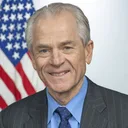
Tariffs on Mexico & Canada start Tuesday
Peter Navarro White House Senior Counselor for Trade & Manufacturing
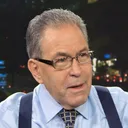
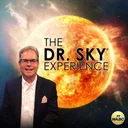
Asteroid has zero chance of hitting Earth.
Steve Kates Space and astronomy broadcaster (Dr. Sky)
Dr. Peter Michalos
Advances in Lung Cancer Detection and Personalized Treatment
Dr. Peter Michalos WABC Medical Expert
Healthy Eating, Stronger Immunity and the Science of Living Longer
Dr. Peter Michalos WABC Medical Expert
Limiting Sugar and Choosing Whole Foods to Support Healthy Aging
Dr. Peter Michalos WABC Medical Expert
Protect Your Skin From UV Radiation and Reduce the Risk of Skin Cancer
Dr. Peter Michalos WABC Medical Expert
