


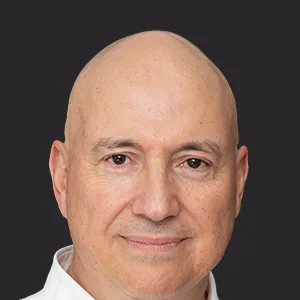
Dr. Peter Michalos WABC Medical Expert
Fighting Aging Through Mitochondrial Health and Autophagy
Transcript
Automated transcript · uncorrectedLive long and prosper well. Doctor Michelos is with us every week and that’s his philosophy and he has a new book besides, to make sure we all live longer. Doctor Peter Michelosa, Sunday morning, you’re always on. Give us a couple of tips how we all.
Live longer well, John, Today we’re going to be talking about the powerhouses of the human cell, and those are the mitochondria, and they’re basically the energy generators each one of our cells, and they basically convert all our food that we eat into atp which is the currency or the cash that our cells use to survive. And basically,
you know, we don’t die of old age. Aging is associated with a biological decline, progressive loss of body function, and that ultimately leads to things like cardiac arrest, stroke, pulmonary embolism, pneumonia, folds which accelerate death. But all these things are affected by the powerhouse of the cell. And a fascinating thing with mitochondria is they mobilize and they
know when there’s problems. When they studied people with gray hair, and they looked at different life events like a death in the family or divorce or major stress and someone’s hair got gray. They analyzed the hair and they found many more mitochondria inside those cells. So they seem to mobilize and they started getting into cells as an infection
one point five billion years ago, and they ended up doing something called and those symbiosis means they started working together, and they’re almost like these aliens that basically sort of took over cells and became the powerhouse and said, hey, I’ll supply all the energy you supply the body. And to this day we have these mitochondria which also have
their own circular DNA separate from our DNA, and that’s why when they do gene analysis, they can trace you back to the original mitochondria leave because it gets passed from mother to mother. The mitochondria DNA now this energy currency.
We need to keep it healthy. And we now know that what helps keep our mitochondria, our powerhouse of our selves healthier. We know that avoiding pollution, avoiding smoking, avoiding drugs, avoiding alcohol is very important to keep them healthy. We now know that exercise, not marathon running, because the first marathon runner ran twenty six miles then actually fell down
and died. We know that just short bursts of sudden exercise where your body thinks that there’s adversity, that there’s a line coming at you when you run away. Those sudden bursts of energy that we have, those help grow build mitochondria. And we also know that just doing a couple of minutes a day of something, or even when
you’re walking outside, even as we’re older, just try to walk fast to like you know, a minute that actually causes the mitochondria to be stimulated. Bellieve it or not. A cold shower or the other extreme. A sauna also turns on mitochondria because when they sense a threat the cold, the heat, and extreme they actually start growing in more.
And we have about one hundred to three hundred per cell, and we have ten to one hundred quadrillion mitochondria in our body. So how we treat them is very important. And we know the foods that also help. In addition to we know good sleep boost mitochondria. Things like coq Q ten eggs, fish, lentils, omega, three berries, magnesium, B vitamins,
all those things actually boost mitochondria. And another one is called nicotine. I mean nicotinamide mononucleotide, which we hear a lot about NMN and red light therapy also stimulated mitochondria, and we found that in addition to things like berries, magnesium, B vitamins, NAD boosters, which are a supplement which is another energy currency of the cell, also boost healthy mitochondria.
So we need also to avoid sugar because sugar turns out to be like taking gasoline and throwing it on the barbecue. It actually accelerates aging and puts and it freaks out the mitochondria that they have to process all this energy because they’re the food processing center, and it causes what’s called inflammating too much, inflammation, too hot, too fast.
So we want to protect the cells because as we ate, the go process called senessence, which is aging, and that that’s the that that week that weakens the cells and we don’t have as much power. The battery of the cell.
The mitochondria don’t work as well.
Let me ask any question. You know, me and you eat two meals a day. They eat lunch and dinner and dinner. I try to have softer foods. In other words, if God, you know, if I have steak, I make sure I have steak at lunch instead of dinner. And at dinner I’ll have some soup and I have some
dover so and it’s softer on the stomach. So when things are softer on the stomach versus a big two pound steak that we used to eat in the old days, is it better on the overwall digestion system.
It is better because it allows faster transits, so you have less toxin sitting around inside the stomach and the intestinal track. And also now in the United States that millions of people are taking these GLP anti fat medications, they slowed down the digestive transit time so you feel like you’re fuller. So that’s why for those people it’s
even more important that they drink more water and they take little walks after you eat to keep things moving along. So yes, softer foods are very helpful. You don’t want to eat late at night because they get sit and stuck in your bodies focusing on digestion instead of healing and repair, because we know at night, when we sleep
is when most of the healing and repair occurs. So I think you’re right, and that’s what that fell repair it.
Let’s tell back our listeners, and from what I’ve learned between the two of us, is anything if you don’t eat the minimum of sixteen hours. Is it that the killer cells in your body come out and kill anything that’s batting your prob body?
Is that. Almost correct? Yes? What happens is after about fourteen to sixteen hours, your body says, oh my god, where’s the food? What’s going on here? I better start cleaning up, resting and repair. And the autoplogy is cleaning up dead and dying cells and the tea killer cells that go after cancer cells.
They focus on all those immune functions instead of our digestive tract focusing on breaking down that flame on steak or that sausage that you ate, is focusing.
On about that that ribby steak with all the fat on it.
Well, that’s a big problem because processing that is very complicated, takes a long time. So all your immune system and your gut and it’s eighty percent is not focusing on the immunity and clean up. It’s focusing on breaking down and digesting, especially if.
You’re having it, especially if you’re having at ten o’clock at night.
Yeah. Absolutely, that’s when you get reflux. And people who have reflux try not eating after seven o’clock and watch how fast your reflux gets better.
Doctor Peter Mihillos, thank you so much for coming on this Sunday morning, and I hope everybody eats better and lives to be one hundred.
Thank you John for always getting the truth out on the Cats round Table
Sunday, August 16, 2026

Democrats' Radical Shift Threatens America's Political Stability
Newt Gingrich 50th Speaker of the House

A New Independent Movement Could Reshape Washington
Joe Manchin Former U.S. Senator from West Virginia



NYC Students Face Alarming Decline in Literacy Rates
David Paterson Former Governor of New York

New York's Affordability Crisis Is Driving Residents Away
Bruce Blakeman Nassau County Executive; nominee for Governor

Russia, Iran and China Drive a Dangerous Geopolitical Crisis
General Blaine Holt Brigadier General USAF (Ret.)

COVID-19 Origins and the Case for Greater Transparency
Dr. Marc Siegel Physician; Fox News Medical Contributor

America's Changing Electorate and New York City's Political Turmoil
Hank Sheinkopf Political Consultant

The NYPD's Growing Retention Crisis and Fight for Support
Scott Munro President, Detectives' Endowment Association
Offshore Wind Farms Pose a National Security Threat
Bonnie Brady Executive Director, LI Commercial Fishing Assoc.

NYC's Pied-à-Terre Tax and the Threat to Real Estate
Suzanne Miller President, Empire State Properties; WABC Real Estate Analyst

Americans Flee High-Tax States for Florida and Texas
Spero Georgedakis Founder & CEO, Good Greek Moving & Storage
Spain Faces a Growing Security and Migration Crisis
Jose Santamaria Chief Investment Officer, Fundamental Investment Services

The Stoler Report with Michael Stoler: Darrell Handler
Michael Stoler Real Estate Expert
Earth's Ocean Floor Remains a Vast Scientific Mystery
Steve Kates Space and astronomy broadcaster (Dr. Sky)

The Legal Battle Holding Big Tech Accountable for Child Safety
Lynn Shaw Founder of Lynn's Warriors

Dr. Peter Michalos

Advances in Lung Cancer Detection and Personalized Treatment
Dr. Peter Michalos WABC Medical Expert
Healthy Eating, Stronger Immunity and the Science of Living Longer
Dr. Peter Michalos WABC Medical Expert
Limiting Sugar and Choosing Whole Foods to Support Healthy Aging
Dr. Peter Michalos WABC Medical Expert
Protect Your Skin From UV Radiation and Reduce the Risk of Skin Cancer
Dr. Peter Michalos WABC Medical Expert
