


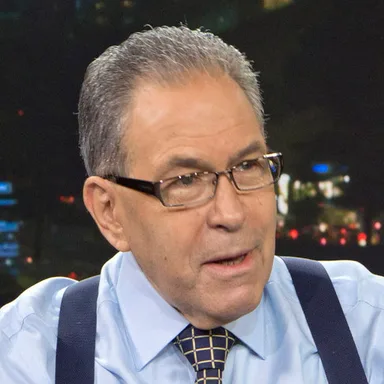
Michael Stoler Real Estate Expert
Interviews Mitch Korbey, Partner & Chair of Herrick, Feinstein LLP.
Transcript
Automated transcript · uncorrectedGood morning. This is Mike stole If the Stolely Real Estate Report. What’s happening in the city with regard to planning, zoning, upgrading of the City of New York. I’m not aware of all the good things, so I brought in the expert today. I brought in Mitch Corby, who is a partner in the chair of the firm at Herrick Findstein’s
Land Use in Zoning Group. Thanks for being here.
My pleasure, Mike, Nice to see you.
So why does a person become a martyr and get involved with zoning and planning?
Well, I love cities and I love how they’re planned, and I used to work for the city for many years and it’s exciting and it’s always changing and it’s important.
So let’s talk about the changes right now. Everybody complains that we don’t have enough housing and definitely not enough affordable housing. So what are we trying to do with a city of yes and other programs.
Well, we’re adding a lot of pages to the zoning Resolution, which was last adopted in nineteen sixty one. But in doing so, we’re also making it easier, making it easier to develop new housing, making it easier to open up certain neighborhoods that have been closed and inhospitable to housing, and even in lower density areas, seeing to it that
we can promote new ways to build housing.
So let’s talk about the City of Yes program, which is a big topic of discussion, especially with conversions of offices right.
Well, the City of Yes, and thankfully it is the City of Yes and not the City of Maybe, is designed to throughout the city stimulate new housing, incentivize it, but also remove antiquated regulations with regard to conversions of buildings.
It will unlock we believe hundreds and hundreds and maybe thousands of new housing units and areas that really could use new housing. And we need housing all over the city. We need fifty thousand units a year. Many of our older office buildings no longer make sense as office buildings.
The column spacing the size. Today’s economy working from home has meant that a lot of these buildings are no longer viable. They should be recycled, they should be reused, but the zoning rules are often in the way, particularly areas that are still zoned for manufacturing. You can have offices in a manufacturing zone which you can’t live in
a manufacturing zone. The City of Yes, along with new changes now that are going to be adopted within the next couple of months, will rezone neighborhoods like the Garment District, like the area that’s north of Madison Square Park.
Where let’s be specific, City of Yes is from thirty fourth to fortieth fifth to eighth Avenue.
Correct, that’s right, Yeah, that’s the Midtown South rezoning component of the City of Yes. It’s that area. It’s the area that’s just west of Madison Square Park and just north and west of Union Square. And so in these these neighborhoods, you know, collectively one hundred or so blocks I suppose maybe maybe closer to seventy five blocks currently
zoned for manufacturing, but almost no manufacturing in any of these areas, even in the Garment District of course now is devoid of any manufacturing to speak of. So it’s long time coming, and it’s made sense to rezone these areas for many years. Mayor Adams and his team at City Planning, run by the Chair of City Planning Dan
Garodnik New York Smartest we call them, has managed to develop a plan to rezone these areas. It’s now been adopted by the Planning commissions, moving onto the City Council, where we expect it to be approved very soon. Now, these areas that make sense for new development where you can’t build housing will be able to be developed with housing.
The only question is is the area appropriate for housing. I mean, let’s take into consideration Lower Manhattan. It worked out in Lower Manhattan because it had totally vacant buildings. Here, you don’t have totally vacant buildings.
That’s an excellent observation. We have now thirty five thousand people living in Lower Manhattan as a result of the conversions of buildings like the aig Bu. That area is in a lot of ways, I guess, very suitable for residential Whereas these areas have been Town South well a little bit more of a challenge. Where are the local schools,
Where are the parks? Where are the services? We believe they’re sufficient services. In fact, these areas can accommodate new housing. It may take longer and maybe a slow growth environment.
And you’re giving incentives if you build housing, especially if you have schools right, well, that’s right, and schools and parks and other amenities.
That’s correct. Within the building’s recreation space being available can be a good thing and provide some incentives as well. So it all makes sense across the board, and it’s a very hopeful and optimistic approach. And we think that over the next decade or so, as I say, thousands of new units will come to this part of it.
So let’s talk about people. Hear the word faar. Explain the term faar, Well, it’s a especially in light of the City of Yes and in light of forty five X.
Well, it’s a calculation based on the lot size, and so you have a number that allows you to multiply the size of your property for new square footage that gets built on that property. So a ten far allows you to build ten times the square footage of the property.
In terms of the kind of building that you build, a lot of the buildings that we’re talking about here are older office buildings that may have made sense many years ago as office buildings. They tend to be large, and they may even be much bigger than certain fars that are permitted today. City of Yes will allow them
to be fully converted. Even though they may be quite large. It may be even bigger than ten or twelve or even fifteen far, and that’s because it makes sense to allow these buildings to be converted in light of their configuration and use. So hopefully the far won’t be an issue and we’ll be able to see all these buildings
converted fully to residential and fully occupied. Yes, some of them do.
How do you convert a building that has terrible has buildings adjacent to it.
Yeah, well that’s a significant issue. And you’re right, it’s not as if all of these buildings will be easy to convert. It’s not as if every single office building is going to be a good candidate for conversion.
In addition, you may not have banks who want to finance this type of conversion.
Yes, these are all reasons why the tremendous optimists out there who think we’re going to have thousands of units right away are probably not quite right. We have buildings that sandwich these office buildings, and you need light and air for an apartment, and if there’s a building on either side, as you point out, there’s insufficient light and air,
financing will be a challenge because it’s not easy to convert a building from office to residentially. You’ve got to rip out the guts of the building. Also, we have buildings that have too big a floor plate, so you have the entire center of the building that’s not hospitable to lightning and residential apartments. So not every building is convertible.
Not every building makes sense from a financial standpoint, but many, many buildings do and I think will be converted. It’s also possible to tear down buildings and replace them with residential once this rezoning goes through. It’s not just about conversion, it’s about ground up and new residential.
Let’s talk about air rights.
Okay, So air rights or floor area development rights to a zoning geek are unused far far that’s not being used today. That can then be transferred. Well, you can only transfer property or development rights to a property next door.
That’s the rule. You’ve got to be contiguous for at least ten feet. Now, City of Yes is done is for landmark properties, individual landmark property properties, and there are thousands of these individual landmark properties.
You mean some of the small churches, certain large churches, and.
A lot of those are landmarks. But also other kinds of buildings are a landmark. That may be office buildings and commercial buildings. You can take that floor area and not sell to the property next door, but across the street and frankly up and down the block and across the street from the block that the landmark is on.
The flexibility that’s now available for City of Yes to sell development rights that are unused off a landmark is significantly bigger and greater and more exciting than it never has been. Being able to go across the street, Being able to go across the block and across the street from the block that you’re on on all sides will
really unlock development potential and allow for new growth and new residential development throughout pockets of the city where we have landmarks, and we have a lot of landmark properties in the city. If you take all the historic districts and all the landmark buildings in Manhattan, thirty percent of Manhattan is either a landmark building or a historic district.
So a lot of the property in Manhattan anyway is subject to the jurisdiction of the Landmarks Preservation Commission.
Okay, what is this mandatory inclusionary housing.
Well, that’s going to apply for buildings over a certain density, both with regard to conversions of certain buildings, and are certainly going to apply to newly rezoned areas. So some of our areas subject to City of Yes are getting new and higher density as a result of new rezonings, and in those areas you will have to set aside
a percentage of units for affordable housing.
Okay, what about certain of the RFPs that are being issued for like Long Island City, Gold Street and so on.
Well, there are lots of RFPs now for city owned property, and the city has recognized that its own property ought to be redeveloped and can be reused, and the city ought to be putting its offices in buildings that it owns and then selling property that it owns for new housing.
There’s a big site in the Meatpacking district actually that’s owned by the city. It’s the only building that was historically dedicated to meat packing that stayed and that it too, has gone for meat packing purposes. And it’s in the far west area of the meat packing district, outside the historic district, and there’s an RFPU to develop that site.
And Gold Street, as you point out, where HPD has its headquarters, right up against the Brooklyn Bridge. Wonderful opportunity. And frankly, we’ve got clients interested in both of those sites, both sites, and there are other examples out there.
What about Harlem, the development on the Second Avenue.
Yeah, so the MTA is doing the right thing working with the city on one hundred and twenty fifth Street, and along with their condemnation actions, which is necessary for the Second Avenue subway, which we’ll get up there, and we’ll get up there in the next several years, is promoting and advancing new development opportunities one hundred and twenty
fifth Street. Again, new housing in a transit oriented area where you’ve got great access to the subways. It’s the right thing to do. We ought to be having development everywhere, but particularly where we have good transit access.
So I think you’ve given me and my audience some information on zoning that we weren’t aware of. And I thank you very much, my pleasure, and I’ll see you soon, all right, Thank you, Mike,
Sunday, July 6, 2025
Who is most equipped to face Mamdani at the polls?
David Paterson Former Governor of New York

Socialism will never work in NYC.
Fernando Mateo President, NY State Federation of Taxi Drivers
This mayoral election is critically important for the future of NYC.
Peter King Former U.S. Representative from New York
The windmills are killing whales in Long Island.
Bonnie Brady Executive Director, LI Commercial Fishing Assoc.

The Greatest gift for this holiday to Americans would be a cut in interest rates.
Roger Stone Political Strategist & Consultant
Supporting President Trump's attack on Iran's nuclear plans.
Ontario Premier Doug Ford
There is no better time for the US to be energy independent.
Lee Zeldin EPA Administrator
What will happen to the ostriches in Canada?
Katie Pasitney Spokesperson, Universal Ostrich Farms

President Trump has successfully entered a ceasefire agreement in the Middle East.
KT McFarland Former Deputy National Security Advisor


2017 tax cuts are extended in the Big Beautiful Bill.
Steve Forbes Editor-in-chief of Forbes

The development of the B-2 stealth bombers.
Steve Kates Space and astronomy broadcaster (Dr. Sky)

Mixed jobs data, stock market up, Tesla shares, Microsoft laying off 9000 employees, and more.
John Terrett WABC Financial Analyst

Michael Stoler
The Stoler Report with Michael Stoler: Eli Weiss and Andrew Albstein
Michael Stoler Real Estate Expert
The Stoler Report with Michael Stoler: Eli Weiss and Andrew Albstein
Michael Stoler Real Estate Expert
The Stoler Report with Michael Stoler: Robin Schneiderman
Michael Stoler Real Estate Expert
