


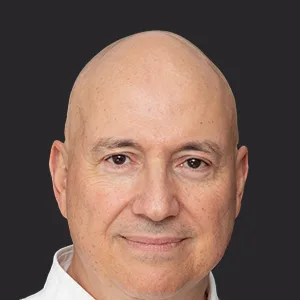
Dr. Peter Michalos WABC Medical Expert
Eating healthy and taking care of our bodies.
Transcript
Automated transcript · uncorrectedSunday morning for the July weekend. Well, we want to live longer. I seem more fourth of July is well with us. Today’s doctor Peter Mitilos, that’s every Sunday, Well, Peter, we want to live longer. What do we have to do?
Well, John, I think one of the things we need to do is we have to think of ourselves as cars. Like when you buy a brand new car and you maintain it, it lasts you a long time. And we’re given a brand new body when we come into this world, and we have certain genes, and it turns out that
about twenty percent of our destiny is our genes, but eighty percent is how we take care of those genes and how we take care of that car. And just like we wouldn’t drive down the road or the highway without a dashboard to know what our tire pressure, our oil pressure, our fuel levels are, our anti freeze, our oil,
the same thing as with lab work, and it’s very important to start an early age, especially if you have a family history, to find out what’s going on with our bodies. And the big studies now we’re learning with health is that sugar, salt, and fat are not our friends, and when we evolved, we were mostly more of a
potassium based species, and now we’ve basically added a lot of salt and that has ruined some of the chemical balance. That’s why we’re seeing more high blood pressure, putting more stress on the kidney because you have to get rid of that extra salt you take in with all the processed food. And the reason why they add so much
salt is because they want to make us thirsty. That’s why they call popcorn is salted in movie theaters. And then you’re going to want to drink more soda, and then there’s caffeine in it, so we urine a more.
Then we get thirstier. So it’s a vicious cycle as we found out how the food is being manipulated to make us hungrier and we want more food. And the age study where they found that as we age, our cells multiply faster, and when they go faster, they make more copying errors which result in disease and cancer. And
they found that one of the things is that as your sugar levels rise, that higher sugar level speeds up aging. But what was interesting is they found that even if your sugar level is normal and your emoglobin A one C, which is the average over ninety days was normal. Your insulin levels could be rising, So that’s a blood test
you want to ask your doctor’s about. So your fasting insulin level, if it’s creeping up, even if in your in your twenties or your thirties, that’s sometimes a sign of pre diabetes or you may have diabetes even though your blood sugar might appear to be normal. So that’s one test that’s very important. The other test associated with
the bad diet is DRPC reactive protein, and that is a sign of inflammation in the body, and that’s starting to be used more commonly. And when you see your C reactive protein, which is an inflammation marker rising, that’s also a sign that you’re having a problem somewhere in your body. You have inflammation. And also another test is
the ESR, which is the sedimentation right, like some people don’t realize they might have a dental infection or an infection in their foot and nobody really finds it, or an infection in the bone. And then you do this test and it’s consistently high, you have to start doing other testing like MRI imaging or getting a tooth scan,
like a lot of people can walk around and have dental problems and they don’t realize that they have a low grade infection and that can affect your overall help. The other thing, of course, is our lipid profile. And number one cause of affecting longevity and death is heart disease.
And we now know that leots that like apo lipoprotein B, which is one of the markers of the proteins that carry your cholesterol. If that one is elevated and above one hundred. That.
Is accurate up to eighty percent to predict future heart attacks and strokes when that’s too high. But some of the important blood tests besides your basic hemoglobin and CBC, your chemistry, your sodium, your potassium, and again we’re a big bag of chemicals. If your potassium is too low, it can affect your heart function, If your sodium is
too low, it can affect your mental status. And some people come in and they think they’re a CITE patient and then they do a blood test and they find that the sodium level might be too low. And that’s why the kidney is so important in keeping the balance of all that chemistry in our body. And the same
way our liver is and that’s another blood test we do call the liver function test, because the liver is our major detoxifier. It’s basically what cleans out all the bad chemicals. If we swallow some poison or if we take too much of a certain medicine, our liver is responsible for detoxifying. And that’s wh why the liver is
so affected by alcohol and people who drink too much alcohol they end up with liver damaged liver cirrhosis and then enlarge liver because it has to handle the extra capacity of the toxins.
That’s so interesting. I mean, we are a complex machine.
Oh, very complicated, and we’re like a super fine tuned sports car. And that’s why as time passes, when we get older, we have to keep that balance and take care of our health. And that’s why the type of fuel we put in, just like in our car.
This knowledge that we’re getting in the last few years, this wasn’t available twenty years ago.
Well no, now with the internet and also with AI and the ability to scan many charts. Just like they found out when they looked at two hundred million charts, the people who smoke cannabis between ages nineteen to fifty nine.
Those people had twenty nine percent more heart attacks exclusive of the regular cigarettes, smoking twenty percent more strokes, two times more heart failure. And now when you look at these charts, just like alcohol, women who drink more than three and a half glasses of alcohol a week, their breast cancer rates were much higher. And this was a
major study with hundreds of thousands of charts in the United Kingdom. So the advent of AI will help us scan medical records more readily and we’re going to be seeing more data, just like we learned after COVID by scanning medical records, the people with higher vitamin D levels had better immune systems and they fought COVID off better.
We found out the people who took met Foreman they didn’t end up in the ICU as much as even non diabetic people, and it had a protective effect. We now know that those on met Foreman had twenty three percent less cancer during their lifetime, and it’s probably because of what we talked about before, because it keeps your
sugar levels more under control. So we’re learning so much, and now I think with the new administration and the job of Secretary Kennedy, looking at our food sources and the dye colorings of microplastics, the hormones. I think that long term, that’s going to really help save literally millions of lives and probably trillions of dollars in the healthcare system.
Secretary Kennedy’s from the Saved Meggas of lives are all that crap they used to put it off food?
Absolutely, John, We got to get rid of those red dyes and get rid of microplastics, and I have to, you know, surveil our food better. And the hormones and and just like in the EU they ban a lot of American meats that have hormones in them. They don’t allow for ALTHA.
Let me ask you a silly question. We only got a minute left, but a silly question. When you’re drinking water with plastics in it. Now, the cleansing the the planet Earth, the cleansing process for water. Rain water is cleansed.
So if you catch the rain water and put it into a vessel that doesn’t get intoxicated with more plastics, then that has to be the best water.
Yeah, if you’re up in a mountain, or you’re on a Greek island or Sardinia or Kardia, great. But the problem is that the water travels from the sky down through the polluted air, which is filled with microplastics and aerosolized particles and rubber tire particles, and there’s a lot of micro and nanoplastics, so it’s color Peter plastic.
Don’t ruin my weekend. Have a great foot at July. I thought I had the answer. Thank you so much for filling your sin and we’ll see you after over the Foot of July.
Thank you, John, and you always get the truth out on the Cats round Table.
Sunday, July 6, 2025

Who is most equipped to face Mamdani at the polls?
David Paterson Former Governor of New York

Socialism will never work in NYC.
Fernando Mateo President, NY State Federation of Taxi Drivers

This mayoral election is critically important for the future of NYC.
Peter King Former U.S. Representative from New York
The windmills are killing whales in Long Island.
Bonnie Brady Executive Director, LI Commercial Fishing Assoc.

The Greatest gift for this holiday to Americans would be a cut in interest rates.
Roger Stone Political Strategist & Consultant
Supporting President Trump's attack on Iran's nuclear plans.
Ontario Premier Doug Ford
There is no better time for the US to be energy independent.
Lee Zeldin EPA Administrator
What will happen to the ostriches in Canada?
Katie Pasitney Spokesperson, Universal Ostrich Farms

President Trump has successfully entered a ceasefire agreement in the Middle East.
KT McFarland Former Deputy National Security Advisor


2017 tax cuts are extended in the Big Beautiful Bill.
Steve Forbes Editor-in-chief of Forbes
The development of the B-2 stealth bombers.
Steve Kates Space and astronomy broadcaster (Dr. Sky)

Mixed jobs data, stock market up, Tesla shares, Microsoft laying off 9000 employees, and more.
John Terrett WABC Financial Analyst

Interviews Mitch Korbey, Partner & Chair of Herrick, Feinstein LLP.
Michael Stoler Real Estate Expert
Dr. Peter Michalos

Fighting Cancer and Aging With the Latest Medical Advances
Dr. Peter Michalos WABC Medical Expert
Advances in Lung Cancer Detection and Personalized Treatment
Dr. Peter Michalos WABC Medical Expert
Healthy Eating, Stronger Immunity and the Science of Living Longer
Dr. Peter Michalos WABC Medical Expert
Limiting Sugar and Choosing Whole Foods to Support Healthy Aging
Dr. Peter Michalos WABC Medical Expert
Protect Your Skin From UV Radiation and Reduce the Risk of Skin Cancer
Dr. Peter Michalos WABC Medical Expert
