


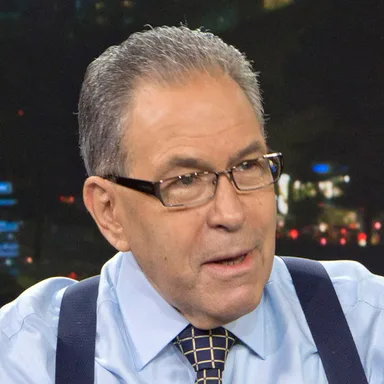
Transcript
Automated transcript · uncorrectedGood morning. This is Mike Stola for the Stolar Real Estate Report. This morning, I have my friend doctor Sam chand And, who I’ve known for many years. He’s the leading economists on real estate, plus he’s an economists in general around the world, highly respected today. He is the founding director and professor at the Chen Institute for Global
Real Estate Finance at NYU. Stern, thanks for coming.
Delighted to be here.
So Sam, we know each other probably close to twenty years at least. So what’s happening today in the world. You know, we have a new president, we have a new mayor coming in let’s say later on. We have a lot of changes happening. What do you see happening with regards to real estate in the general economy?
Sure? Well as a backdrop, Michael, as you mentioned sort of, it’s a period of significant change in twenty twenty four and twenty twenty five where you know, your listeners are clearly aware of the outcome of the election in the United States, and that’s a real focus for a lot of us. I’m thinking about what the economy might look like,
what the job market might look like, and what real estate might look like in twenty twenty five. As a backdrop for all of that, I will mention that it’s not just been a big election year in the United States.
This has been twenty twenty four was the biggest election year in world history. More people went to the polls in a single year than ever before. And in part that reflects that we had elections in India, Pakistan, the United Kingdom, here in the United States. Hard to argue that the election in the United States is not the
most consequential. I would argue that when we’re thinking about implications for the US economy, for the global economy, for geopolitical stability around the world, the US election is the one that really sort of demands everyone’s attention right now.
I think in terms of where we are today, everyone is looking very closely at the messaging from the incoming president, is looking at the cabinet nominations, trying to make inferences around what the policy priorities of the next administration might be.
In the lead up to election day, Michael, you know a lot of you know, a lot of ideas being thrown out there, a lot of policies being advocated for on both sides. It’s inevitably the case and We see this in every electoral cycle that once a new administration takes over, of the range of things that they talked
about in the lead up to election day, a subset of those become their priorities for the first couple of years. So I think what we’re going to be looking for in particular is that you know, in the early days of the new administration, what do they choose to focus their attention to.
Do you believe that inflation is now under control?
I believe that we’re moving in the right direction with inflation. One of the concerns that the market has today is that some of the policies that the new administration may work to act on fairly quickly after after inauguration day are policies that could actually stoke inflationary pressures. And I’ll give two examples of this, or three examples of this.
The first is the potential for tax policy to be stimulative to the economy. And this is one of the This is one example where there’s a little bit of good and bad with each of these things that we might do if we keep, if we extend or make permanent the tax cuts that were introduced during the first
Trump administration. A lot of folks will benefit from that. It is likely to benefit the outlook for the economy overall. I think that, you know, certainly for those of us who live in New York and in Connecticut and New Jersey, the potential for an increase in the state and local tax cap or potentially, although unlikely, an elimination of the
salt cap. Altogether, those are all things that will help to give the economy a bit of a boost and improve on the growth outlook. That though will also stoke some inflationary pressure.
What about the terrify The tariffs are.
The next one, Michael, I think what we see there is that the potential or the possibility of, you know, very large tariffs being imposed fairly abruptly on Canada and Mexico. China are major trading partners. While these are things that may be born out of a desire to improve trade relationships, bring balance better balance to trade relationships, Interestingly, in the
case of Canada and Mexico, the threat of a twenty five percent tariff is not really about trade policy. It’s about concerns that the incoming administration has with regard to the flow of drugs and migration. You know, across the north in our northern and southern borders. What I think we’re all cautious on and thinking carefully about, is how
the abrupt introduction of very large tariffs with our most important trading partners between China, Canada, and Mexico. There is not a thing that you buy that either directly or in direct is not going to be impacted. In so while the intention maybe to bring some balance to trade relationships or immigration, it also has the potential to be
extraordinarily disruptive to the US economy. Every American consumer, every American business would see the prices for things that each of us buys and needs every day jump almost immediately. So we need to be very very careful of that.
There is a prevailing view that some of the discussion around your twenty five percent tariff being levied against Canadian and Mexican goods, that this is in part a negotiation tactic that and it may be one that proves very fruitful.
We saw the Canadian Prime minister, you know, make a trip down to Florida pretty quickly after the initial after the initial threat was made, and so it’s unclear whether that actually happens. If it does, happen in the way that’s being articulated now, it’s potentially very damaging to the US economy, so we do need to be careful there.
What about interest rates, So interest.
Rates at the short end of the yield curve, this is the Fed Fund’s target rate that’s decided at those fo MC meetings, gets a lot of attention. Everyone is sort of your watching for the kinds of signals that we’re getting from for members of the of the Federal Open Market Committee, from the Chairman of the Federal Reserve,
were my team looks very closely, you know, every day at options trading markets in Chicago. You rather than rely on sort of what you know, an economist like myself thinks, or sort of the language that we’re getting out of the Fed, we look at sort of what the markets themselves think. And when we look at that trading data
in Chicago, we can make inferences around what is the market think is going to happen with the Fed Fund’s target rate. And I think what we’ve seen in the last couple of weeks is that some concerns around inflation they do relate to stimulative tax policy that we talked about.
They relate to tariffs. They also relate to immigration policy. When we look at something like the housing market, the informal labor market plays a very important role in.
What effect on the real estate market.
That’s all this So in terms of the real estate market, you know, there’s a couple of different things. I think that you know, the favorable treatment of carried interest, uh, the uh you know, the likely continued favorable treatment of of dividends paid by reads. There’s a lot in here that’s sort of positive, not without getting too specific, a
more favorable or a stronger growth outlook for the US economy, you know, is to the benefit of the real estate market overall. Uh, that just means that everyone’s a winner, though, Michael, because I think you in the case of the housing market, single family housing market, we’re very supply constrained already. If we see big tariffs imposed on Canada and Canadian soft
with lumber, which has been an ongoing dispute for a generation. If we’re to see uh, sort of you know, a significant decline in the number of skilled construction workers available in the labor market in the United States, that’s gonna make a really hard to bring a new supply online in those markets.
What do you see happening in the major capital marcus like New York, San Francisco’s, Chicago and Florida.
It’s it’s a real mix. I think that you know, overall net migration flows, you know, where are companies looking at when they’re thinking about expanding. You know, where are people moving to? Uh? You know, they’re clearly in the sun belt of the United States. Markets like Miami, like Dallas, like Houston that are better positioned in some respects as compared to a
New Yorker or Chicago. They’ve got more efficient tax policy, lower costs of living, although there’s been a significant deterioration in housing affordability in a lot of those markets, they’re generally perceived as being more business friendly. It’s easier to get things done, and that remains a feature of the market.
You know. Like you, I’m a New Yorker, I’m a champion for the city. I believe in New York and I think there’s and with good reason that being said, you know, we’ve got some real challenges ahead of us that we have to be ready to attack head on if we want to make progress. You know, one of
those key ones is that UH, for New York to function well. For real estate in New York to UH to have value. You know, we need a we need a well functioning subway system. We need a good public transportation system. That is how every day New Yorkers get around.
And you know, the the changes in congestion pricing. The fact that we’re moving ahead with congestion pricing and set the pause aside, that is, that’s a real positive because irrespective of how any one of us might feel about congestion pricing, I realized sort of it’s a you know, it’s a divisive one. Not everyone likes the idea of
congestion pricing. The bottom line is that if we don’t find new revenue sources our ability to support, maintain, and even improve upon the infrastructure that every day New Yorkers rely on, we’re just not able to do it. What we can’t do in a city like New York at this point, or Chicago, Boston, Philadelphia, we’re really not in
a position to raise income taxes, UH, to raise property taxes. We need to get more efficient. How we think about bitcoin, Yeah, no, we’ve seen a huge rise in bitcoin valuations over the last couple of weeks. I think a lot of folks are betting on or anticipating that, you know, with as the makeup of the new administration takes shape, that will
be one that’s highly favorable to to cryptocurrency. I’m cautious. I think when we look at how quickly the valuations have risen, there are well, there will there will certainly be some winners, and cryptocurrencies may ultimately play a larger role in how we think about currencies in the United States and elsewhere that we we do need to be cautious.
The run up and prices has been too abrupt.
Okay, last question, which as classes are you most bullish on?
I think broadly, I feel really good about workforce, multifamily. You know, there are too many American families in New York City and all around the country that are really struggling with housing affordability issues. It’s challenging, it’s costly to bring new apartments online, and so we’re supply constrained. There folks that are able to leverage technology, relationships capital as
capital costs begin to come down to bring new workforce and attainable housing online. I think in the form of workforce, I think are going to be very very well positioned so that that’s what I feel really strongly about, and others related to industrial data centers. Those are probably the big winners for me.
Really. Last, but not least, I’d like to thank the Sam Chanden, my friend, the economists to the World. As I would say, you told me you’re just being appointed to the World Economic.
A world decn off for we have a really exciting report coming out that I’ve had the privilege of co authoring. We’ll be releasing that in the next couple of weeks and presenting it at Davos. Really is a framework for how we think about real estate around the world.
And the students NYU Stern are very fortunate to have you, and I hope to have you bet soon during the new year. Thank you, Thank you,
Sunday, December 22, 2024
CEO shooter charged by the Feds.
Judge Richard Weinberg Retired New York City Criminal Court Judge; 77 WABC Host

Albany approves involuntary commitment.
Craig McCarthy City Hall Bureau Chief, New York Post

Key aides of the Mayor face criminal charges.
David Paterson Former Governor of New York

President Biden is selling off parts of the wall.
Ken Paxton Texas Attorney General; nominee for U.S. Senate


What are these drones?
Tidal McCoy Venture Capitalist & Former Asst. Secretary of the Air Force

Jamie Dimon and Chase Manhattan with Trump.
Charles Gasparino Fox Business Senior Correspondent and Columnist
RFK, Jr. will face opposition in the Senate but Trump should have his cabinet.
Ron Johnson U.S. Senator from Wisconsin


Radiation affects humans and the oral and gut microbiome for longevity.
Dr. Peter Michalos WABC Medical Expert
Michael Stoler
The Stoler Report with Michael Stoler: Eli Weiss and Andrew Albstein
Michael Stoler Real Estate Expert
The Stoler Report with Michael Stoler: Eli Weiss and Andrew Albstein
Michael Stoler Real Estate Expert
The Stoler Report with Michael Stoler: Robin Schneiderman
Michael Stoler Real Estate Expert
