


Transcript
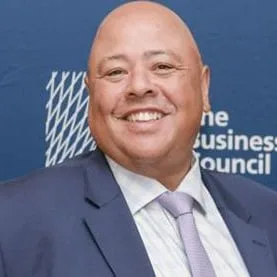
Automated transcript · uncorrectedSunday morning. What’s going on in New York State? In business of what is today is Paul Zuba. He’s the senior vice president of the New York Business Council and representing three thousand businesses. Well, Paul, is there any good news?
I know I’m fighting the war right now. And I had Bruce Blakeman on before on the windmills in Long Island, which is going to kill you know, you know what I’m describing that as Paul Zuber that it’s killing Long Island to provide power to upstate New York. And I know you guys are upstate, but it’s not fair to
kill Long Island.
Well, you know, you know, John kind of give you like a quick update. Interestingly enough, the New York Independent System Operators, now for the audience, that New York Independent System Operators are is a group that oversees the electric grid in New York and they just came out with a report that shows we are in trouble when it
comes to our energy. You know, the generator deactivations are outpacing new supply editions. So so what’s happening is we’re having to take all these system generators offline because of the climate law. But what everybody has to understand is we’re in an area of where one of our biggest economic development tools is all these data centers and these AI centers,
because that’s the that’s the new world of order of you know, the up and coming businesses, and they require so much energy. And what’s happening is because we don’t have the energy supply, we can’t actually cite many of these data centers and many of these AI centers, particularly upstates.
But windmills is not the answer, Paul, because when it’s going to kill New.
York, it’s going to kill New York. Windmills aren’t the answer. The problem is I think everybody’s trying to make it the complete answer, right, Like if you’re telling me you’re going to do some windmills on here or there, but you’re going to keep you’re gonna build pipelines, you’re going to keep natural gas. You’re going to make it work
and you know, and not just completely say we’re going to get rid of natural gas immediately, then we can get there. But one of the things that came out of this report that everybody should be aware of is New York is projected to become a winter peaking electric system by twenty forty, which means in the winter as
opposed to the summer, is where we’re going to have peak electricity use. So imagine what happens if we don’t have a reliable grid in the middle of winter, your power goes out. Right Now, it’s bad enough when when it’s a hot summer day and your power. It happened in Texas, and now you’re talking about a winter time
in New York where it could be twenty degrees, it could be ten degrees, it could be below zero, and all of a sudden, your power goes out. You know, this report raises a lot of questions, and I think it’s the governor has to get off, get off the pot, as they would say, and move quickly. We’re trying to
put these pipelines online. This is something the Business Council has been talking about time and time and time again. Tell us what it’s going to cost, and tell us what the reliability issues are. That when you look through the sales.
Course of the windmill energy, the course of the windmill energy is three or four times and that’s you know what power commissions do they pass on the course to the consumer.
Yeah, they pass on the quest of the consumer. And one of the things that everybody has to understand is when you when you build some of these renewable systems, the con eds of the world and the other utilities have to extend translation lines to those new power sources, and that extension of that transmission line and that that
infrastructure build out is passed on to the consumer. So when you don’t do this in a very orderly way, and again we’re not saying that, you know, we shouldn’t be building out renewables, but you have to do it in a way that kind of fits with the current structure. Right.
You can’t just start taking natural gas generation offline and then say magically, we’re going to have enough wind power and enough solar power to make things work. And then the other thing that you’ve got to remember is wind and solar are not what they call dispatchable power. So it’s if they are intermittent power they add to the grid.
But sometimes you need immediate like dispatchable power. So for example, if you’re a pharmaceutical you can’t have your power go out because if your power goes out and the refrigeration goes down, you’re potentially throwing away millions upon millions of dollars of you know, meta or any anything that you’re creating in that pharmaceutical So you need dispatchable power. You
need to know that the grid is never going to go down. And we’re going about this the wrong way. And I think what the governor needs to do and what we’re calling for on what is kind of being discussed now is you need to bring back this Climate group that you that was first enacted under the law,
and you have to relook at everything and not be so polyannish pie in the sky and just think that we’re magically going to get to a fully renewable world. We’re magically going to be electrifier all buildings in New York City, and let’s be honest about where we are.
I’ve been told, Paul, I’ve been told by landlords they are building all electric buildings, as per Albanese instructions, all electric buildings. That means if you don’t have an adequate backup system, how do if the power goes out? How does a person go down from the fifteenth floor down to with electric elevators? How does they do to cooking
with electric stoves? How do you do the refrigerator With electric refrigerators, I mean you can’t cook, you can’t back up your your iPhone, I mean what, and you can’t if you can’t walk down fifteen fifteen floors, the senior citizens are going to suffer.
Well, that will exactly John Well, this that’s the problem and the thing that came out with this this report by the New York Independent System Operators. So when you don’t have enough power generation and you’re talking about winter peak demand, you know, you’re just adding to the grid when you build all electric buildings to the point that
the grid can’t take it because there’s not enough power on the grid. And then what you’re also adding is, you know, we’re in this world of affordability. Everybody’s talking about affordability. So not only are we talking about potential increases and consumer costs when it comes to their electric bill, but you know, I my heart goes to to the
co op owners who are in New York City who have you know, older buildings and then suddenly now they’re being told that they have to electrify the buildings and retrofitting that building means you, as a co op owner, might have to pay hundreds of thousands of dollars as an owner to electrify the building. And you woke up
one day and you were perfectly happy, you were paying, you know, doing what you’re doing as a co op owner, and all of a sudden, the government told you, I’m going to stick you with a with a bill for a couple hundred thousand dollars because I’ve decided electrically it’s horrible.
You need the word I don’t you know my expression. I don’t care if you’re a Republican or a Democrat. You need common sense.
Exactly. And that’s why the governor needs to call everybody back in. So let’s let’s sit like, we know what the marketplace looks like, we know what the grid’s looking like, we know what’s available and what’s not available. So again, instead of being pressured by the politics, which is what drove the climate law in the first place, let’s really
look at what’s available and what’s not available. And then but let’s create a system in which you have in the natural gas generation. Yeah, you can produce renewables, you know, there’s nothing wrong with renewables, but like do it in an orderly fashion and which you can create them for everybody.
We love you. We’re at a time. Thank you for giving the American people the facts of life. And we’ll talk again
Real soon, all right, Thank you, John
Sunday, June 8, 2025
Why is Trump and Musk having a public disagreement?
David Paterson Former Governor of New York

Nobody in Long Island wants turbine windmills.
Bruce Blakeman Nassau County Executive; nominee for Governor

The affordability crisis in NJ is the main issue for the primaries.
Jack Ciattarelli Former New Jersey Assemblyman; 2021 and 2025 nominee for Governor of New Jersey
National Porto Rican Day Parade.
Joe Ithier Political Consultant & Community Leader
Independent medical research on ostriches met with CFIA resistance.
Katie Pasitney Spokesperson, Universal Ostrich Farms
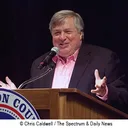
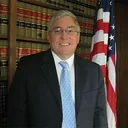
Helping America maintain energy independence.
Patrick Morrisey Governor of West Virginia

Where is Ukraine spending all this money?
General John Teichert Brigadier General, USAF (Ret.)
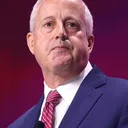
Supporting Trump's agenda.
Michael Whatley Former RNC Chairman; nominee for U.S. Senate, North Carolina

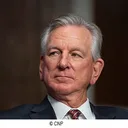
Making the tax cuts permanent.
Tommy Tuberville U.S. Senator from Alabama; nominee for Governor

The bromance is over. Elon Musk and Donald Trump collide.
John Terrett WABC Financial Analyst

The new administrator of NASA.
Steve Kates Space and astronomy broadcaster (Dr. Sky)

Paul Zuber
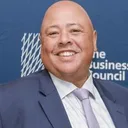
Climate Mandates Are Hurting Working Families
Paul Zuber SVP, NY Business Council
They Need To Fix The Climate Law In Albany, To Make Life More Affordable For New Yorkers
Paul Zuber SVP, NY Business Council
New York will face a $34 billion budget gap over the next 3 years.
Paul Zuber SVP, NY Business Council
