


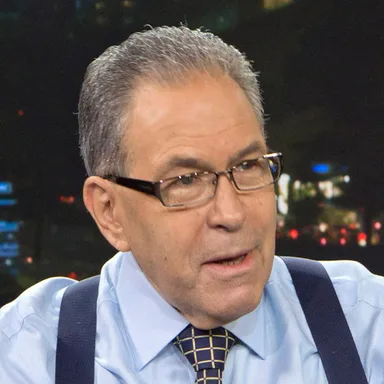
Transcript
Automated transcript · uncorrectedGood morning. This is Mike Stola for the Stolar Real Estate Report. What does the lobbyists do? What is their role in the economy today in the real estate world? I don’t really have the answers, So I brought today a prominent lobbyist who is the head of the real estate practice. Am I correct? Correct at CASIRA and his
name is e Good? Gothell? Pretty good?
All, dad, got health pretty good?
Good good, Michael.
It’s a pleasure to be here. Thank you for having me.
Okay, so talk to me about what your role is and what the firm does for people.
So I’m the senior vice president of real Estate at CASIRA. I lead the real estate team. We’re a ten person team. We do government relations in lobbying. We represent developers, property owners, institutions, nonprofits, cultural institutions, all trying to figure out how to advance the betterment of New York City, primarily through either developing or improving their real estate assets.
Okay, most of this and the residential side, or generically the entire real estate.
It’s diverse across the board.
Okay, So specifically, what type of projects today are you involved with?
We represent residential developers, office developers, cultural institutions, nonprofits, and healthcare sector is trying to build hospitals and doctors’ offices, all trying to improve their real estate assets to make New York a better play.
What about the City of US and these other programs, the forty five X and the M programs.
So throughout my career I found that, you know, the challenge that the real estate industry faces most difficult and the most difficult way is uncertainty. And in the recent months and years, we’ve had regulatory certainty from both the city side and the state side. On the state side, there’s the forty five X program, which is the successor
of the four to twenty one A program. There’s the four to sixty seven M program, which is the conversion program. These are incentives to incentivize either residential development or residential conversion. And on the city side, they recently passed the City of Yes suite of rezoning proposals, all intended to make development easier, more efficient, and to promote the development of
New York City. And having those pieces of legislation in place, and they’re in place either in perpetuity or for a significant number of years, really puts the four Walls around what is permitted, and it takes away some of that uncertainty that prevents developers from moving forward, that prevents lenders from lending on a project, and prevents investors from feeling
comfortable to take a step forward when they want to invest on a property.
So what do you think with all of these news programs, which one is are going to be really beneficial for the city of Neurope.
So the forty five X program I think is the most prominent. The old four to one A program was the way that multi family housing was develop the New York City, going back to.
The seventies, right.
It was initially an idea to incentivize development in New York City and it has been evolved over time.
We need to figure out to.
What extend forty five X will work for all parties. The negotiations were between the governor’s folks, labor, the industry. We got to a place where I think everyone is a little bit unhappy, and maybe that means we got to a decent spot, but that remains to be seen.
So what are they unhappy about?
You know, labour wants more protections, higher wages. The development community doesn’t want necessarily to be bound by some of these reporting requirements. But it’s a new program. It is the law of the land. It is the law of the land for the next ten years. I don’t see it being revisited anytime soon, and so we’re all gonna
have to figure out how to work within that framework. But before then, the law wasn’t in place. There was no certainty, and so there was no movement. Now we are seeing movement on new projects in Manhattan, in Brooklyn, in.
Specifically which ones we see. We’re talking about the Pfizer building.
That we so so last week the mayor announced a new a new project in downtown Brooklyn on Flatbush Avenue, that’s going to be a forty.
Five right, if that’s the gold Street property.
No, the gold Street is Lower Manhattan and Flatbush. It’s it’s it’s a partnership with the city. It’s a it’s a it’s a city owned site that has a long term lease on it that the long term lease holder is going to be redeveloping the property. And now we’re seeing a rezoning, a proposed rezoning in Long Island City,
a very large rezoning that that has the potential to develop to permit twenty million square feet of development.
All will have to be developed.
Assuming that it is multi family housing. And that’s the intention here pursuingto the forty five X program, and so the proof will be in the putting when those once those projects begin to get off the ground.
It’s a new program. People are learning, and the reporting.
Requirements of it are, you know, a little bit challenging, and I think that the development community is gonna have to learn how to deal with that, but it will allow development to move.
Now you see the development committee community being appropriate with regard to the conversions today from office to residential, because I mean the number is significantly much higher today than before.
Yes, so as soon as COVID hit, everyone immediately started talking about, well, obviously we need to do conversions. All these buildings were empty. No one knew if we’d even returned to the office. Now we have returned in a very good way, but I think we have sort of normalized as to what returned to office looks like. And
we still have a lot of Class B and Class C office buildings that are either partially empty, primarily empty, or entirely empty. And initially in the first couple of years, as soon as COVID hit there wasn’t a lot of movement on the conversion in the conversion world, but we are seeing that happen now, especially because the four sixty
seven M program is a very generous incentive intended to advance these conversions.
What are the incentives.
It’s a very generous tax tax incentive, and it is It is a significant tax incentive for a significant period of time. And what we’re seeing now is people moving forward with that program. And what it does is it solves multiple problems.
Right.
It solves the problem of having vacant buildings that doesn’t benefit anyone, and it solves the problem of our housing crisis. You know, we are in a housing crisis. And the good news about that is that people are beginning to acknowledge it across the political spectrum.
And so it used to.
Be where those on the left politically we’re not comfortable saying that they were pro housing. Today we have significantly moved towards a place where everyone is pro housing.
We have a mayoral election this year.
All the candidates are saying how many housing units they want to see built now, how they want to get there.
That’s where the.
That’s the big question how they want to get there, that is.
The big question.
But we should acknowledge the fact that politics is pro housing and that’s new and that’s good, and it puts us in a place to figure out how do we figure it out?
Not should we figure it out?
And that puts the community, the real estate community, in a place to say, well, we’re at the table. Because the public sector and the private sector they like to vilify one another sometimes and that’s okay, but realistically they each need each other.
Right.
The public sector needs to know that the economic engine of the private sector is going to invest in the city and to go and invest in the future of the city. And the private sector needs to know what the rules are, what’s permitted, what they can do within the limits of the law, and then let.
Us go do that.
Let’s talk about what you’ve done up in the Bronx before.
So last year there was a large rezoning proposed for for Metro North for the future around the four future Metro North stations. The idea was there’s going to be four Metro North stations coming to the Bronx new stations.
How do we build on that literally and figuratively right, how do we leverage the new stations coming to build housing around them. We represented the largest property owner within that rezoning area, and today that’s an industrial.
Office warehouse site.
But really, if there’s going to be a new Metro North station there that takes you minutes mere minutes to get to Midtown, it can also take you up to Connecticut, up into Westchester, how do we make the highest and best use for that site. The answer is housing and a mixed use development.
Was primarily housing.
But the community is concerned. All communities are afraid of change, and that’s okay. We have to understand that.
What about Jamaica.
Jamaica also makes a ton of sense to develop. I mean some of it.
You know, there’s a lot of things we don’t know, but we know a lot of the answers to some of these big questions. It just has to have some political will and a willingness to work with others, to work with the different sectors. Because the cynicism doesn’t help, it doesn’t advance projects. We need to get people to
yes and figure out how do we build around transit notes. That’s not a new concept, but it’s something that there is some hesitation to from a certain countries.
What about hospitality.
Hospitality is critical. We have to make it easier to build hotels. New York City is the capital of the world. We have obviously got hit by by COVID. Tourism came back, but it has taken a hit recently this year. I think tourism is down a little bit, and we have to think about how do we build the best hotels,
the best restaurants, the best bars. People want to be here, and so we have to give them all the reasons to be here, spend their money and go back and tell them how great New York is. Who we get more people coming here?
What about Harlem?
Harlem forever has been a fascinating neighborhood for so many reasons. It’s so rich in culture and history. It’s got great access to the You know, Midtown.
Isn’t there a major development talking about one hundred and fifth Street and Second Avenue.
Yes, there is, and that makes all the sense in the world. Also again because one twenty fifth obviously is a major crosstown street. There’s great public transportation there. Planking standpoint, we have to think where does it make sense to develop and both from a sustainability, from a planning, from a profitability standpoint. Developing around transit nodes where people already are,
so that we can leverage the value of the density of people and the ability to move them to their jobs, to the places of business, to the places of entertainment, to their houses of worship. We have to be smart about these things, and we’re seeing that in a lot of ways.
That’s why people are going to you and other professionals in this business to navigate the waters.
Yes, the waters can be choppy sometimes, but we figure out how to align the priorities of our clients and the priorities of the stakeholders so that they’re not just saying yes to us, they’re saying yes to themselves.
I hope they just continue to say yes and development continues. I’d like to thank you for being here today.
It was an honor. I really appreciate it.
Sunday, June 8, 2025
Why is Trump and Musk having a public disagreement?
David Paterson Former Governor of New York

Nobody in Long Island wants turbine windmills.
Bruce Blakeman Nassau County Executive; nominee for Governor

The affordability crisis in NJ is the main issue for the primaries.
Jack Ciattarelli Former New Jersey Assemblyman; 2021 and 2025 nominee for Governor of New Jersey
National Porto Rican Day Parade.
Joe Ithier Political Consultant & Community Leader
Independent medical research on ostriches met with CFIA resistance.
Katie Pasitney Spokesperson, Universal Ostrich Farms
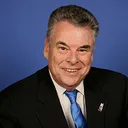

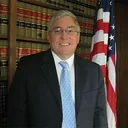
Helping America maintain energy independence.
Patrick Morrisey Governor of West Virginia

Where is Ukraine spending all this money?
General John Teichert Brigadier General, USAF (Ret.)
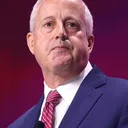
Supporting Trump's agenda.
Michael Whatley Former RNC Chairman; nominee for U.S. Senate, North Carolina

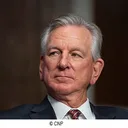
Making the tax cuts permanent.
Tommy Tuberville U.S. Senator from Alabama; nominee for Governor

The bromance is over. Elon Musk and Donald Trump collide.
John Terrett WABC Financial Analyst
The new administrator of NASA.
Steve Kates Space and astronomy broadcaster (Dr. Sky)

Michael Stoler
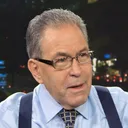
The Stoler Report with Michael Stoler: Eli Weiss and Andrew Albstein
Michael Stoler Real Estate Expert
The Stoler Report with Michael Stoler: Eli Weiss and Andrew Albstein
Michael Stoler Real Estate Expert
The Stoler Report with Michael Stoler: Robin Schneiderman
Michael Stoler Real Estate Expert
