


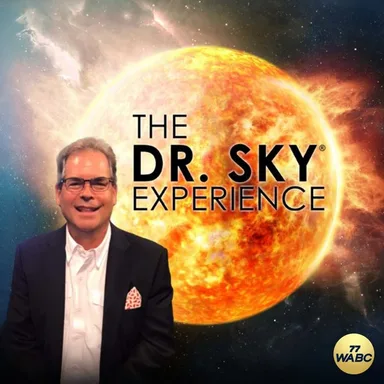
Steve Kates Space and astronomy broadcaster (Dr. Sky)
The new administrator of NASA.
Transcript
Automated transcript · uncorrectedSunday Morning. Whether us is Steve Kates otherwise known as doctor Sky Steve give us the hot news for this Sunday.
Well, good morning, John, as we move into June. Interesting in the world of politics, President Trump has apparently pulled the nomination of Jarrick Isigman to be the new administrator of NASA, and around that swirls a lot of controversy and questions as to maybe why news media reports may be accurate or not, that his prior associations with even
giving contributions to people like Democratic Senator Mark Kelly, and his relationship with Elon Musk has a little bit of tension is arising between Musk and the President, but we don’t know for sure. But John, no matter who’s the administrator of NASA, they’re going to have to deal with a twenty five percent cut in their annual budget, and
they really get a small budget in comparison to other three letter agencies and such interesting news. Will know soon exactly what the President will do.
Now, what was the reason the other gentleman left?
Well, according to these news reports, John, I don’t believe everything I read, nor to you. Apparently that isaacs men’s associations as we mentioned before, prior associations and maybe giving contributions to Democratic candidates and others. Now, some dispute that, some say that that’s not a really true story. We do not know. But in all truth, John, I think
men is a very qualified individual as a space pioneer himself. So we’ll have to see that as the wheels of politics turn, what the outcome.
Will be understood. So give us what use What are the good news for Sunday morning?
Well, Darren, we had one of the most intense solar storms just over this past few days, and we didn’t see the number of sunspots to make up the difference. To ask and answer why. What I’m talking about is on a level of geomagnetic storms, one called a G four and out of nowhere. But of course that somewhere
is the Sun. Large proton storms from the Sun lit up the airt’s atmosphere with a Rura borealis and radio disruption. So the bottom line solar cycle twenty five, John, is by no means over, and that indeed continues to be the news of the day. But just remember this, folks and John, it’s interesting the radiation in space that happens
with these particular solar storms. Well, it’s interesting here is that many people may not realize that cosmic rays are very dangerous to the human body. But the higher the level of solar storms, John, the Earth has this magnetic shield around us which lowers the number of cosmic rays.
But still here’s a problem in space medicine. One day in space, John, for the astronauts is like a whole year of the radiation that you receive on the ground. Though not fatal in so many ways, but an interesting story nonetheless. And I find that fascinating because this is something Mother Nature in the sun as we talk about
with mass extinction. The Earth has this incredible ability, as we both agree and talked about many times, to heal itself. But we need to understand more about space medicine and long duration missions in space.
Now the Chinese and their space station.
I think the week before we talked about that bacteria or whatever we call the virus bacteria that had a thing around it that protected it from radiation.
Any other information has come out.
Not at this point, John, We’re still looking and that’s a hot story that we’ll still investigate. But you’re so right, and just to repeat in case people didn’t hear it on the Cats roundtable. The Chinese on the Chinese space station Tiangong noticed in their control panel they swooped up some bacteria that The interesting thing is it has its
ability to be resilient in space and protect itself. So in other words, it’s not going to be blown away or destroyed by radiation. It’s actually going to be protected and that’s something very unique in space. How did it happen.
What did the Chinese do beforehand with the experimenting with some other type of bacteria. We do not know, but John will consider that to be the mystery.
Of the week.
Bacteria in space that has the ability to protect itself in that hostile environment.
Well, maybe I’ll teach us how to protect our astronauts on the way to Mars.
It’s a good way to thank John, and I agree with you one hundred percent. But the area, once again, ladies and gentlemen, space medicine is so important and we’re going to be having some guests on my popular program and appreciate you for letting me have that the Doctor Sky experience that appears every Friday night at midnight itto
Saturday morning Eastern Day Lifetime and Sunday mornings midnight to two am Sundays. As Want John, we explore the great realms and mysteries of astronomy, space, aviation, and weather, stories of celebrities, American exceptionalism, and the beat goes on, happy to be with If you and the listeners and are quick reminder, don’t forget in the live sky. Coming up
is the beautiful John full Strawberry moon that occurs early Tuesday morning Wednesday morning. One of the most beautiful full moons of the year lies in a weird constellation John of the zodiac, so called thirteenth sign of the zodiac.
It’s called Effusius, one that we don’t hear about often. The moon will be beautiful in a few days.
Thank you, doctor Shi, and we’ll catch up again soon
Sunday, June 8, 2025
Why is Trump and Musk having a public disagreement?
David Paterson Former Governor of New York
Nobody in Long Island wants turbine windmills.
Bruce Blakeman Nassau County Executive; nominee for Governor

The affordability crisis in NJ is the main issue for the primaries.
Jack Ciattarelli Former New Jersey Assemblyman; 2021 and 2025 nominee for Governor of New Jersey
National Porto Rican Day Parade.
Joe Ithier Political Consultant & Community Leader
Independent medical research on ostriches met with CFIA resistance.
Katie Pasitney Spokesperson, Universal Ostrich Farms
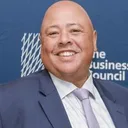


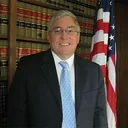
Helping America maintain energy independence.
Patrick Morrisey Governor of West Virginia
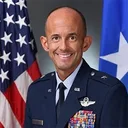
Where is Ukraine spending all this money?
General John Teichert Brigadier General, USAF (Ret.)
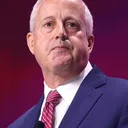
Supporting Trump's agenda.
Michael Whatley Former RNC Chairman; nominee for U.S. Senate, North Carolina

Making the tax cuts permanent.
Tommy Tuberville U.S. Senator from Alabama; nominee for Governor
The bromance is over. Elon Musk and Donald Trump collide.
John Terrett WABC Financial Analyst

Steve Kates
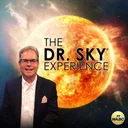
Deep-Space Mysteries, UFOs and the Orionid Meteor Shower
Steve Kates Space and astronomy broadcaster (Dr. Sky)
The Mysteries of Mermaids, El Niño and the Antarctic Ice
Steve Kates Space and astronomy broadcaster (Dr. Sky)
Exoplanet Radio Signals, SpaceX’s Heavy Rocket Test and Nuclear Propulsion
Steve Kates Space and astronomy broadcaster (Dr. Sky)
Supersonic Jets, SpaceX’s Next Starship Launch & Trump’s Golden Dome Defense System
Steve Kates Space and astronomy broadcaster (Dr. Sky)
The Science Behind Hurricanes, Cosmic Radiation and the Universe
Steve Kates Space and astronomy broadcaster (Dr. Sky)
Ben Franklin, Mars, and Asteroid Mining
Steve Kates Space and astronomy broadcaster (Dr. Sky)
