


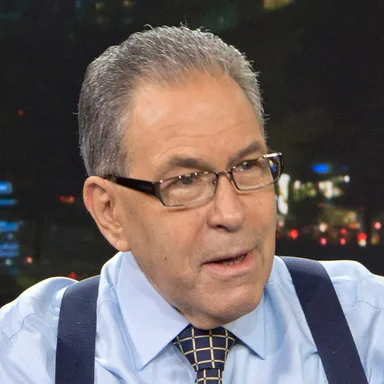
Transcript
Automated transcript · uncorrectedGood morning.
This is Mike Stola for the Stolar Real Estate Report. What’s happening in the multi family world in New York City, what’s happening in the hospitality world. So I have this morning Eli Wise, who is a principal of Joy Construction, who’s very involved in all aspects of real estate in New York, especially with the four, twenty four, eighty five
X and the other programs coming up. The City of Yes. So I’d like to ask Eli a couple of questions. Thanks for having me this morning, Michael, So let’s talk about City of Yes. You know it’s probably each and every day it’s been written up in the newspapers. What’s the status the City Yes? And explain what City of
Yes is? Sure?
So I was always confused by the naming of City of Yes, because really what this is is addressing the zoning code in New York, of the rules and regulations of how buildings get built in New York that hasn’t been updated since nineteen sixty one.
John F.
Kennedy was the President of this country the last time New York City’s zoning code was updated, which for a city that’s supposed to be one of the most dynamic and modern cities in the world is pretty outdated and candidly outlandish. So the City of Yes is basically a revamp of the nineteen sixty one zoning code that is
a supposed to be more reflective of the city’s current needs and b looking for ways to use the zoning code to provide more housing and affordable housing. New York has a very well documented housing shortage. Our vacancy rate is one of the lowest in the entire country. We also have an affordability crisis, whereas over fifty percent of
New York City residents spend more than one third of their income on rent, so that’s not sustainable. We in order for a city to be successful, it needs to grow. And if the city is going to grow and it grows by people, we need places for them to be housed and be able to afford those houses. Talk about
the old for twenty one A sure so four to twenty one A basically was an abatement program that allowed multi family developers like myself to get a reduction on their real estate taxes.
Well for thirty five years.
The program has been through many iterations and as sometimes it was as much as thirty five years, sometimes it was ten, sometimes fifteen.
There were various options you.
Could choose based on where your project was located and also the levels of affordability you provided. But the premise behind it was that by building let’s say eighty percent or seventy five percent of market rate rental units, those rents would then subsidize the creation of affordable units in those buildings, and it served as a few purposes. Number one,
it helped spur housing.
As I said, we not only have an.
Affordability crisis, we have an overall housing crisis in terms of.
There being enough supply in the market at any income level.
So, oh, but we don’t build more land, how do we increase the number of units.
So all we really have is you’re right, we don’t have more land. And that’s what City of Yes is trying to address. So what City of Yes is trying to address is, Okay, we don’t have more land, but perhaps we can legalize basement apartments in people’s homes, and that’s been something that could create a tremendous amount of
units overnight.
We’re looking at the City of Yes is looking at changing.
The parking requirements because in today’s world with uber work from home subways, people are driving less, and we’re also looking at ways to reduce congestion in the city. So by reducing parking, you’re making the project’s construction less expensive, thus hopefully creating more units. So it’s really trying to it’s you know, I try to k of creating housing
and affordable housing policy in New York is like when you have the end of your tooth based and you’re squeezing and squeezing and squeezing to get those last bit of tues based out. That’s what we have to do in you know, New York. We have to find every angle and every policy, every pocket of money, every opportunity
for more housing.
So let’s talk about the conversion of office buildings to residential on the City of Yes and other programs.
Sure, so the state passed a law called four sixty seven M which was geared towards giving tax abatements to office conversions, specifically mostly in New York City, but they could happen anywhere in New York State. And the thought process was this would spur that development, which could create more housing again, you know, adding more supply to the
market and also addressing the city’s vacancy in the office market, which candidly is still pretty troubling, and it is in many cities across the country. So the thought there was if you could provide a taxi bait to developers, they would be incentivized to create housing.
The issue in office conversions, and this is really the issue. There are two issues.
Number One, pretty much any office building in Midtown Manhattan built after nineteen sixty one, if converted to residential, would be overbuilt, and that’s what City of Yes is actually trying to change that. It would allow those buildings to be compliant. The second issue is and this is just purely you know, all us grew up playing lego. It’s
a design issue, and office buildings are designed extremely differently than residential buildings.
But we had a lot of office conversions under the four twenty one gees in Lower Manhattan.
Correct, So those buildings were built under the nineteen sixteen zoning code nineteen sixteen, nineteen sixteen zoning code, Yes, and those buildings, because of their age and the changes in construction technology, were a lot more amenable to be converted to residential use. That’s not to say that you know, there are office buildings in Midtown that won’t be converted.
There are projects going on right now that are very exciting, but it is a challenge to the development community to actually get efficiencies and cost efficiencies and a product that makes sense by converting an office building. It’s it’s not something that you can just snap your fingers and convert any building given the size of the floor plates, where
the elevator shafts are.
And to be candid with you, light and air.
Okay, So let’s talk about a little Let’s talk about some of the projects you’re doing today in Inwood in the Bronx. Will you have land? Yes.
So it’s it’s ironic because we’re talking about government programs and most of my projects are funded by government programs or are the function of a rezoning where the city is able to create land. So my project in Inwood, which is on the corner of two hundred and seventh and ninth Avenue, is six hundred and eleven all affordable units,
ranging for units from formerly homeless tenants and people earning up to thirty percent of area median income about one hundred and fifty thousand dollars a year, all the way up to people earning about one hundred percent of that, which is again one hundred and fifty thousand dollars a year.
So it’s a mixed income community. There’s a food Bizarre supermarket that’s coming in on a Fresh program. No, it was not built under the Fresh program. We found the tenant after we built it. But what I think is important to note that project was built on a seventy thousand square foot plot of land that, prior to the
rezoning in Inwood was zoned as a one far so you could only build seventy thousand square feet. This project, which is delivering a mixed income, affordable housing development and a waterfront park at a supermarket, is over six hundred thousand square feet. So we can’t create land, but we can increase air.
What about the development in the Unite stadium.
So that project is leasing up right now.
I was involved in a seven hundred and fifty unit project again on River Avenue in one hundred and sixty seventh Street between one sixty fifth and one sixty seventh. It’s a three building project, two of which are completely affordable and have a charter school known as the Dream School at the base and then across the street at
eleven fifty nine, we partnered with a wonderful nonprofit partner called Community Access who does supportive housing, which is affordable housing, but also for a tenant population that requires social services, whether it be mental health, substance abuse, domestic abuse.
So in total we created seven hundred.
And fifty units, all of which are income restricted, all of which target a certain population to help improve their lives.
You are also involved with hospitality what’s happening in that market, so you.
Know, hospitality is again facing a crossroads due to you know, to public policy.
There’s a there is a law going through.
The City Council right now that is going to change the way staffing is done at hotels right now in the city.
But to be very candid with you, right now.
Whether it’s just the renaissance of New York post COVID, some issues of supply coming off the market, rates in New York are extremely expensive right now. We’re seeing tremendous demand from leisure travel. But most importantly, and what actually makes me feel very optimistic, is we’ve seen business travel come back very, very strong, and that’s been mostly starting
at the end of twenty three all the way through twenty four and twenty five is looking very strong as well. I mean we are now double digit, if not over twenty percent over where average daily rates were in twenty nineteen prior to cole.
And what about financing for hotels, Well, that’s a different story.
It’s not cheap and leverage is very very much constrained.
So remember we are not that far off from when our hotels were at twenty percent occupancy are forced to close and it’s hard to get lenders or operators to forget that so quickly. So I think it’ll just take time for the shock of what happened during COVID to ease and make lenders feel a bit more comfortable in
that space.
So on. In general, it sounds like hopefully the city of the s four eighty five x the four to twenty seven whatever I mean, all these numbers come out from the air. Things are looking positive, definitely in the affordable housing. Unfortunately, we have zoning codes that have to be changed since nineteen sixty one or nineteen sixteen. As
you would say, yes, okay, I’d like to thank Eli Wise for being here in US speak next week.
Thanks for having me
Sunday, November 10, 2024
What does Governor Hochul mean to "Trump proof the State"
David Paterson Former Governor of New York

This is going to be an awakening for America.
Roger Stone Political Strategist & Consultant
Hispanics left the Democratic Party in droves.
Joe Ithier Political Consultant & Community Leader
Even Democrats were fed up with the Left.
Alfonse D'Amato Former U.S. Senator from New York


New Administration, were voters fed up with Wokeness?
Charles Gasparino Fox Business Senior Correspondent and Columnist

Everything will change with the new Administration.
KT McFarland Former Deputy National Security Advisor
Senate Majority is a whole new agenda.
Tommy Tuberville U.S. Senator from Alabama; nominee for Governor

Artificial Intelligence in Space.
Steve Kates Space and astronomy broadcaster (Dr. Sky)

Michael Stoler
The Stoler Report with Michael Stoler: David Schechtman
Michael Stoler Real Estate Expert
The Stoler Report with Michael Stoler: Eli Weiss and Andrew Albstein
Michael Stoler Real Estate Expert
The Stoler Report with Michael Stoler: Eli Weiss and Andrew Albstein
Michael Stoler Real Estate Expert
